
Aba Huab – De Riet – Thunderstorms
Day 4 and we still hadn’t managed to spend a night wild camping in desert isolation. In 2020 we drove through Desolation Valley not stopping. Now, we hoped we could at last enjoy the solitary desert wilderness we craved by wild camping in it. We knew there was a small shop in Twyfelfontein village, and went there first to get the things that we’d forgotten to get in Windhoek, and couldn’t get in Uis. I really can’t remember now what that was, but at the time we seemed obsessed with trying to find them.
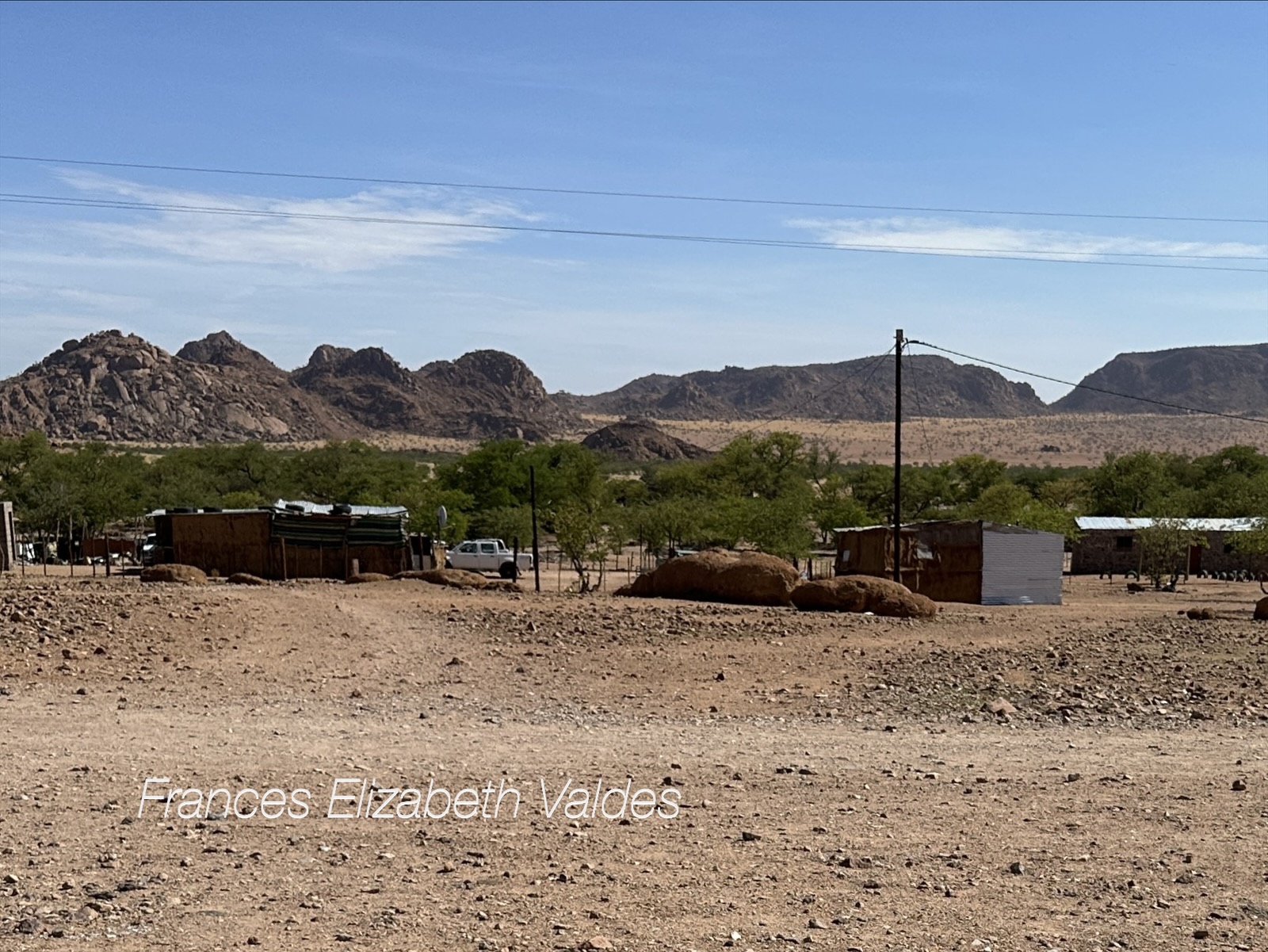
Anyone who speaks about Twyfelfontein is usually talking about the 2000+ year old rock paintings which are a world heritage site. I don’t think tourists ever go to the village.
The village consisted of a number of huts and shacks. There were actually two shops, both sold very little; just beer, maize meal and a few other essentials for people without much money.
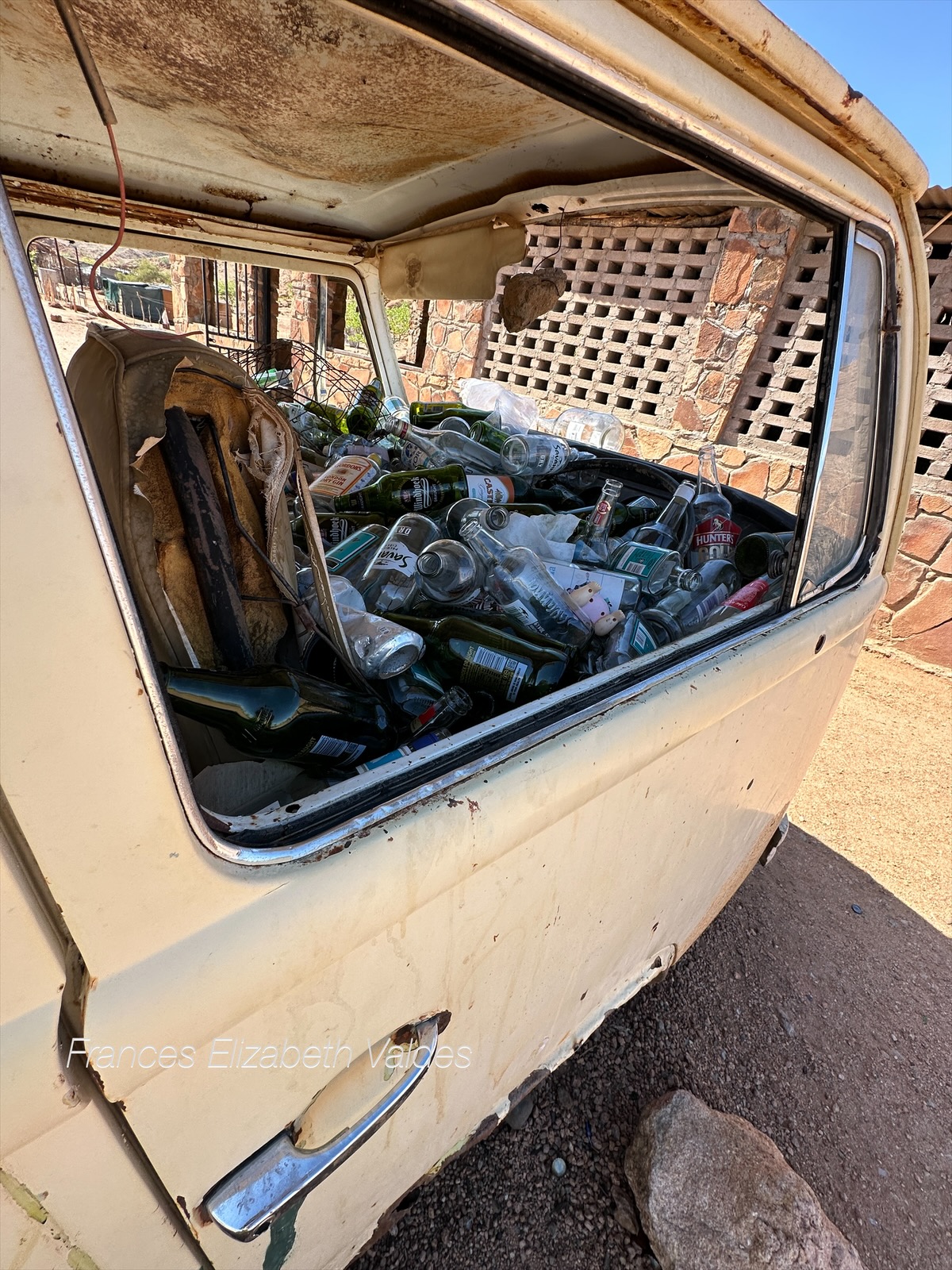
Outside one of the shops was a rusting VW camper full of empty beer bottles. I thought it a work of art.
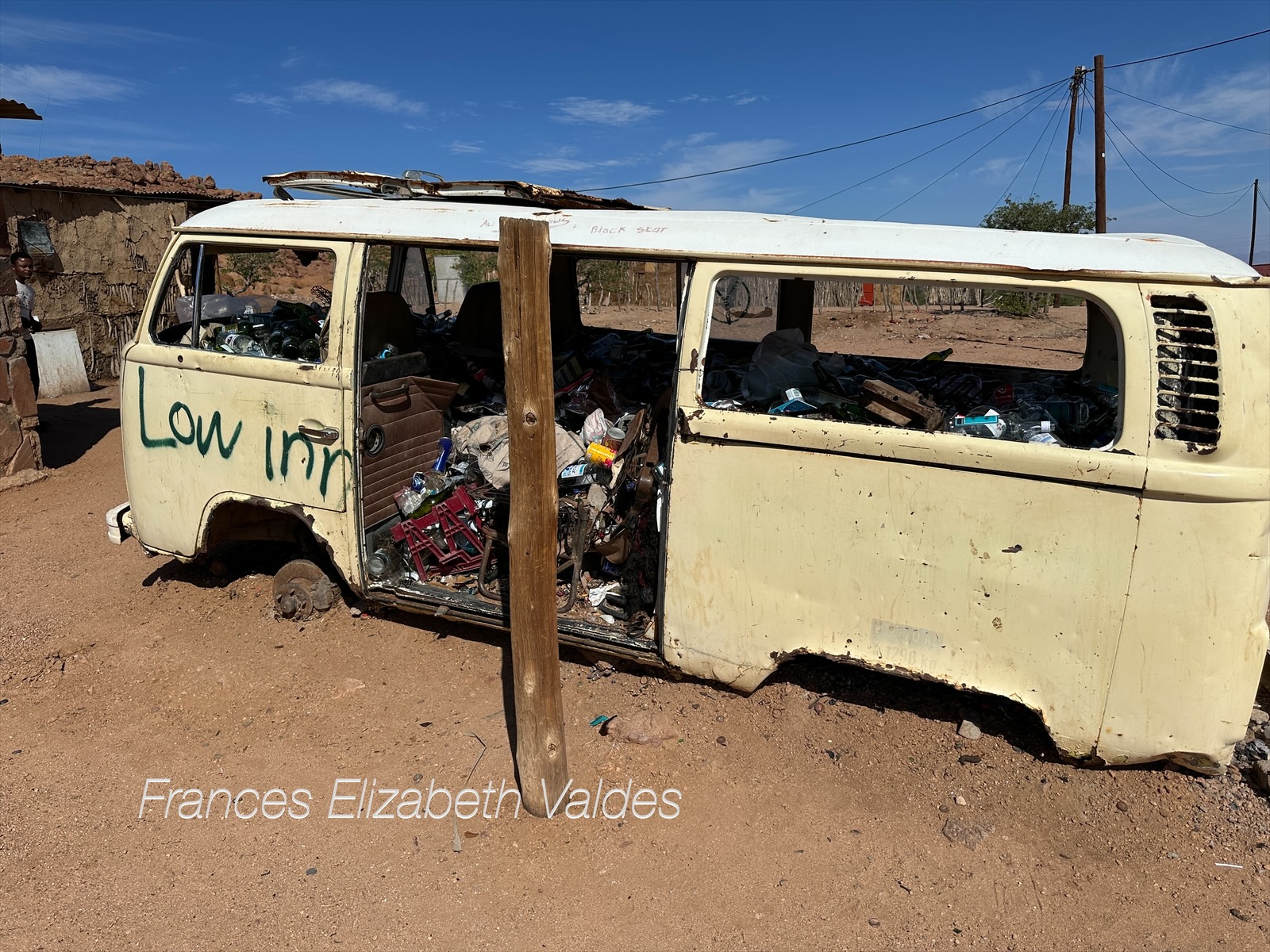
As always in rural Namibia, people were really friendly, smiling and helpful. However, we still weren’t able to buy whatever it was so important for us to get. Instead we stocked up on more biscuits and beer. Mainly because we wanted to buy something, so our money could go into the village, which clearly needed it.
I was struck that several of the huts had a satellite dish outside. It seemed incongruous amongst so much poverty, but also worried me. TV programs showing unattainable lifestyles are bound to sow discontent. People here were very poor, with few jobs available to lift them out of poverty.
We knew that we would be in the remote desert for the next couple of nights (although so far nothing had gone to our plans). We had filled up with water at Aba Huab Community Camp, and we needed to make sure our 2 fuel tanks were full. In any event, in Namibia fuel is not readily available off the main tourist routes, so it is important to fill up when you can
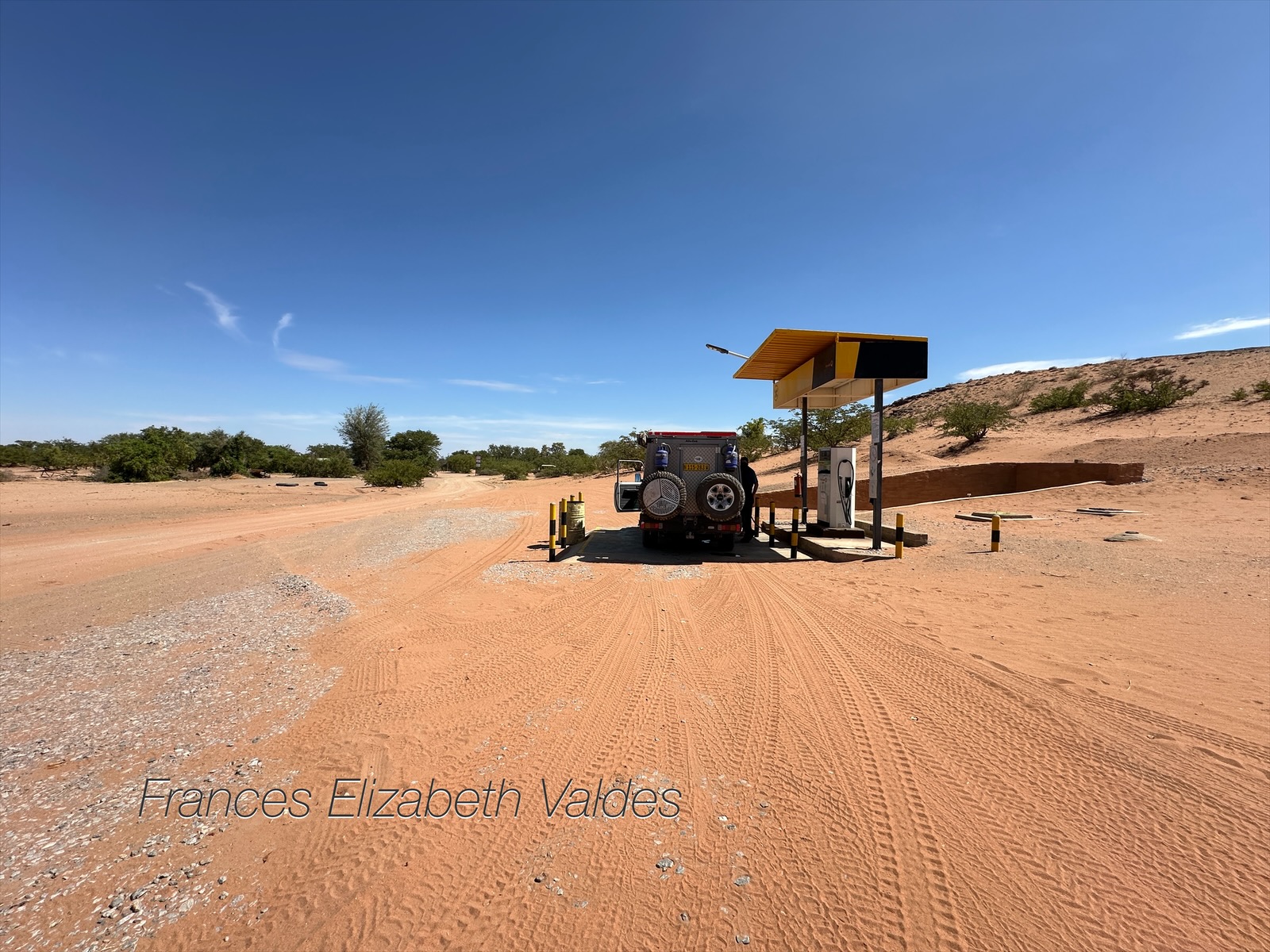
There was fuel at the airstrip, and that is where we went to fill up. Fly-in ‘safari’s’ are a popular way of seeing the country. People come to Twyfelfontein to see the rock paintings, and also in the hope of seeing rhino in Doros !Nawas Conservancy and/or desert adapted elephants in the Huab. They are collected at the airstrip by lodge vehicle which need fuel.
After re-fuelling we at last headed off for some remoteness – so we hoped. We started to follow the Aba-Huab ephemeral river, which clearly hadn’t seen water for sometime. Nigel needed to let air out of the tyres to drive on the sand (the land cruiser is equipped with a tyre pump – in case you were wondering how we were going to reinflate them).
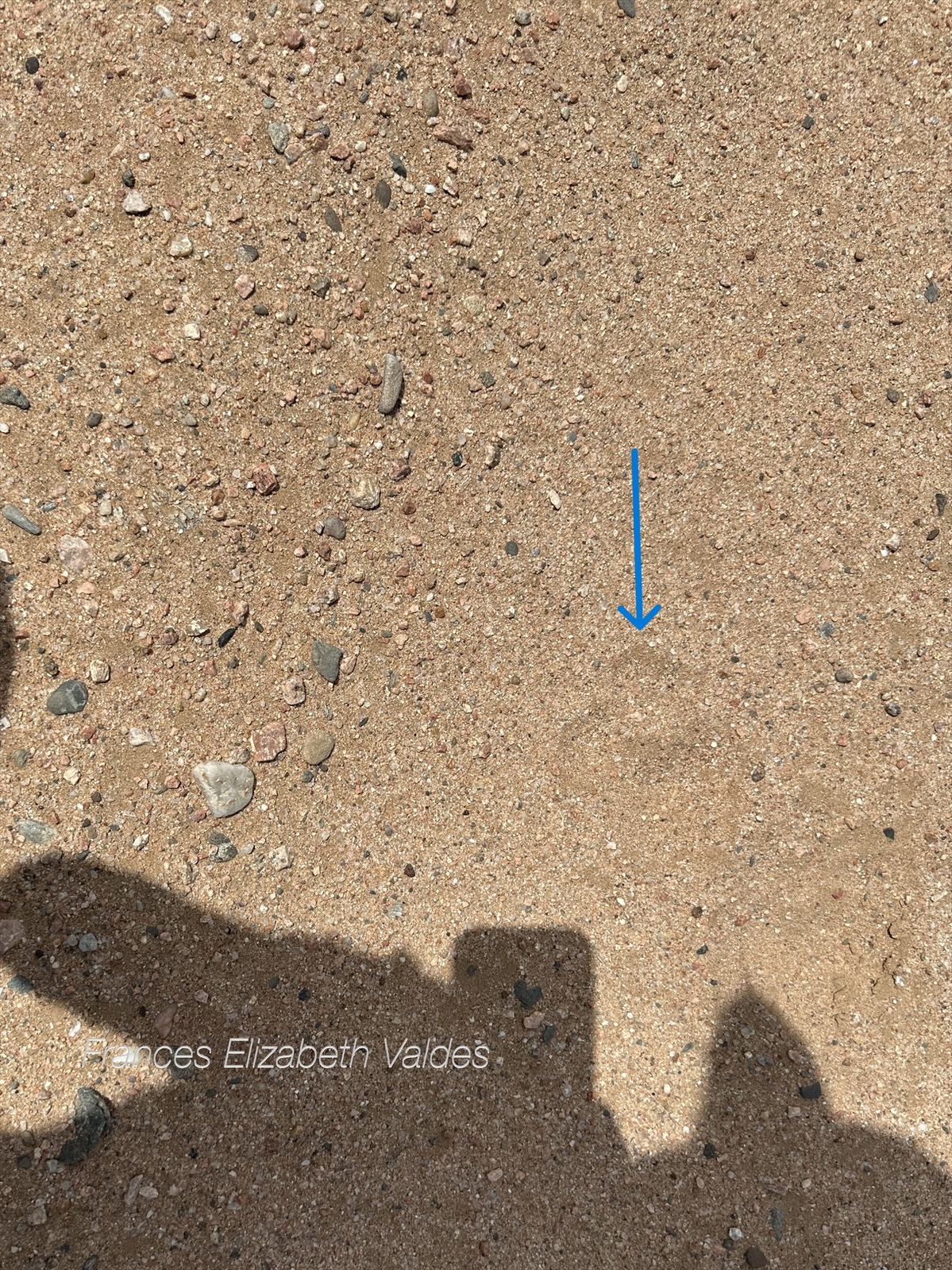
While Nigel let air out of the tyres I wandered around, and came across a lion print. The edges weren’t sharp, meaning it wasn’t too recent. But last night’s wind would have masked it, if it had been more than a day old. I felt it best not to linger.
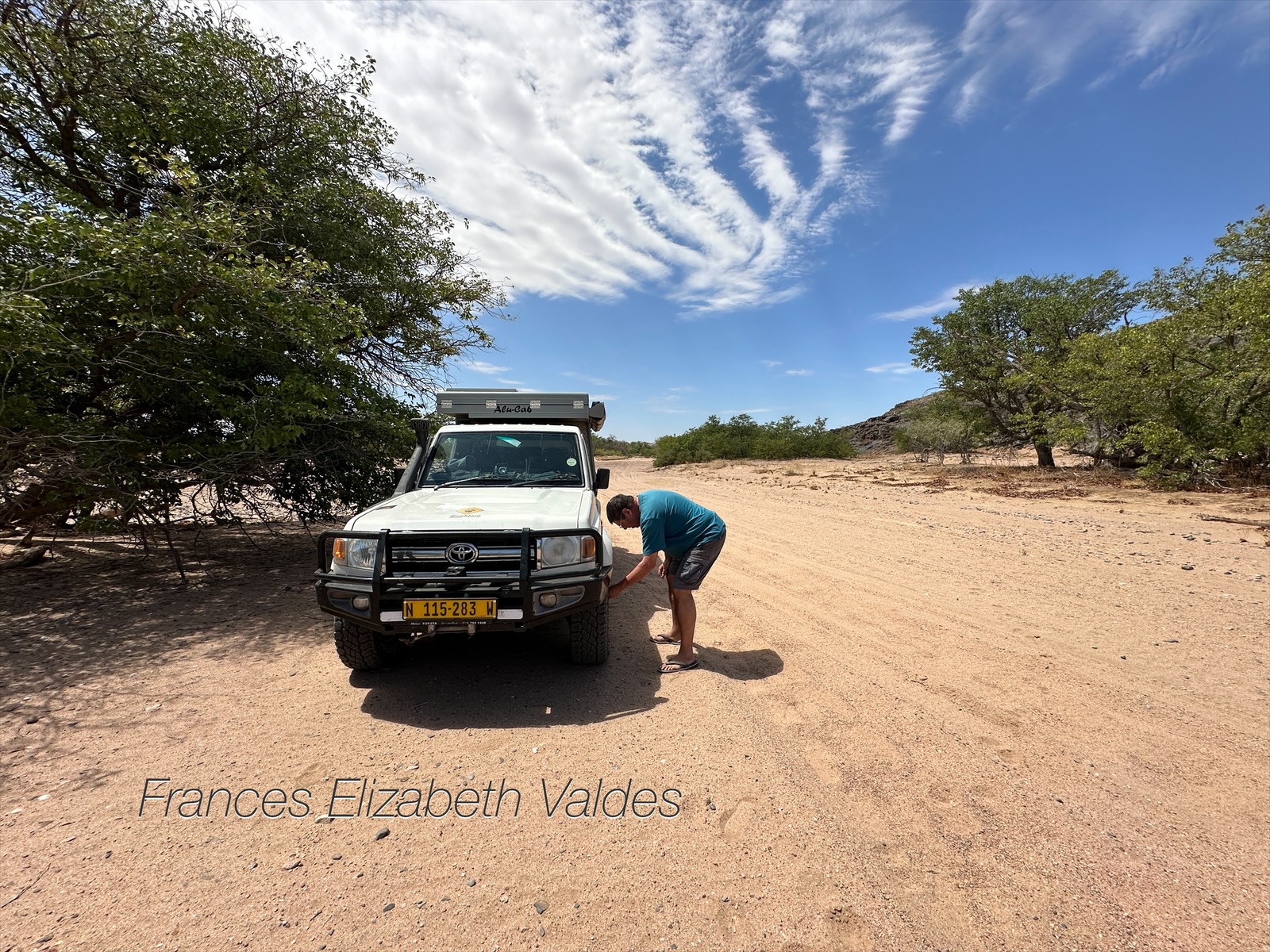
Along the Aba-Huab we stopped next to a few huts, collectively called Rendezvous. A pickup (locally called a baakkie) full of men stopped, and asked us if they could help. This frequently happens in Namibia. If you stop, people make sure you are OK.
The men were rhino rangers. The one talking to us was very knowledgeable and seemed in charge. We asked how much poaching there was, and he said very little because the rangers were everywhere. We certainly noticed this as we travelled on.
The chief ranger was well spoken and dressed. We were beginning to recognise those who had work because they were not thin like those who didn’t. That was so sad. I know the government tries to help, but it’s not a rich country. Those who reach 65 years, which in 2022 was less than 3.9% of the population, get a small pension.
After Rendezvous was the village of De Reit. De Reit had changed from when we were last here in February 2020; it even had electricty.
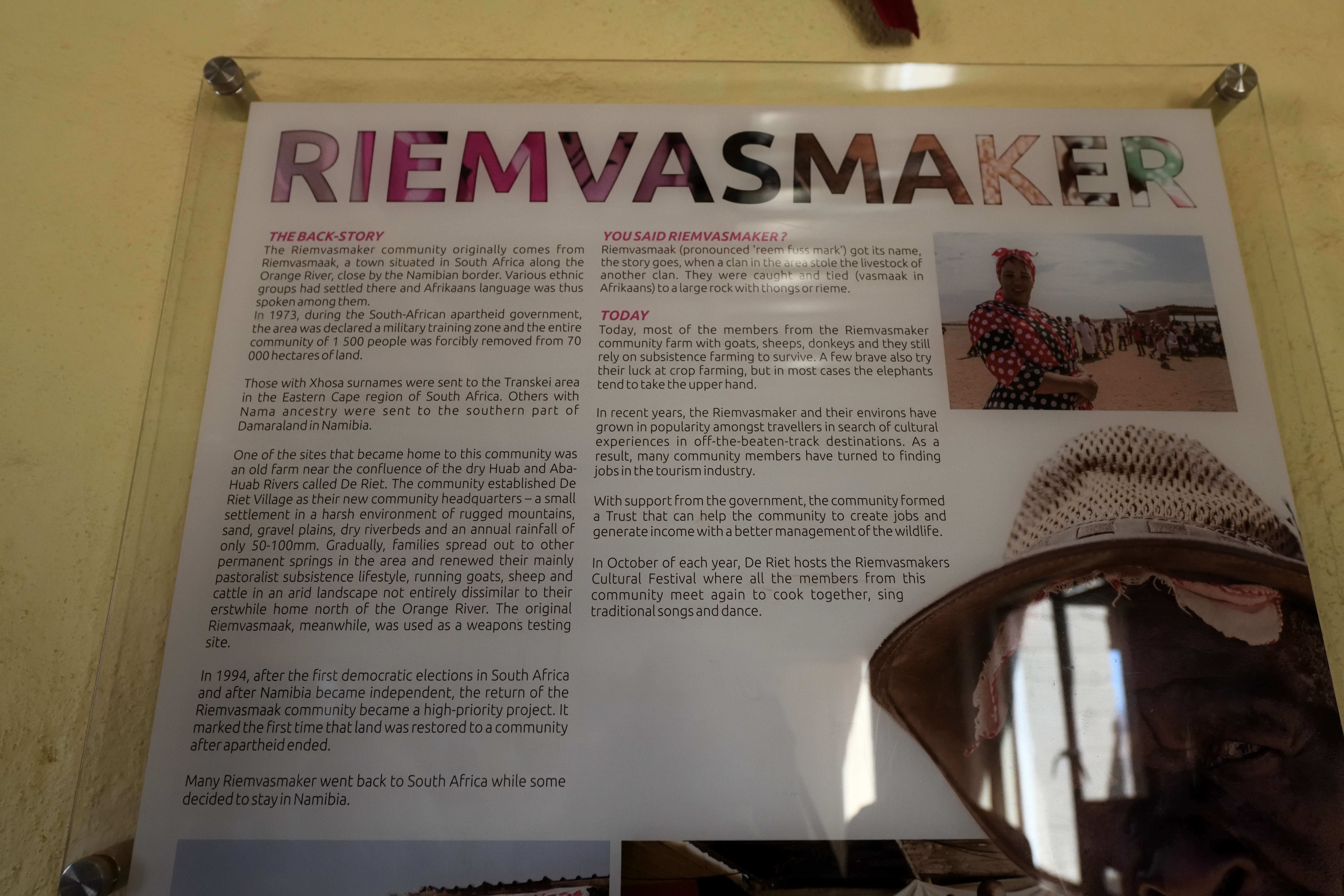
In 2020 we were shown around by a village elder. He was an original Riemvasmakers. These were people who lived and farmed in the Reimvasmaak region of South Africa, but were moved to De Reit (and a few other areas) during the Apartheid because the South African Government wanted their land. They became known as Riemvasmakers. After the collapse of apartheid they were offered their land back, and some went back, but others like the elder, didn’t.
The visitors centre was now staffed by two young men. They told us the elder had died, and there was no-one in charge. This was the same attitude of the young men at Gobogobos – there was no-one in charge of them.
In 2020 we wanted to wild camp near the village, but didn’t want to do so for free. The elder set a price which was the same as we would have paid in a campsite. We asked the young man how much he would charge, and he wanted 50 euros. His attitude was so different from the elder last time. We finally agreed on the same price as we paid in Aba Huab Community Camp (around 20 euros).

In 2019 I gave some toys I had crocheted to the pre-school. When we returned in 2020 we were delighted to see they were still being played with. During lockdown I had crocheted more toys to give away. We found the schoolmistress and handed her the toys. She had just returned from a visit home in Windhoek, and had beautifully manicured nails. She was wonderfully enthusiastic about the school.
We left De Reit and drove further along the Aba Huab river meeting a bull elephant scratching himself against a tree. We had repeatedly been told that the elephants had moved to a different area because there was rain in the air. The herd had some youngsters with them and didn’t want to risk a flash flood in the valley. This bull was obviously less concerned about flash floods.

When we returned to Twyfelfontein at the end of our trip, we discovered there were groups of elephants still present. We had, by that time, worked out the information we were given wasn’t always correct. Everyone wanted to help us by giving us up-to-date information but it wasn’t always right. I guess fake news isn’t confined to the internet!

The Aba Huab leads into the Huab and Desolation Valley. But as we drove into the Huab we were met by a sea of reeds (see the danger of reeds in FYI). We tried to get through them but had to give up. It was getting to that point in the afternoon, when we had to decide where we were going to camp for the night. In view of the distant rain clouds, like the elephants, we needed to leave the river valley.
The track away from the Aba-Huab was very rocky and we made slow progress. It was getting late and we decided to make camp on a raised plain overlooking the Huab valley. We made camp, took out our chairs and importantly the beers.
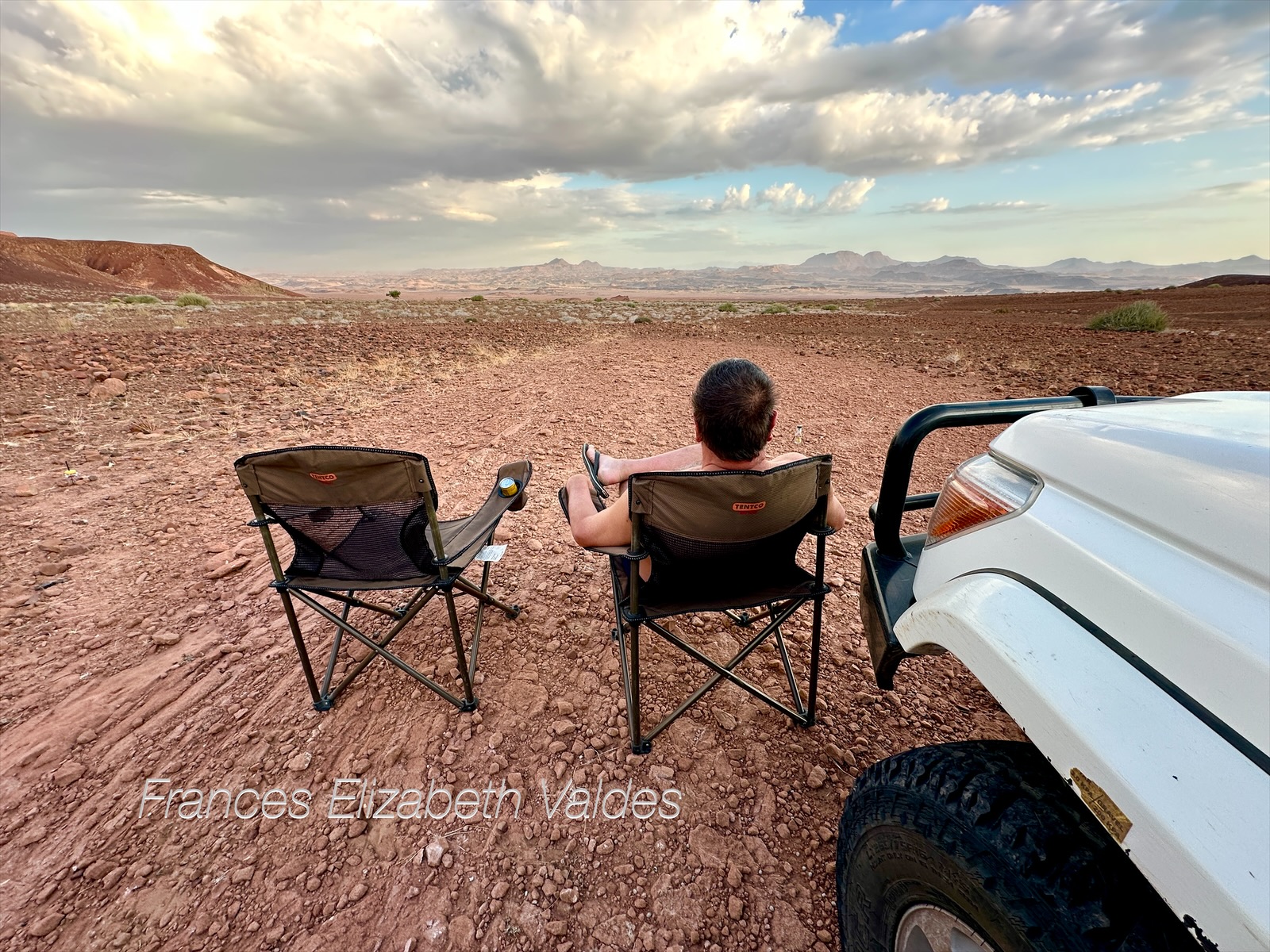
Our camp site was very exposed on the plain. The rain and thunder rattled around in the distance, getting closer. I began to get worried. Nigel (born and bred in Africa) said there was nothing to worry about – just enjoy the view. The view was from a treeless and bushless plain, on which we were the highest object, and also the only object for several km in either direction.
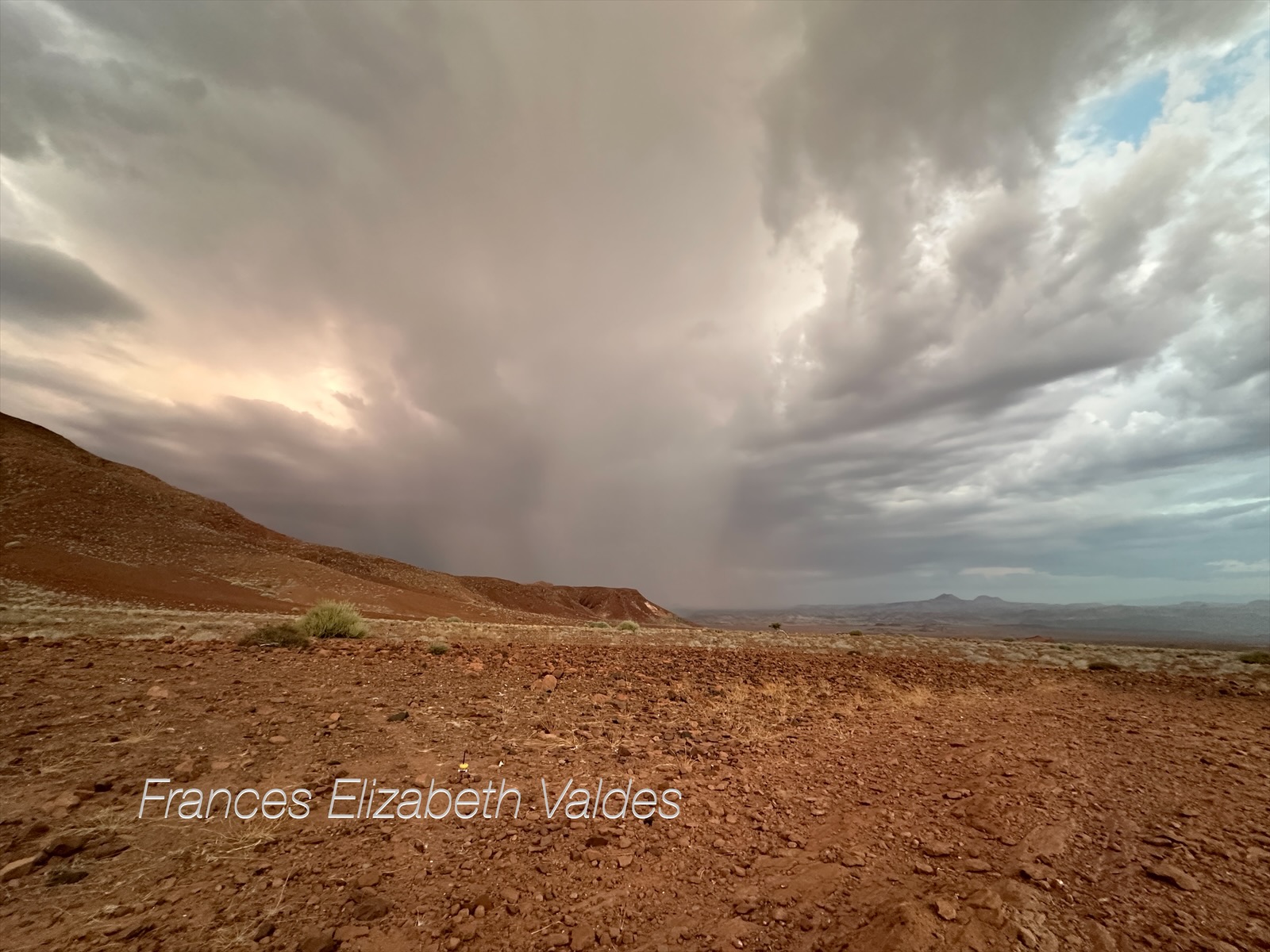
The rain started and we sat inside the cab. The thunder was overhead at this point, and the lightning was all around us. I will concede to Nigel that, it was very atmospheric. But I caught him on his phone (we had an amazing data signal even though we were miles from the nearest village) Googling what to do if a car gets hit by lightning.
The storm went on for sometime and I was beginning to think we would have to spend the night in the cab, but eventually the rain eased. By this time it was almost dark. We had a quick shower (the campervan had a 150 litres tank and a shower hose outside) and went to bed without eating. Strangely this didn’t seem to matter.
 Desert Wonderers