
Bersig – Palmweg Concession – Xai Ais
In the morning a woman walked through the bush to our camp. We were apprehensive that this meant we were going to be asked for money, or told we shouldn’t have camped there. But, she introduced herself and said the owner of a farm had seen us and wondered if we were OK. There was no attempt to suggest money, it was a genuine enquiry. Where else in the world would that happen to tourists!
We went back to the Torra Conservancy office in Bersig to give some money to the community as a thank you for camping. The guy in charge said he was going to De Reit that afternoon, to ‘sort out a problem’. I wondered if the problem had anything to do with lack of leadership since the elder had died. The young men we spoke to clearly didn’t think they needed a leader.
We headed towards Palmweg on well graded gravel road, passing the farm which the woman this morning had come from. It was just a number of brick built shacks and lots of goats. It looked like a community rather than one farm.
The number of shacks and goats on the road was quite strange after the previous few days by ourselves in the Namib desert. It seemed as if we had hit a major population area! Bearing in mind the total population of the Torra Conservancy was 12001 in an area of 3,522 square kilometres, this is relative!
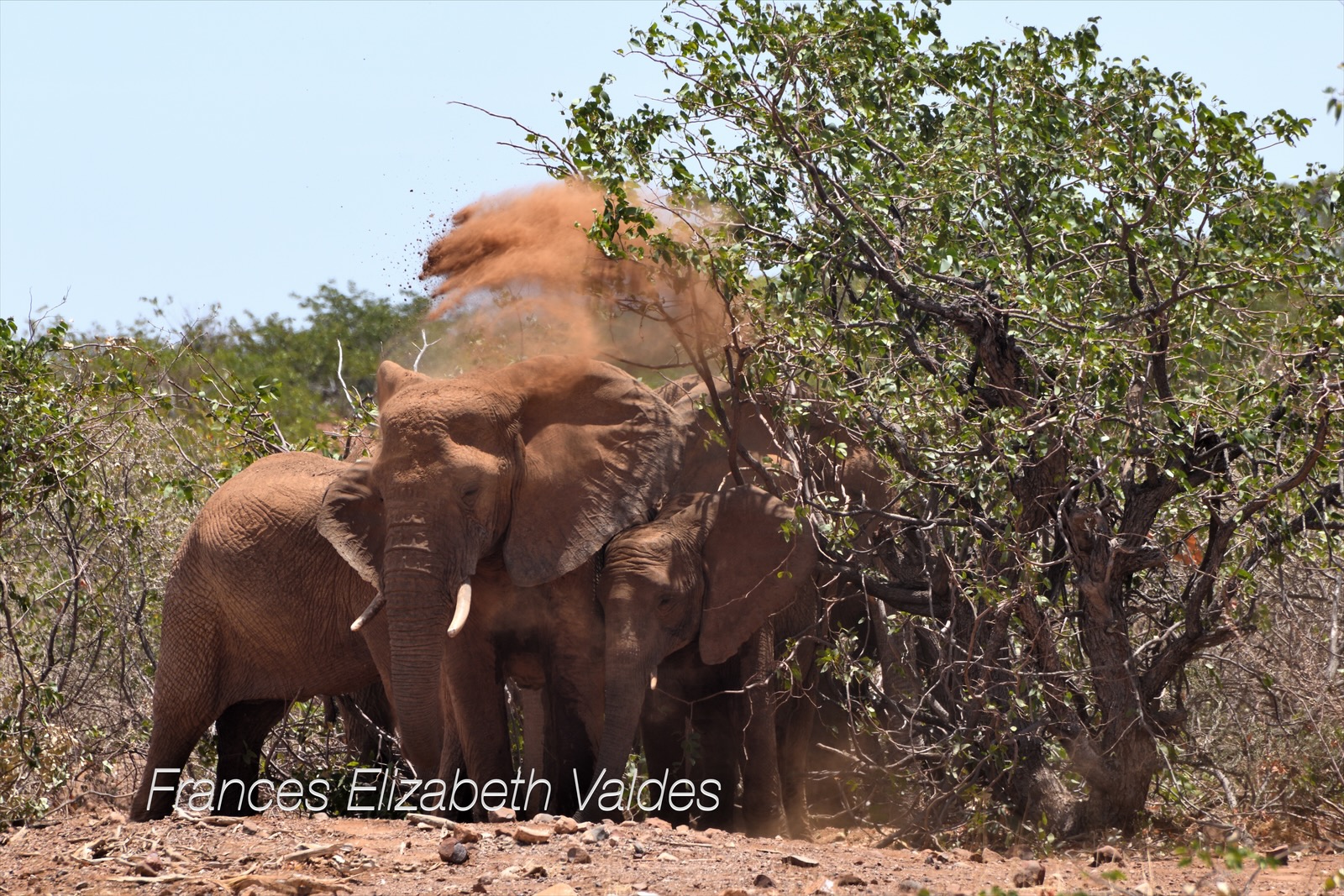
At Palmweg there is a veterinary fence. This runs the entire width of Namibia. Vehicles travelling south are checked for meat products. The boundary was originally put in place in 1896 during the German occupation, to prevent a rinderpest outbreak in the north. It failed, but the boundary was kept in place to control not only animal movements, but also people movements. Now it is supposed to control the spread of foot and mouth disease.
North of the fence the farms are generally community owned, south the farms are fenced in and the livestock more controlled. This means the meat produced south of the fence is considered ‘safe’, and can be sold overseas. Animals travelling south need to be quarantined which is expensive, so doesn’t happen. The government is trying to remove the fence and provide prosperity for northern farmers, but there is concern this will cause the spread of foot and mouth. Although, immediately north of Palmweg there hasn’t been an outbreak in 30 years (there were 3 outbreaks in other northern areas in 2020) .
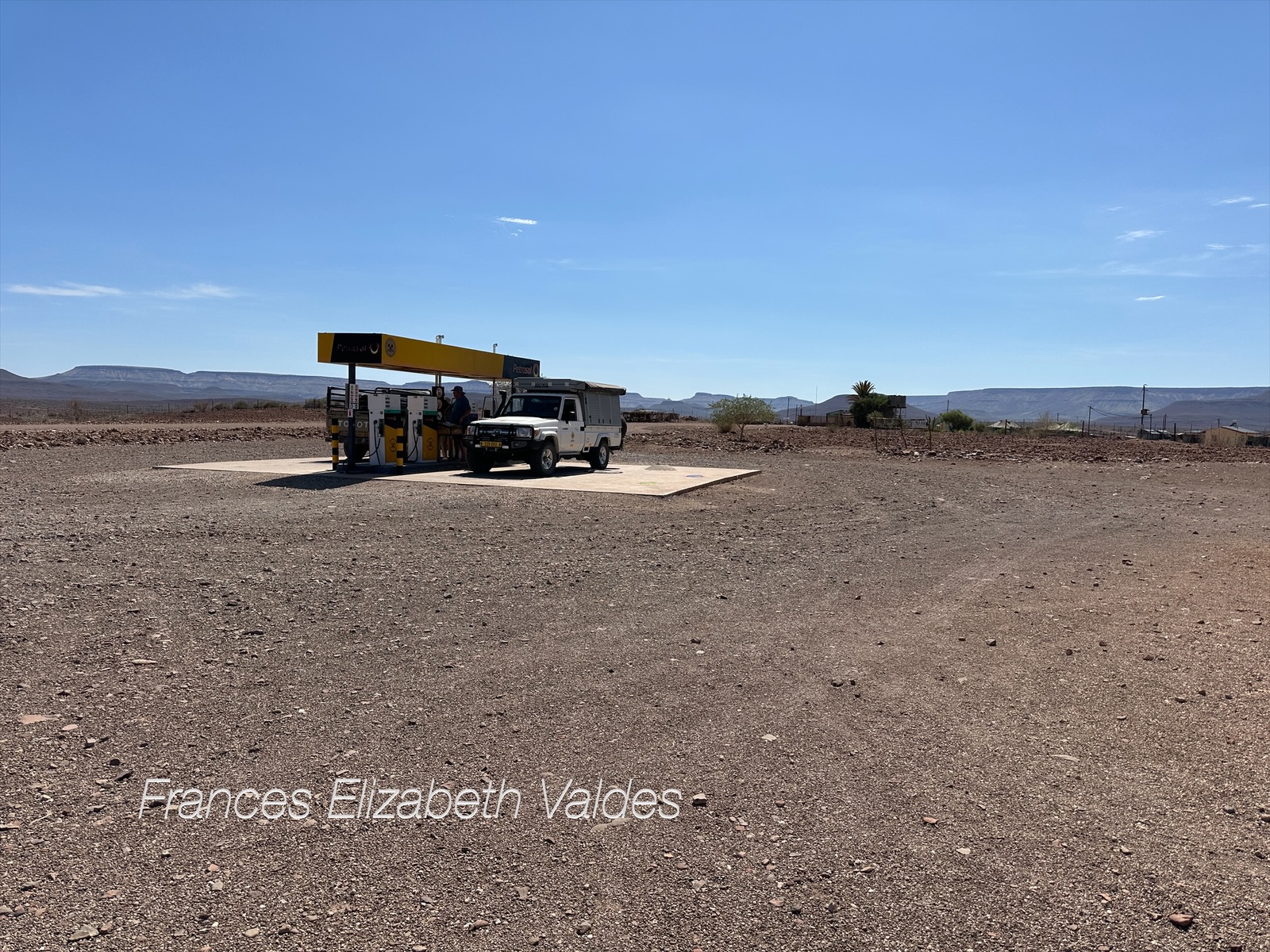
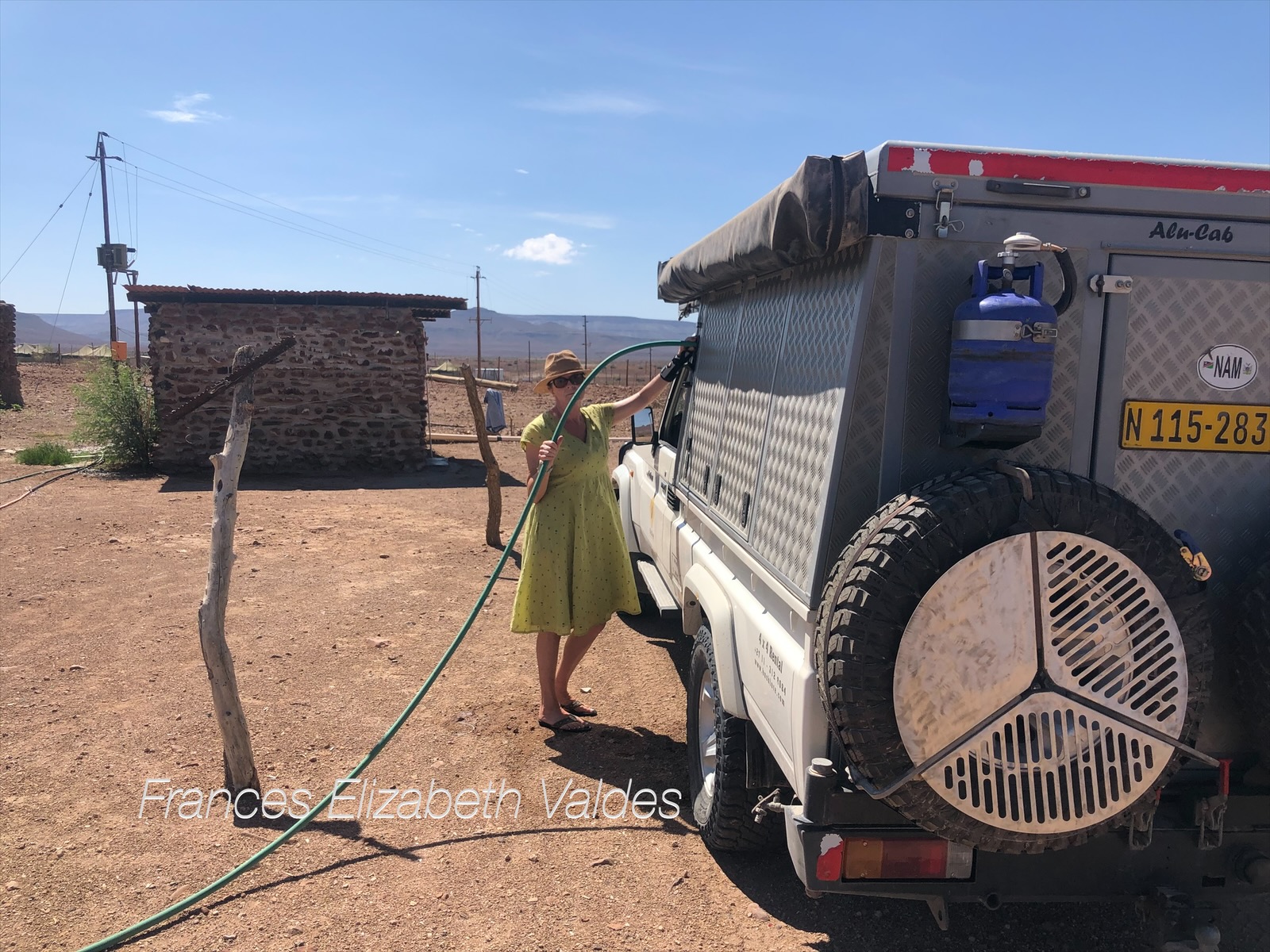
We filled up with fuel and water at the service station immediately after the veterinary fence. In Namibia people are so accommodating. The guy at the service station had no problem letting us fill our water tanks. In Europe, when we have tried to fill our own campervan we were mainly expected to pay. In this extremely poor country we were never asked for money to take their water, however, we usually ‘say thank you’ in the only way we know which is to give money. I hope that doesn’t corrupt their generosity.
We went to the Palmweg Lodge to get the permit we would need for the next part of our trip – through the Palmweg concession area. The price of the permit vastly increased from 2020, but it went to the community. The whole world has suffered from price rises after Covid, and the Ukraine war, so it was wrong to expect anything else.
The lodge was close to the rhino ranger’s village, and we wanted to meet with the person in charge to hand over the second-hand binoculars we had bought. There was a man sitting on a sofa as we bought the permit. He turned out to be one of the rangers. He said the person in charge was out, and phoned him.
It took some time for the head ranger to return, and during that time we chatted with the ranger at the lodge. He complained about the violence in Windhoek, and young people and their phones. This seems to be a world wide complaint from people over a certain age. The crime at Windhoek didn’t seem any worse than any city.
We heard that the chief ranger was back, so we drove to the ranger camp. It was here that Louise (the manager at Rhino Camp in the Ugab) had spent covid with her husband. It was a nice looking area of single story brick houses. The ranger’s office was in a two story building (unusual in this rural area), with a thatched roof in which birds were nesting, delightfully interrupting our conversation.
He was pleased with the binoculars. He told us they were managing some success in defeating rhino poaching. The rangers went into the wilderness for days at a time, looking for rhino spore and human footprints. As the area was uninhabited, a footprint raised suspicion of poachers. We were certainly impressed with the number of rangers we met on our travels. Nigel gave him the coordinates of the rhino we saw two days ago.
And then we headed away from people, into the Palmweg concession. A beautiful remote area we had visited in 2020. During the covid years we kept thinking about it.
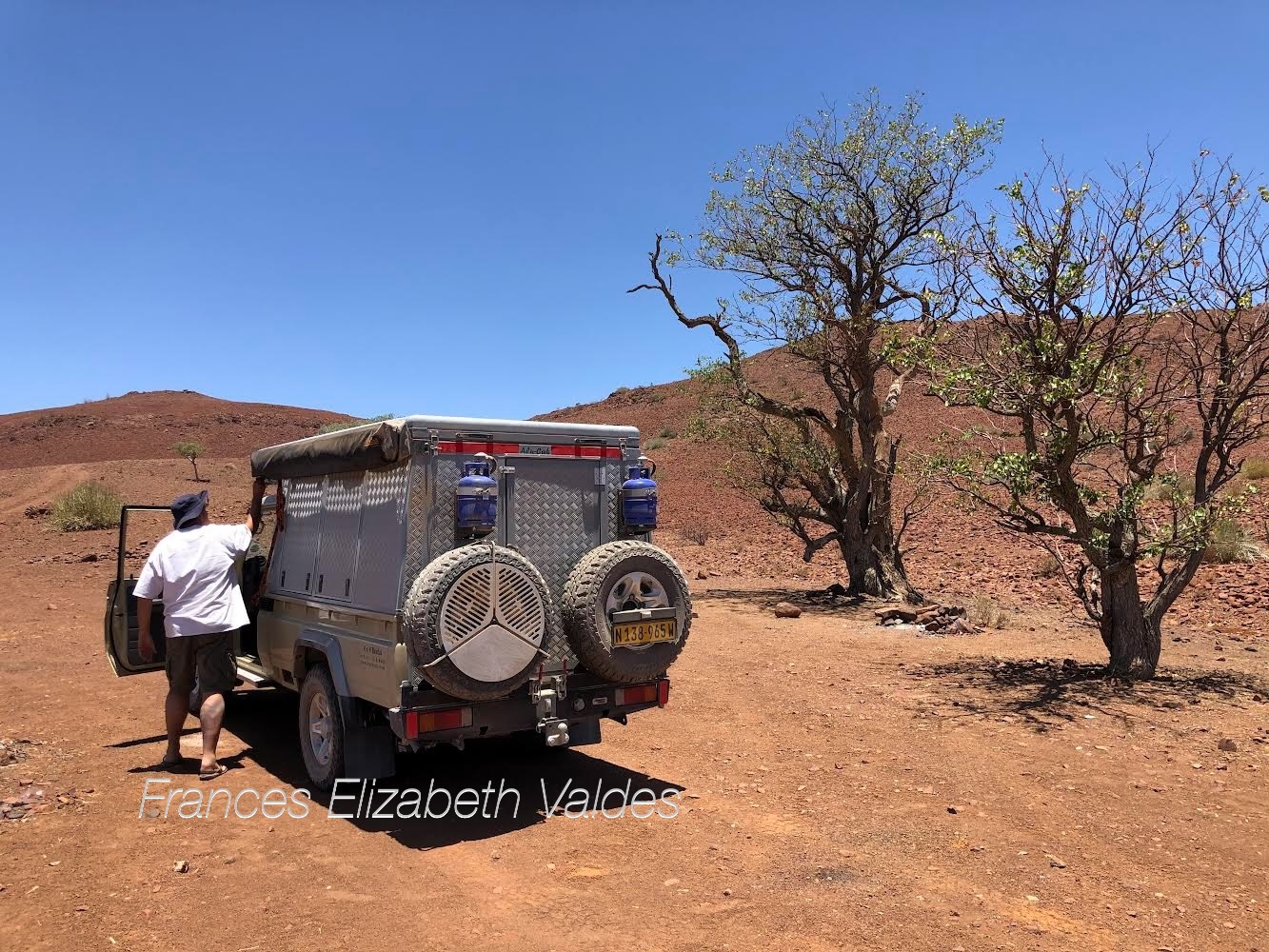
The area immediately around the gate is a day permit area, so occasionally you see visitors. We met a German professor showing a woman the area. They were both in their late 50’s or early 60’s. He had visited the area many times undertaking research, and talked of his experiences in the area, and in the Hoanib. He was fascinating. The woman sat swaddled in a scarf, hat and sunglasses looking ahead unsmiling. I wonder what she expected when the man suggested showing her Namibia.

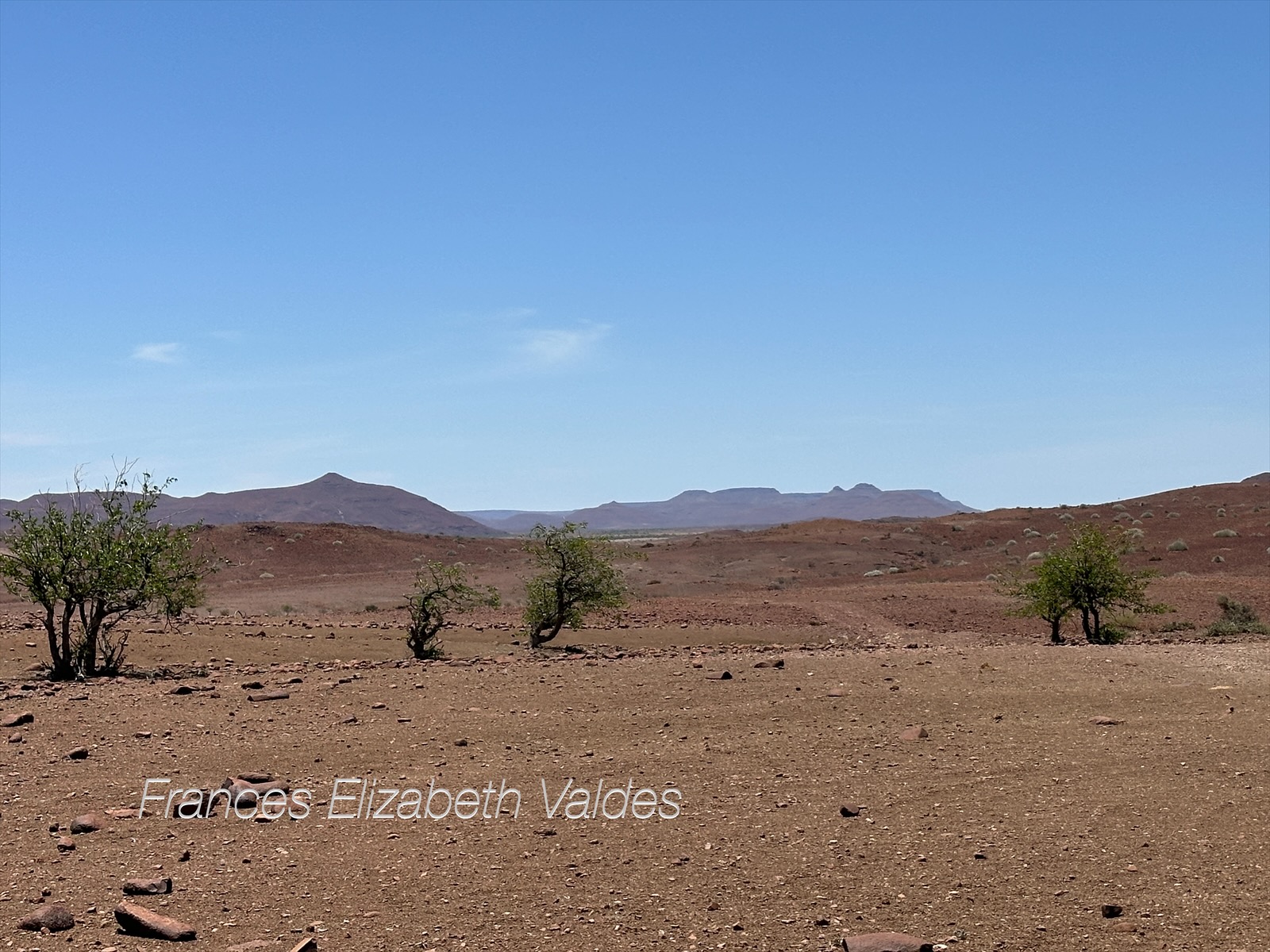
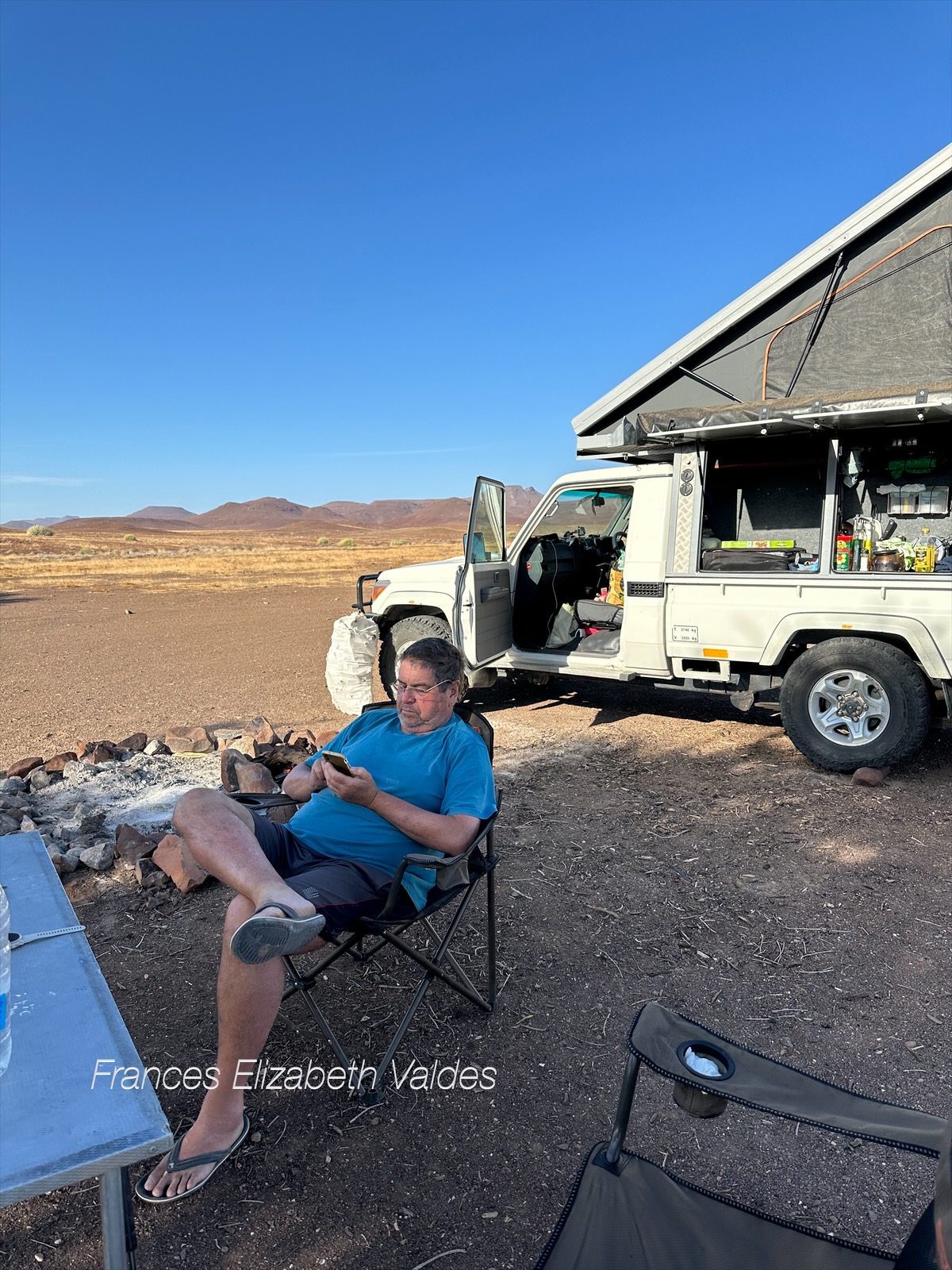
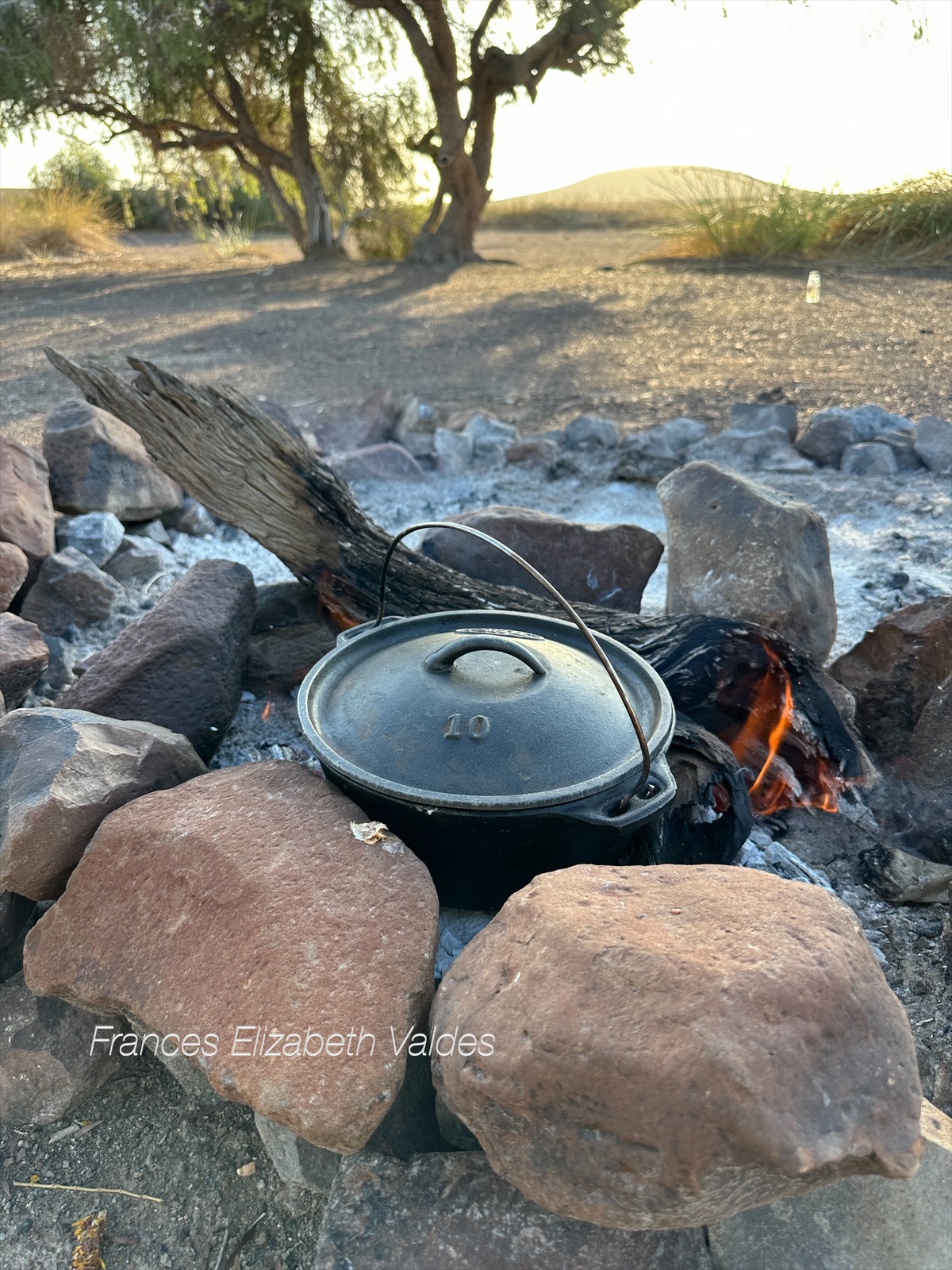
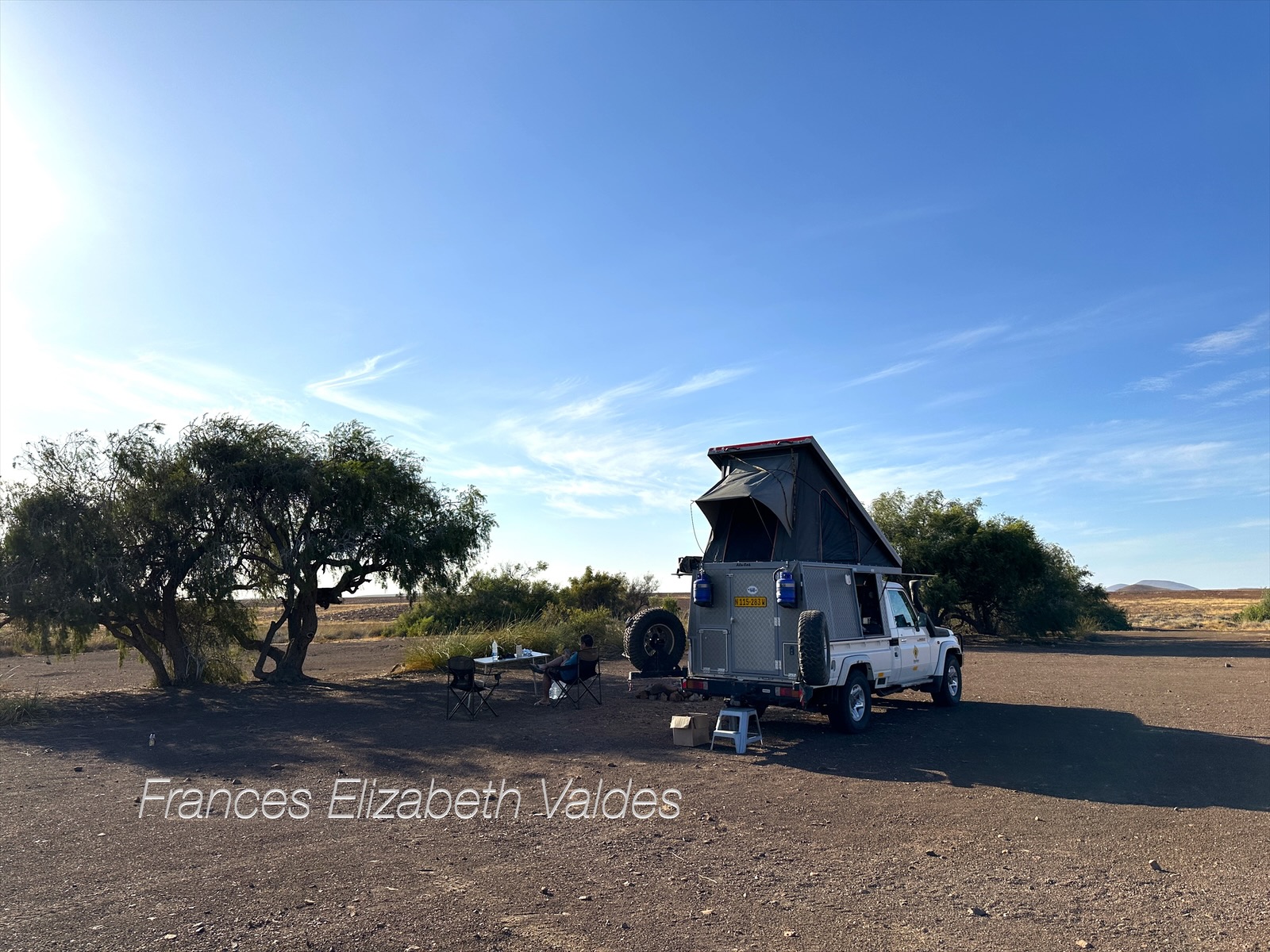
After lunch we left the day permit area knowing we were unlikely to see anyone else for a number of days. We wanted to spend the night at Xai Ais camp. The camps in these areas had no facilities, and I’m not really sure why we even aim for them other than, we know they will be flat and there will be no issue with us lighting a fire.

Xai Ais was close to a spring (called a fountain in these parts). You must never camp close to a waterholes. It is one of the few restrictions on wild camping. Namibia, like so many parts of Africa we have travelled to, has a very pragmatic attitude towards what is and isn’t forbidden. It means you know if something is forbidden, it is for a good reason. In the case of waterholes, you don’t want a night time meeting with any other mammals who like waterholes.
Xai Ais was just as we remembered it. It had a peace and tranquillity which haunted us2 . I’m not sure why this camp, of all the ones we stayed in 2020 had kept returning to me. I think it might have been because it was the first wild camp I had began to relax in, and therefore enjoy. I’m not a natural camper, and I’m a compulsive worrier. 2020 was my first experience of camping in Africa and on our first few camps I had been tense. By the time we had got to Xai Ais in 2020, I had stopped thinking I was going to be eaten by a lion, chewed by a hyena, or stung by scorpions. Of course, the danger hadn’t gone away, I was just thinking about it less.
 Desert Wonderers