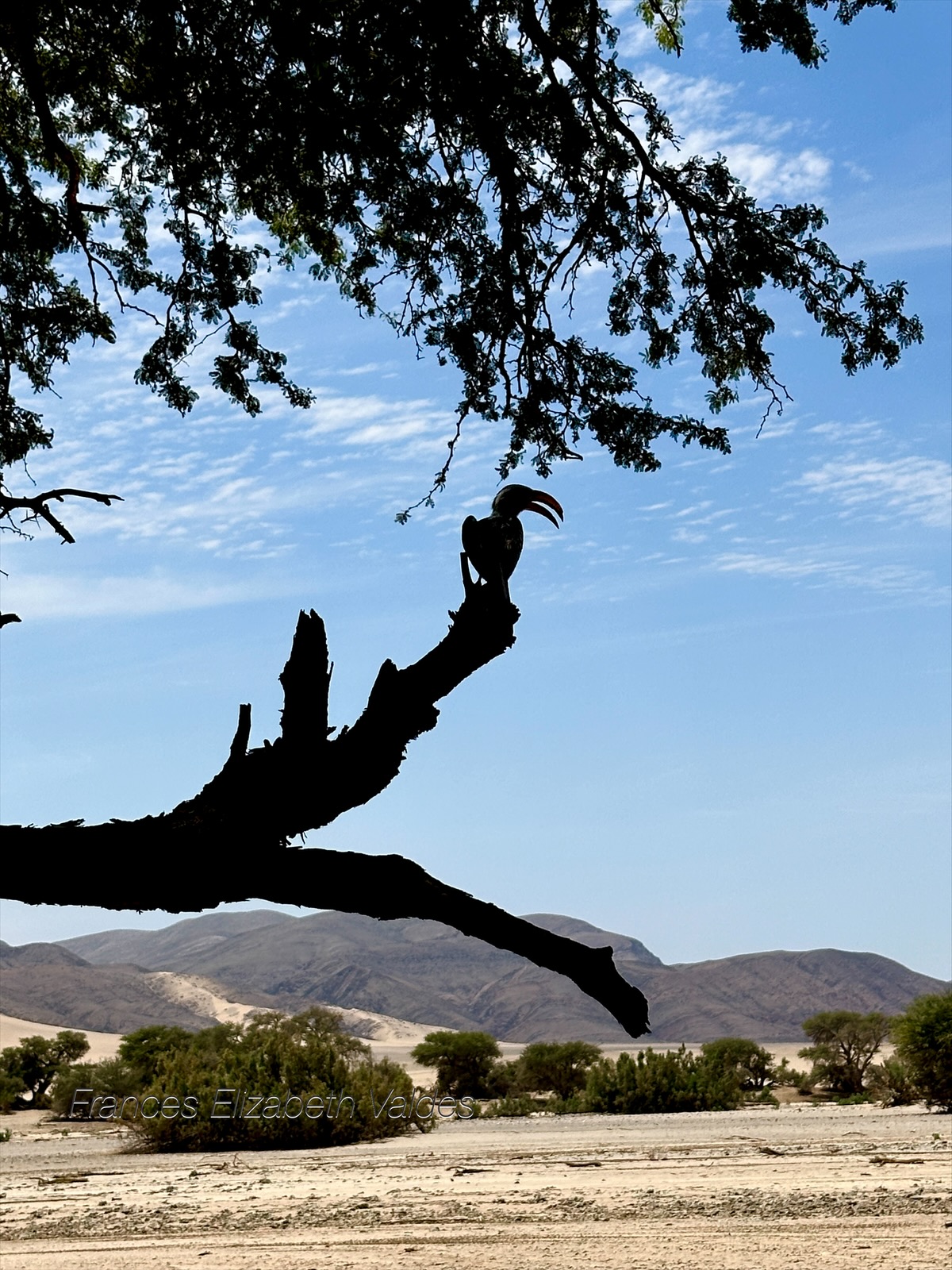
Purros
The camp owner at Purros was called Chips, apparently it started at school because of his passion for a certain kind of snack. We were having breakfast when Chips came to say he had a problem. They had no water, and he was worried he would have to close the campsite.
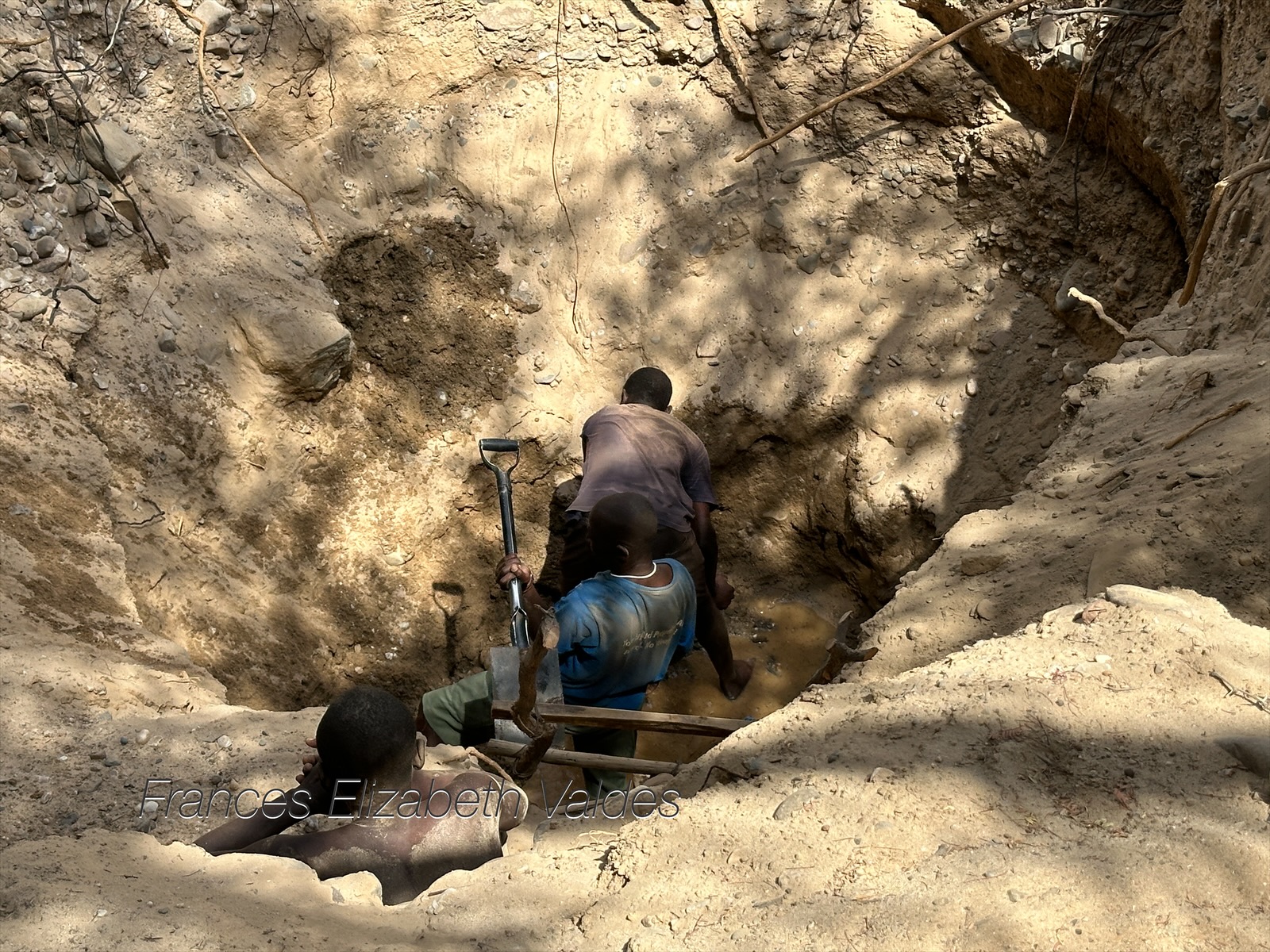
The camp had a large borehole, but because of the drought it needed to get deeper and deeper, and now the sandy sides were caving in., and it was full of sand. He needed to get labourers from Purros to dig it out, but didn’t have the money. We went with him to look at the borehole and sure enough it was a sorry sight.
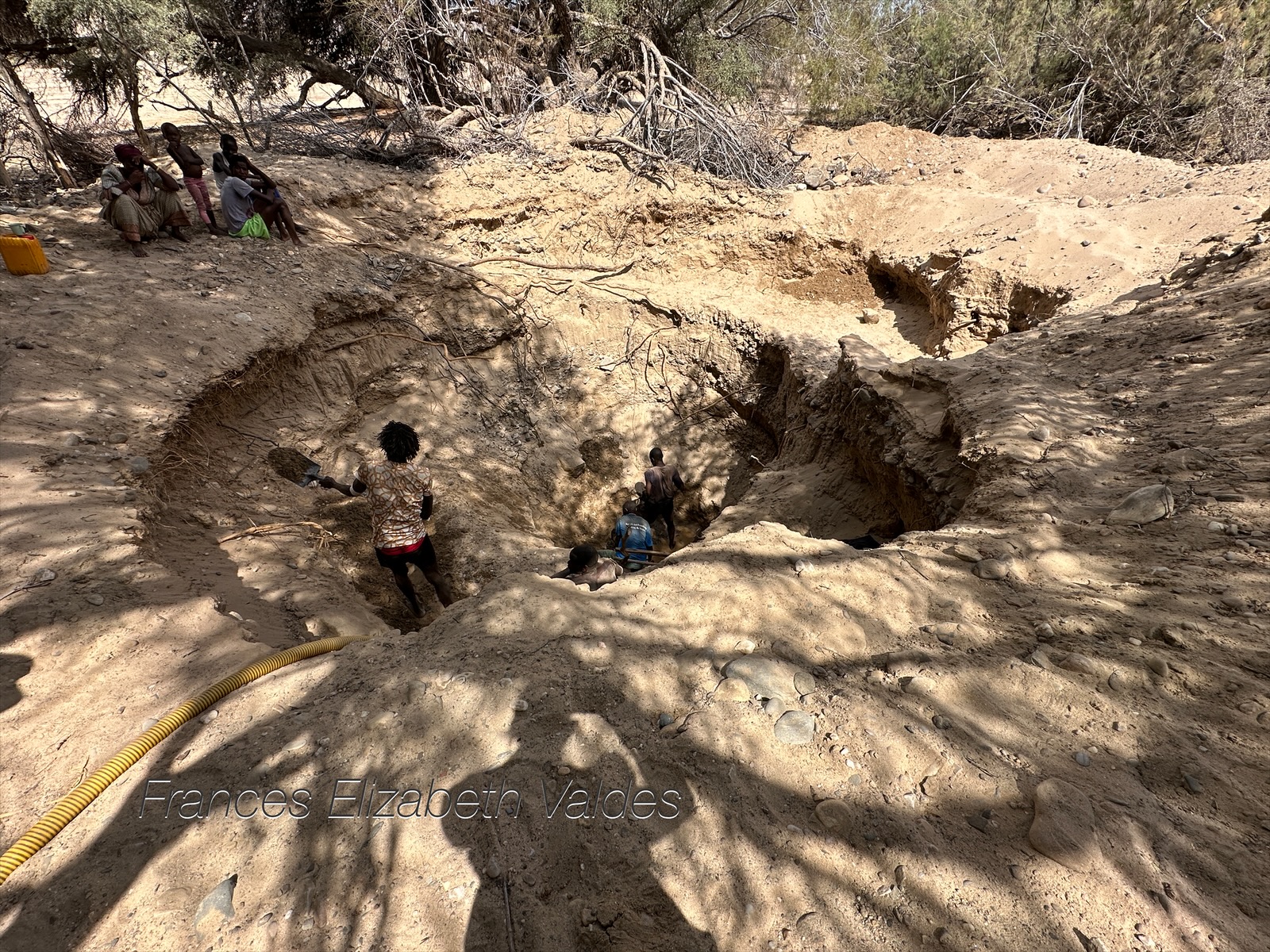
It was sad that lack of money for something so basic as digging out the borehole would close the camp, and deprive Chips and his family of an income. Back home we put money into a savings account each month, to give to a charity as a lump sum. Usually, this means bringing it to Namibia to give to communities and schools, but in this case, we felt for Chips and his family. He came to us not to ask for money, but to tell us we may not be able to stay another night because there was no water.
We gave him some of our charity budget to employ people for the day. We felt this had a knock on effect of giving, albeit only one day’s employment to some locals. We left Chips making arrangements and went into Purros.
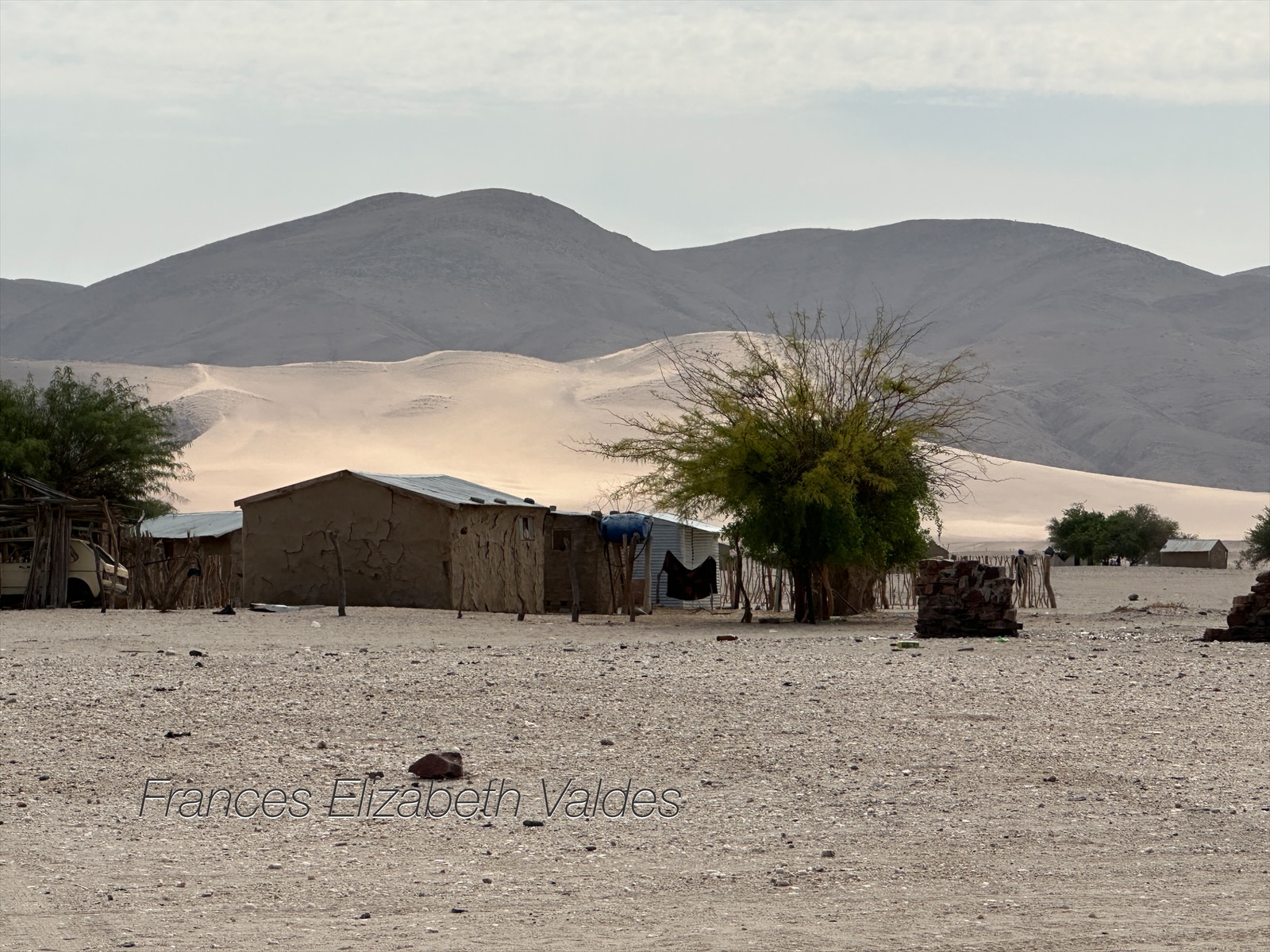
Purros seemed particularly run down from 2020. We headed for the school to make a donation, and found a local teacher.
We were looking for the headmaster who we feel is the safest person to give a donation to. It was the day of President Hage Geingob’s funeral and a national holiday. The headmaster had gone with some of the pupils to the bright light of Sesfontein. President Geingob seemed very well respected by everyone we met no matter their ethnic group.
We like to make donations in front of lots of witnesses. I think corruption in Namibia is fairly low, and they are extremely aware of it, and its reported in the newspapers when it happens. I think the fact that it makes it so often into the newspapers, indicates that it’s not a rampant as they think. In other countries we have visited it has been much more obvious, with police stopping and asking us for ‘fines’ or ‘taxes’. I won’t even go into the corruption exposed in Britain, especially during the Covid crisis!
The school was mostly empty. A groundsman roused the only teacher still at the school. She arrived to speak to us, clearly looking as if she’d just been woken up. We apologised for waking her up, when she must have really needed the down time.
We chatted to the school teacher for a while, and she explained where everyone was and said they would be back tomorrow. We mentioned the lack of water at the campsite, and straight away she said we were welcome to fill our camper’s water tank at the school. Yet again she had shown how generous people with so little are.
The village had been shown on the Tracks4Africa app as having fuel. We were beginning to get anxious that we didn’t have enough. Well the anxiety was more mine than Nigel’s because I’m a worrier. In 2020 they had a large drum with diesel in it. The owner of the drum poured diesel into a container to pour into our car. Nigel was very careful that the container was clean, so we didn’t introduce dirt to the fuel tank.
Now we were told that their drums are empty because the tankers couldn’t get through. If we couldn’t get fuel by the following day we would have to make a 250km round trip to the nearest fuel station.
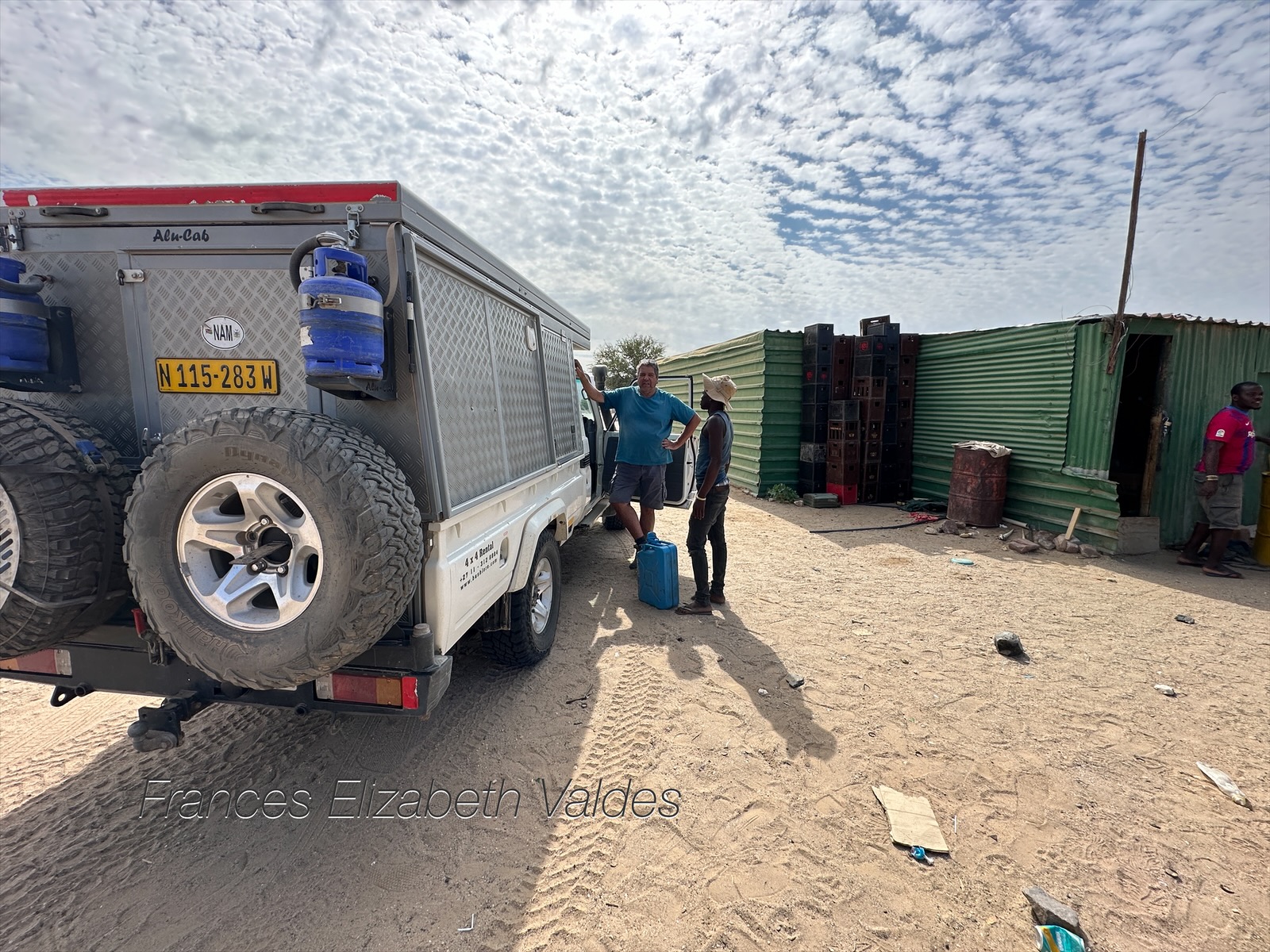
We found some guys who said they would sell us some diesel. Nigel said he didn’t want to take all of it, as the village would need some. After saying that, they went overboard to give us more.
It wasn’t cheap but again the money went into the community. We didn’t get a great deal of fuel but it was enough to let us spend more time in this area.
One of the young men who had the diesel, claimed to be a pastor and wanted to build a church building. He said the village council only supported another church in the village, even though both he and the other church’s priest were on the village council. He wanted us to give money for the foundations of his church. He was quite well built so clearly had work of some sort.
We began to think that giving money to the village councils might not be the good idea we had thought it was. This was the second time we heard people complaining it wasn’t allocated as they wanted. We decided we would only give to schools from then on.
We drove up a hill on the edge of the plains towards an awful lodge. It was hideous, standing out like a sore thumb against the mountains above Purros. I cannot imagine how the architect got permission to build it. Usually the lodges in Namibia are beautifully built to blend in with the surroundings. The same could not be said of this lodge. We were hoping the lodge may have some spare fuel to sell us.
The lodge was empty apart from builders renovating it. There was a South African in charge of the renovations. We had seen one of his trucks earlier, pulling a water bowser which subsequently got stuck in the sandy river bed in front of our camp. These trucks were constantly driving to and fro while we were in camp.
The South African said the camp had been owned by two Italian women but they had sold out to the South African safari company. He said people came to the lodge for the same isolation we sought. I suspect they were also lured by being sold the chance to see desert adapted elephants.
The whole area of Purros was littered with handmade signs offering elephant trips. Except, we later learned from some elephant conservation people we met, that a desert elephant had come up to Purros, possibly to look for water. It upset the villagers, and the wildlife office had shot it. I can’t imagine what that does to an elephant family. Elephants have social structures, and show signs of grief.
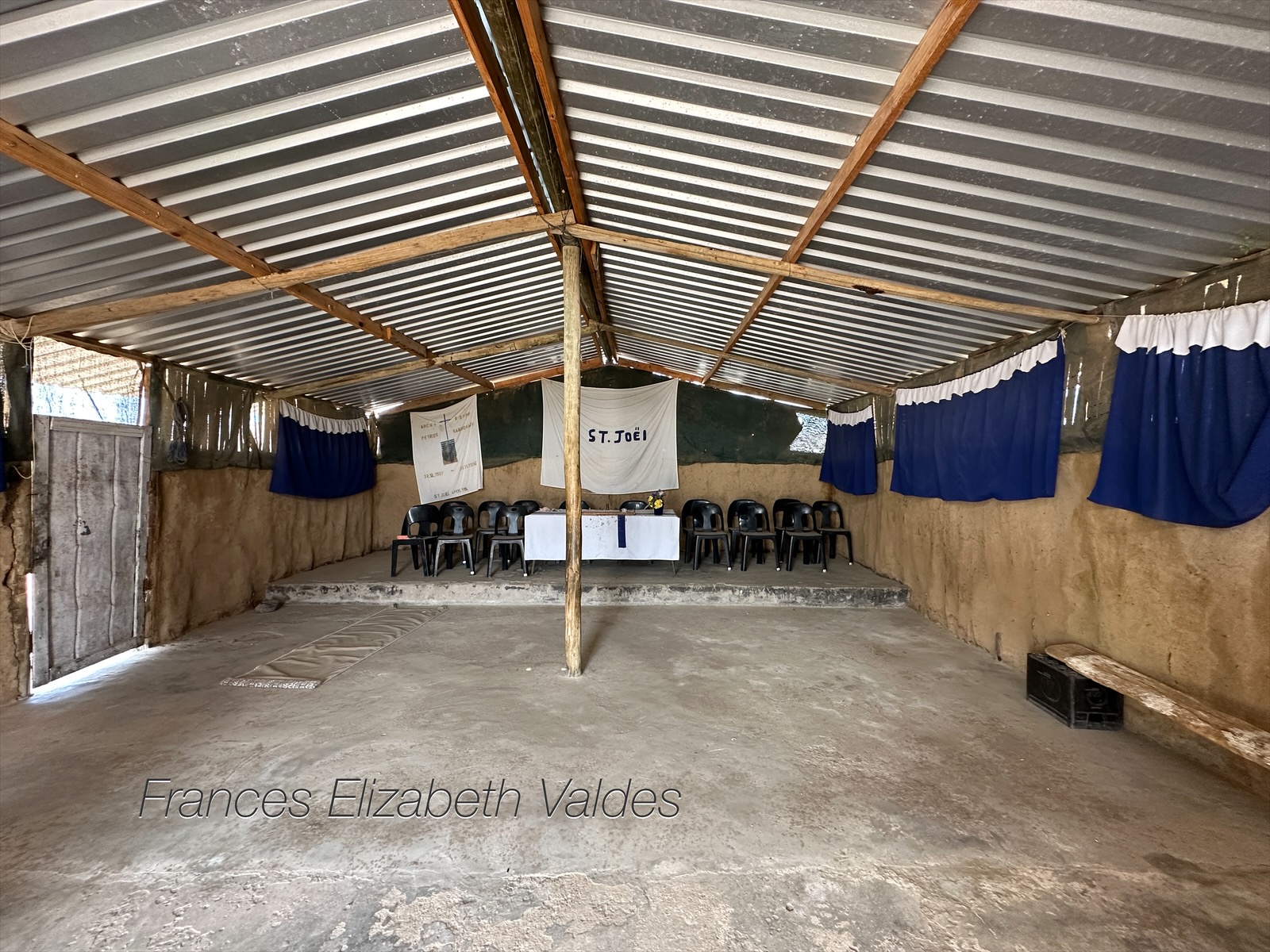
The lodge said they needed all their fuel so we returned to Purros. I went to have a look around the church building. The one our fuel giver felt was favoured by the village council. It was empty even though it was Sunday. It was small and rather bare. It seemed to be affiliate with an American church.
We returned to the campsite where six people were now digging the bore hole out. Apparently the going rate for digging the borehole in that heat, on a national holiday for the President’s funeral, was £4 (around 5 euro) a person! The price of things here is about the same as the UK, so £4 doesn’t go far. The staple meal in the villages is maize meal porridge flavoured with packet soups.
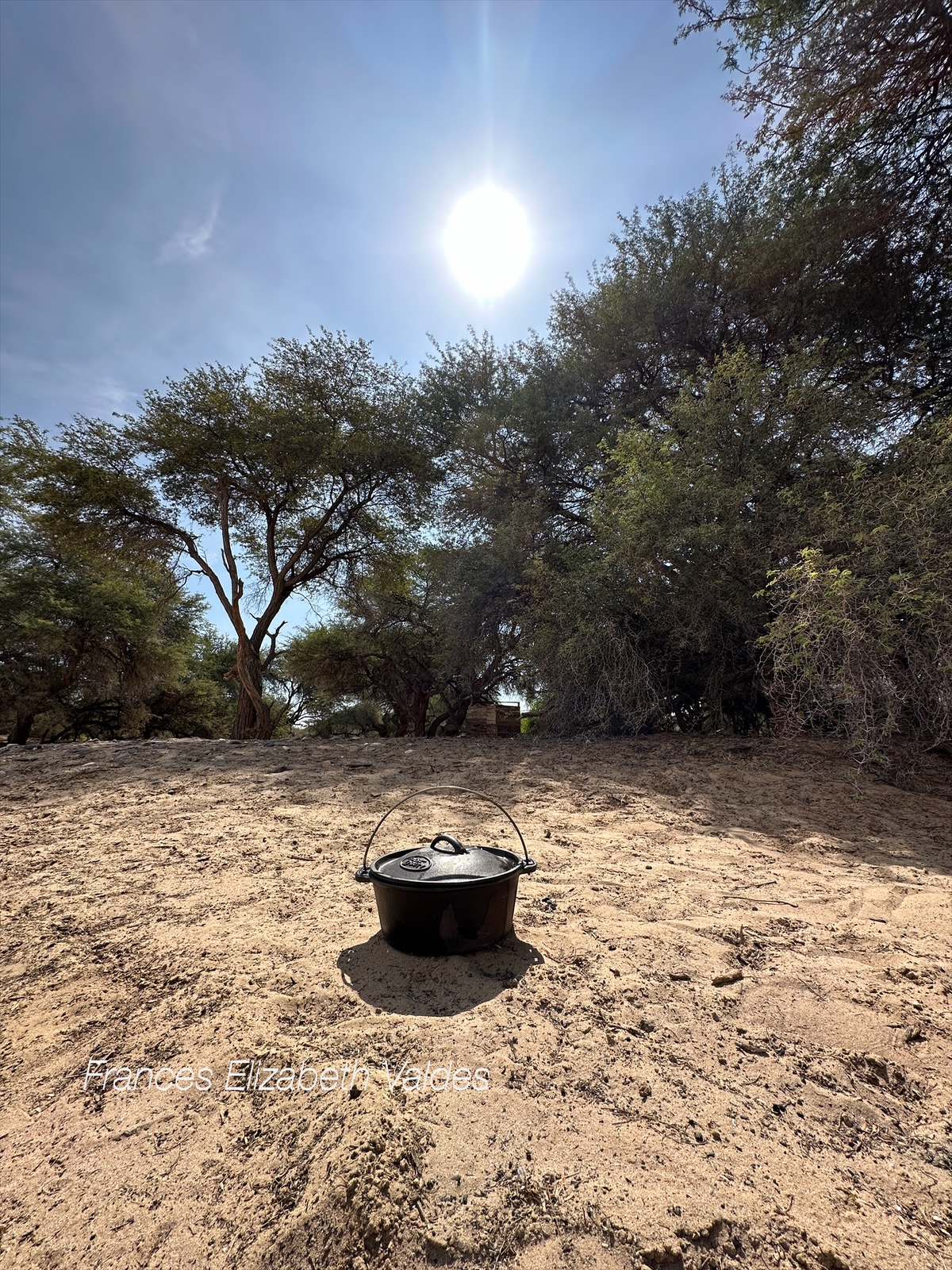
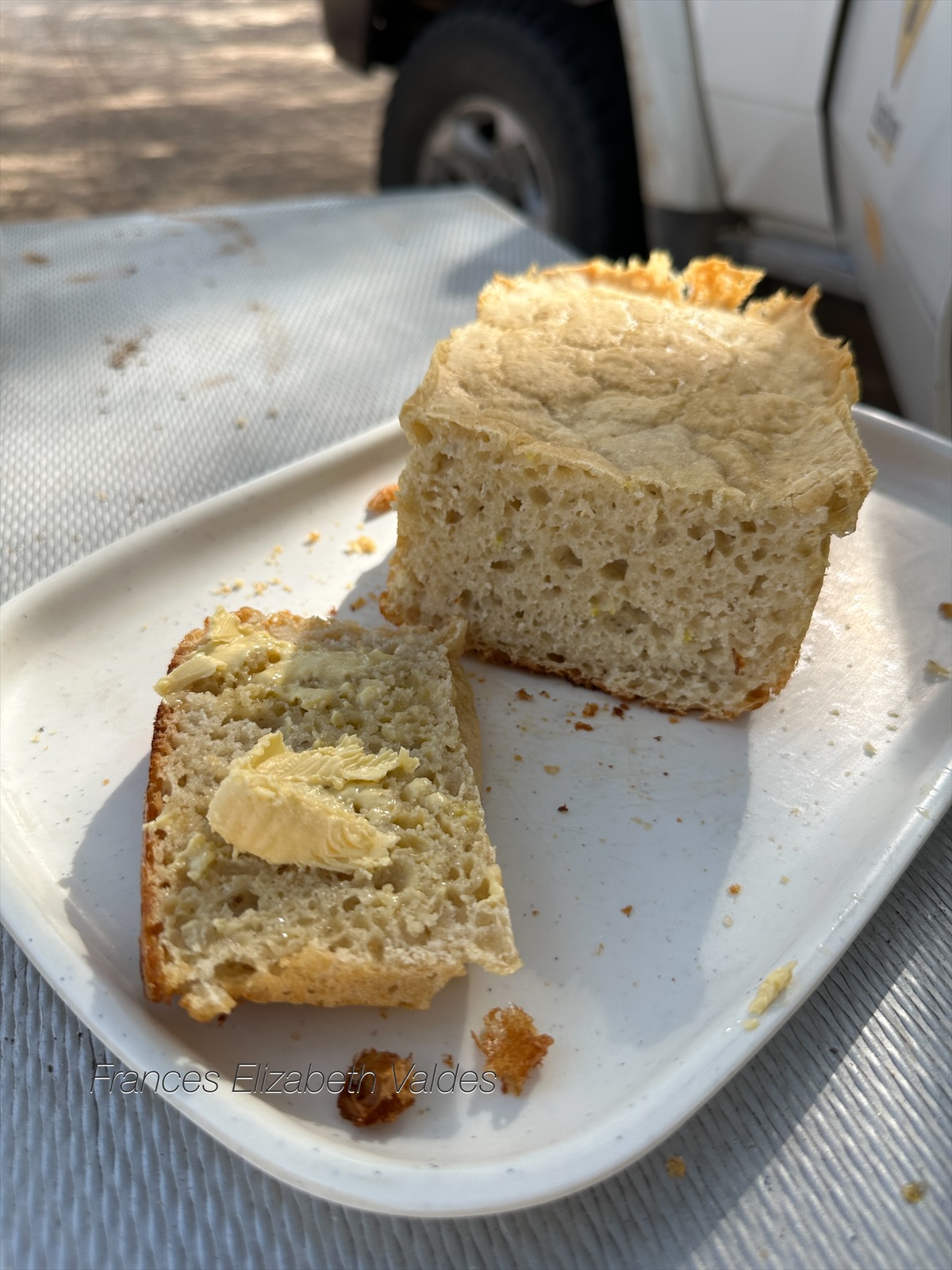
It was early when we were in camp, and unusually for us we spent the afternoon chilling out. It was really rather nice, we were overlooking the dry river bed, with a view of the distant mountains. The campsite was in a lovely situation. We were curious about how the borehole dig was going and went to see. By the end of the day the water table had been reached, and Chips looked so happy.
 Desert Wonderers