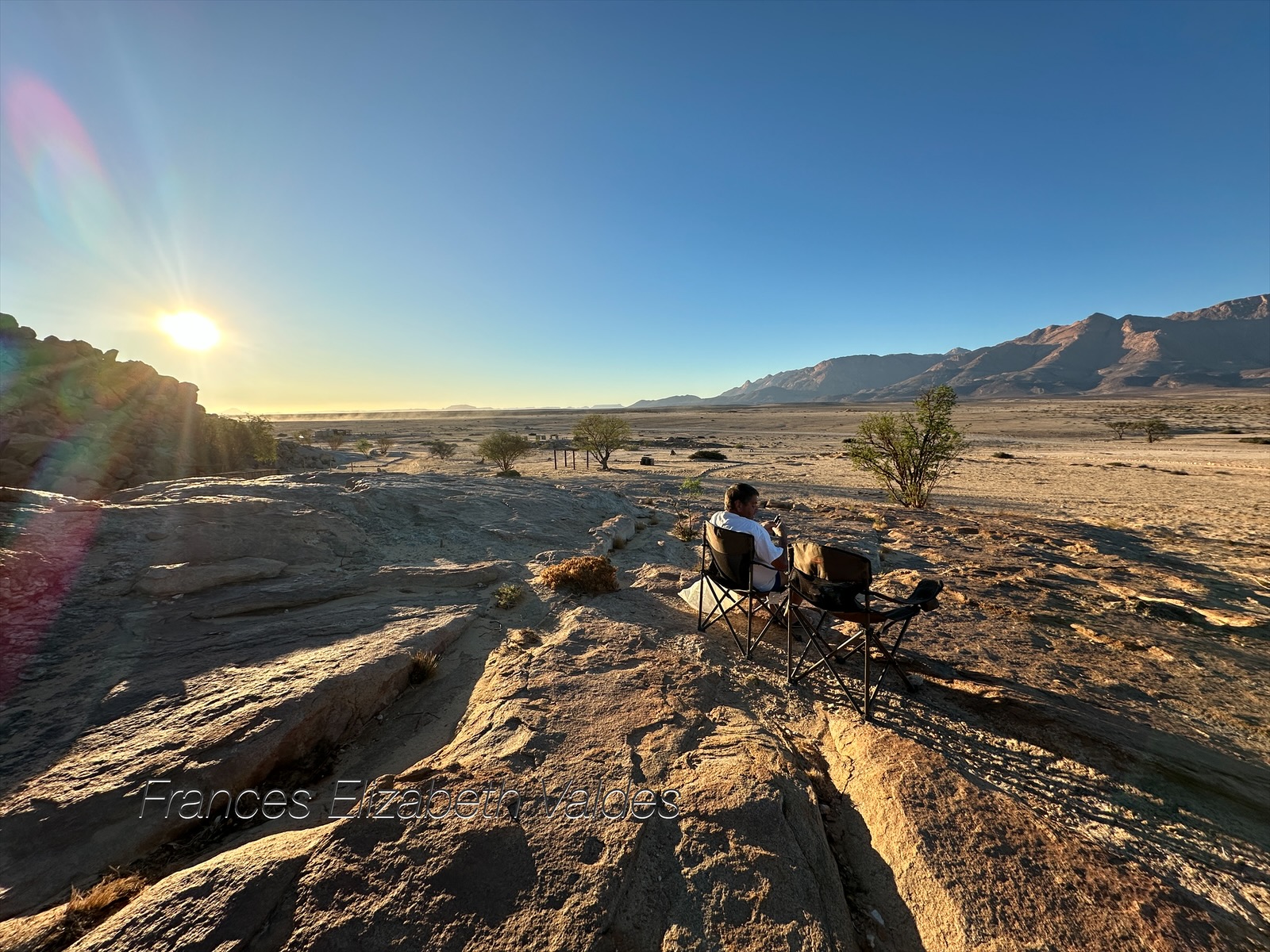
I still think Rhino Camp is one of the most beautiful bush camps we have stayed in, but as we had breakfast the water trucks for the mine exploration arrived, a few hundred metres from our camping pitch. They are draining the water from the river bed.
We packed up and went to the reception area where Louise was sitting. She looked sad. We told her how sorry we were.
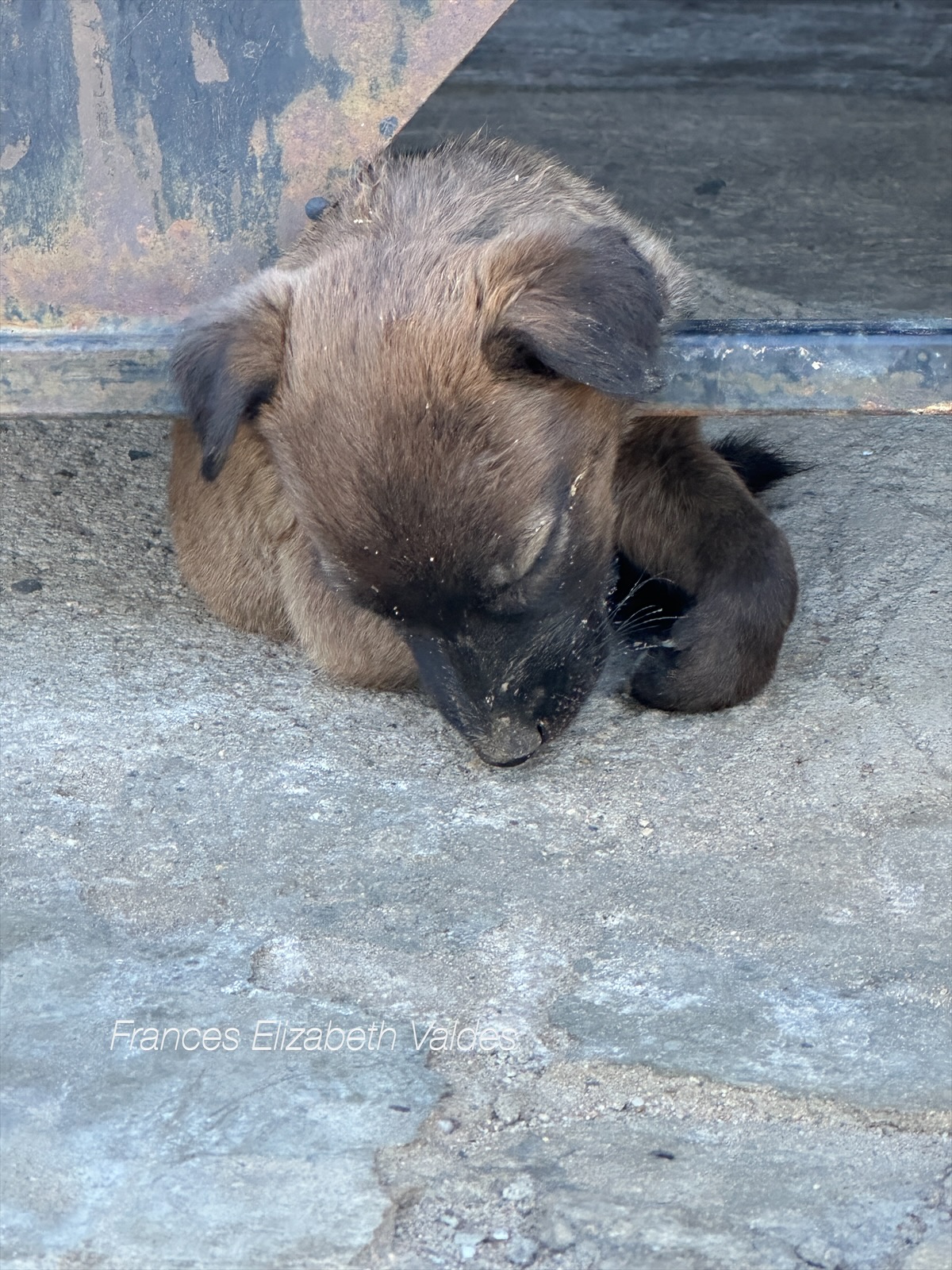
She had a couple of rather lovely puppies. I think that dogs give an early warning of lions – well provided they aren’t eaten as her previous one was!
Before we left, we went slightly up the side valley towards the copper exploration. It was so sad to see what they were doing to such an untouched wilderness area. Then we drove off, leaving Louise and her son.
On the way from the Rhino Camp to Brandberg there used to be an abandoned mine called Brandberg West Mine. We had explored the ghost village and mine buildings in 2020. We heard they were looking to re-open the mine, and as we passed the little valley it was in, we crept up to see what was happening. Sure enough it was full of activity.
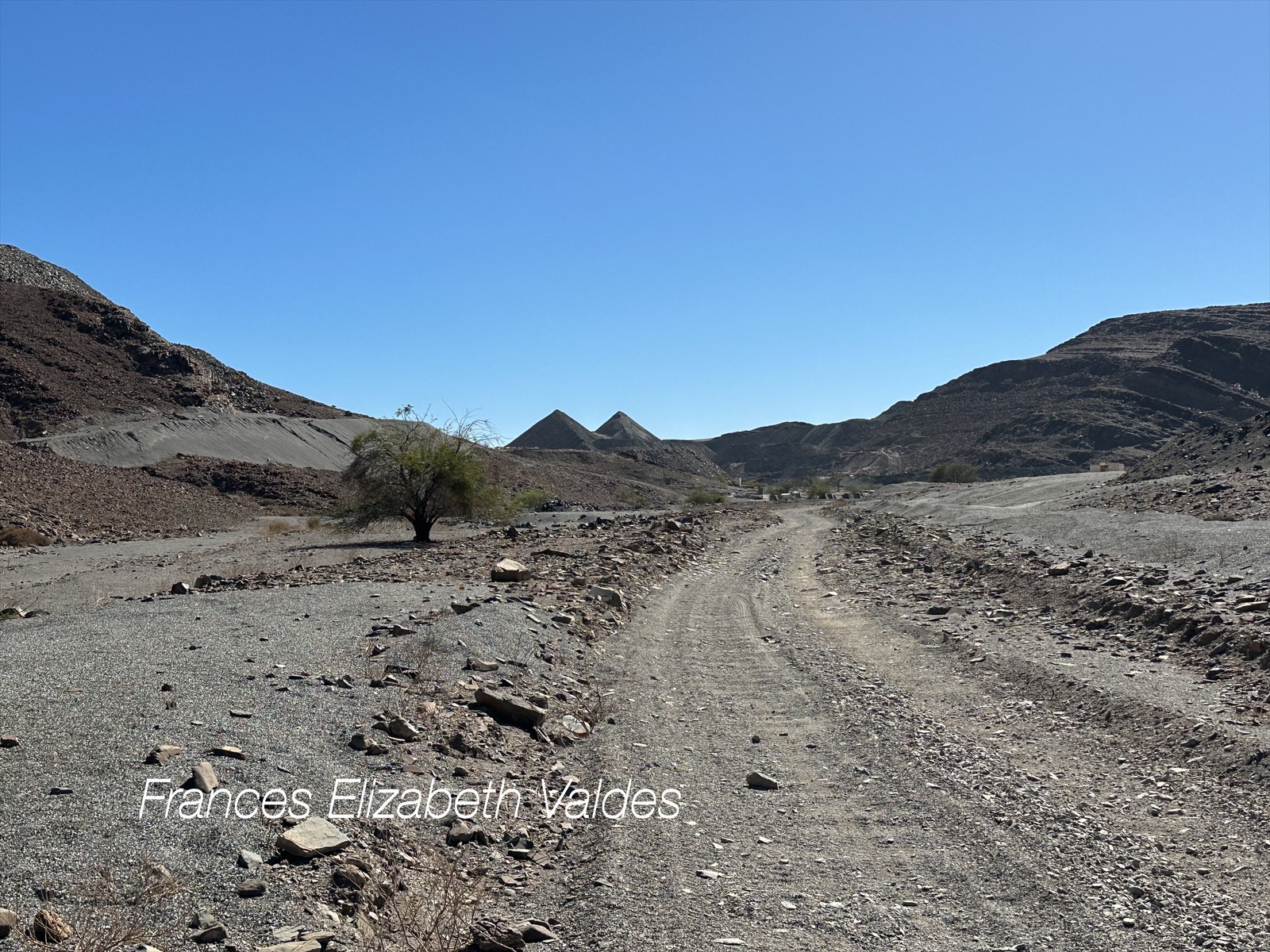
Once we passed Brandberg West Mine, we realised how much the track had improved from previous years. By the time we emerged onto the gravel track at the base of Brandberg massif we could see that it had been recently, and frequently, graded. We were passed by big trucks going to and from the mine exploration areas.
We decided to leave this main road and head towards the Gogobosis mountains. This area is rich in crystals, and we knew that there were some one and two person crystal diggers, usually referred to as ‘small miners’ in the vicinity.
As we got to the mountain, we stopped to admire the view and in the distance toward the Skeleton coast end of the Ugab, we saw what looked like large greenhouses. This was a green hydrogen plant being built with tomato greenhouses as some kind of by-product. I’m sure there is a connection, but I don’t know why you would grow tomatoes next to a green hydrogen plant. The green hydrogen plant made the Namibian newspapers, and they were very excited about its development for the economy of Namibia.
It is so easy to think there is nothing out here. We had spent nearly four weeks immersing ourselves in the emptiness, interested in the lives surviving against all odds. Now these developments were edging out the wilderness. The government does seem appreciative of the value of the desert and its unique life, but if you are a poor nation and someone is offering you large sums for just a bit of your wilderness, who can resist. I hope it does improve the living standards of the people in this area who have so little.
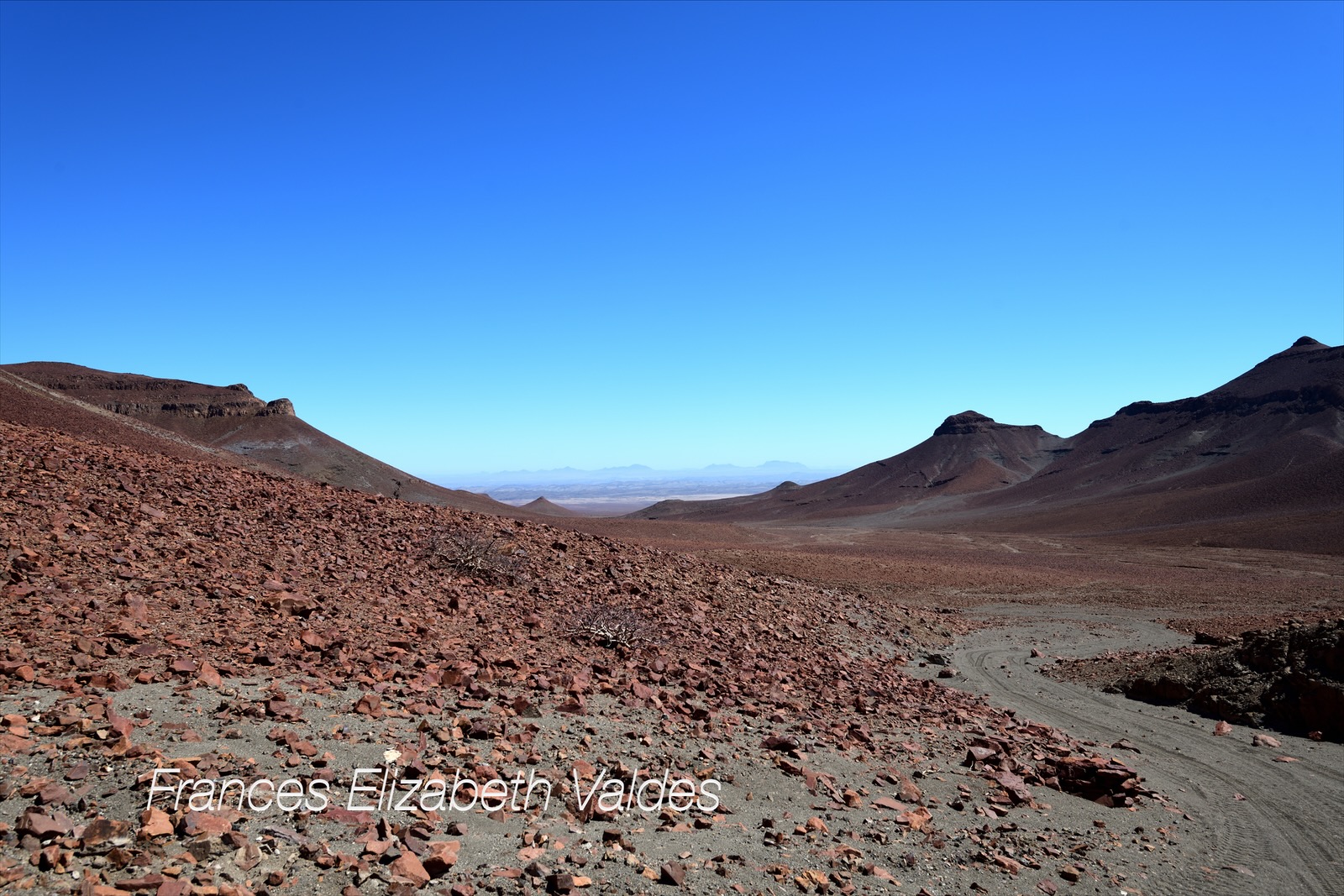
The Gogobosis mountains are beautiful, but at nearly every turn there were a few shacks and miners. There were small signs on the side of the track staking out claims. I had understood the government was trying to preserve this area, but the signs of crystal miners were everywhere. I believe (well in 2020 we were told) that they can’t use explosives, so they dig with tools. It is fair to say that most of the mines were hidden in valleys, not seen from the main tourist track around the base of Brandberg.
We drove on having lunch near to our penultimate campsite in 2020. We drove down the Messum river for a bit and around the base of Brandberg to Elephant Rock Campsite. This was our first campsite this year, and the last one we stayed at in 2020. We weren’t sorry the trip was coming to an end because we were tired. But we were sorry to be leaving the desert.
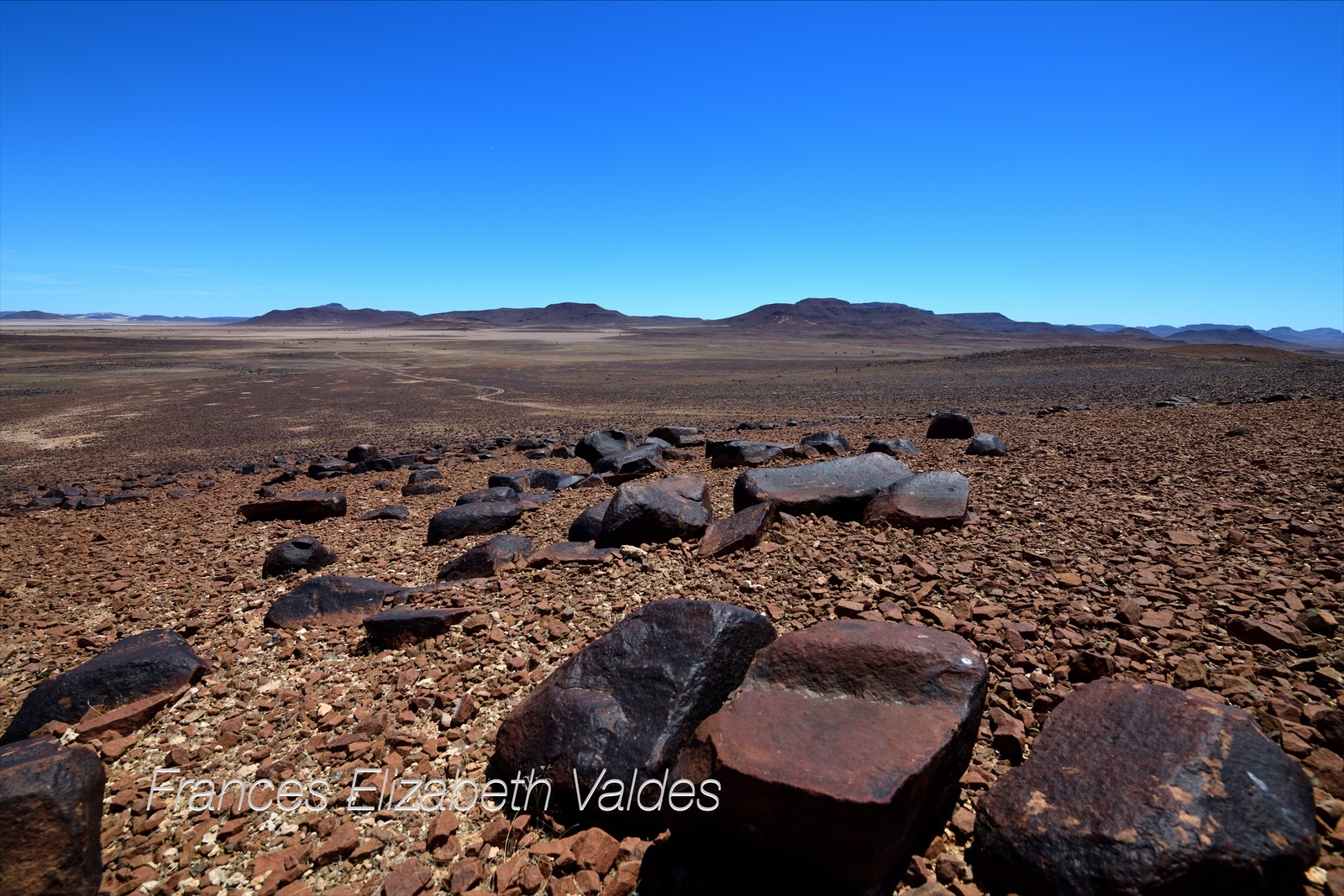
We were sad. Not only was our holiday coming to an end, but we were sad to see how this area had changed so much. When we first visited Namibia in 2003, this area seemed so remote to us. Now it seemed positively populated. There was another camper at Elephant Rock campsite, and in the distance the trucks to Brandberg West mine had been rumbling since sunrise.
The Uis mine, and Brandberg West mines were again profitable, there was exploration for copper among other minerals. There was the green hydrogen project and trucks going up and down the Brandberg road. Uis was thriving, which was of course good for Uis.
We feel very privileged to have experienced what we have, when we have. Namibia is changing fast, and it is wrong of us to want to keep it the same, so a few privileged people like us can enjoy it. There were signs of mineral exploration everywhere between Rhino Camp and Uis. This was new, and wasn’t present when we were here four years ago.
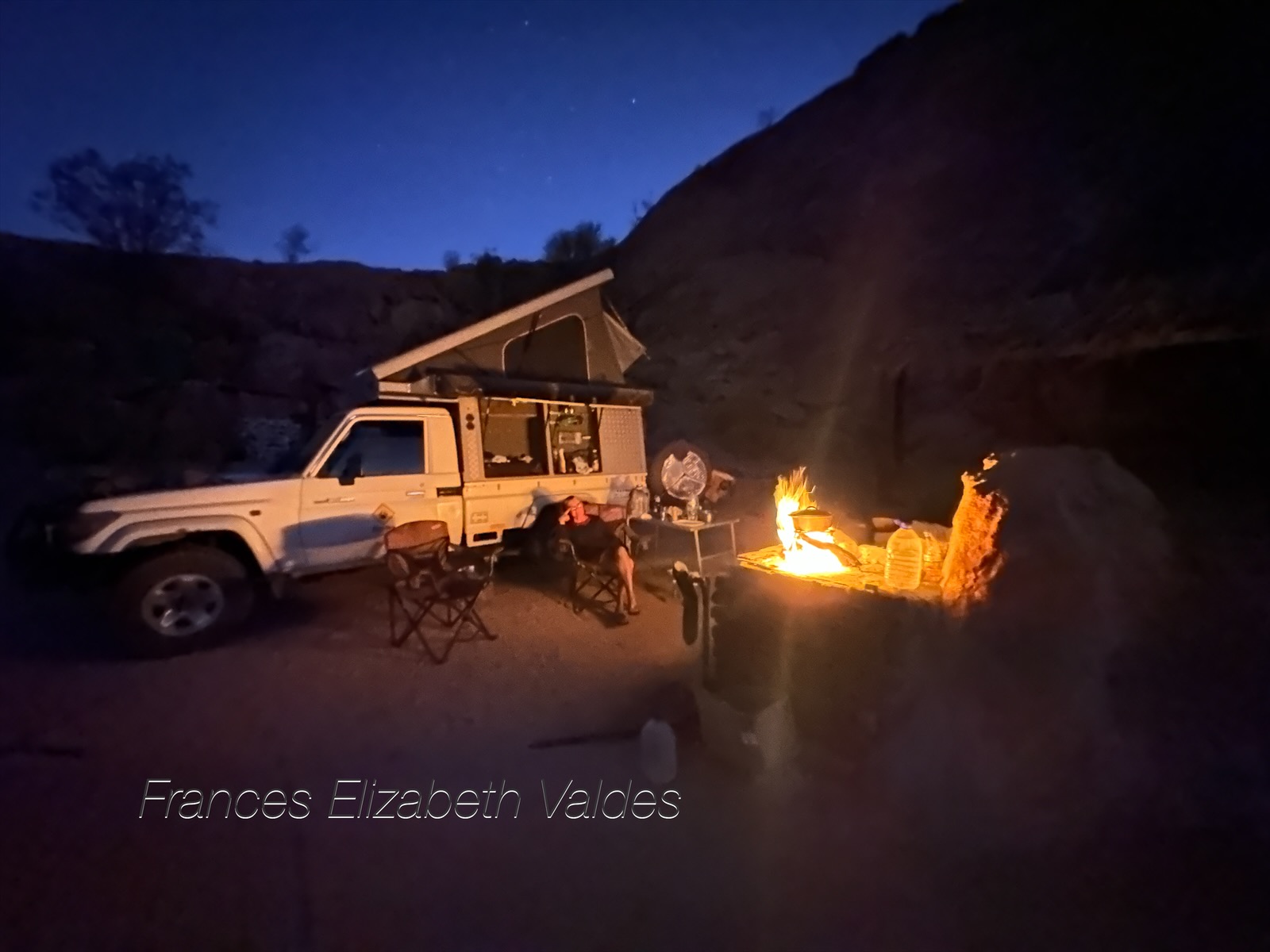
The last camping morning emphasised that we were now in the land populated by people. Nigel was unusually, and fortunately, first to bed. In the morning he told me he had seen two cockroaches on our bed. Thankfully didn’t tell me.
Cockroaches are only present where people are.
 Desert Wonderers