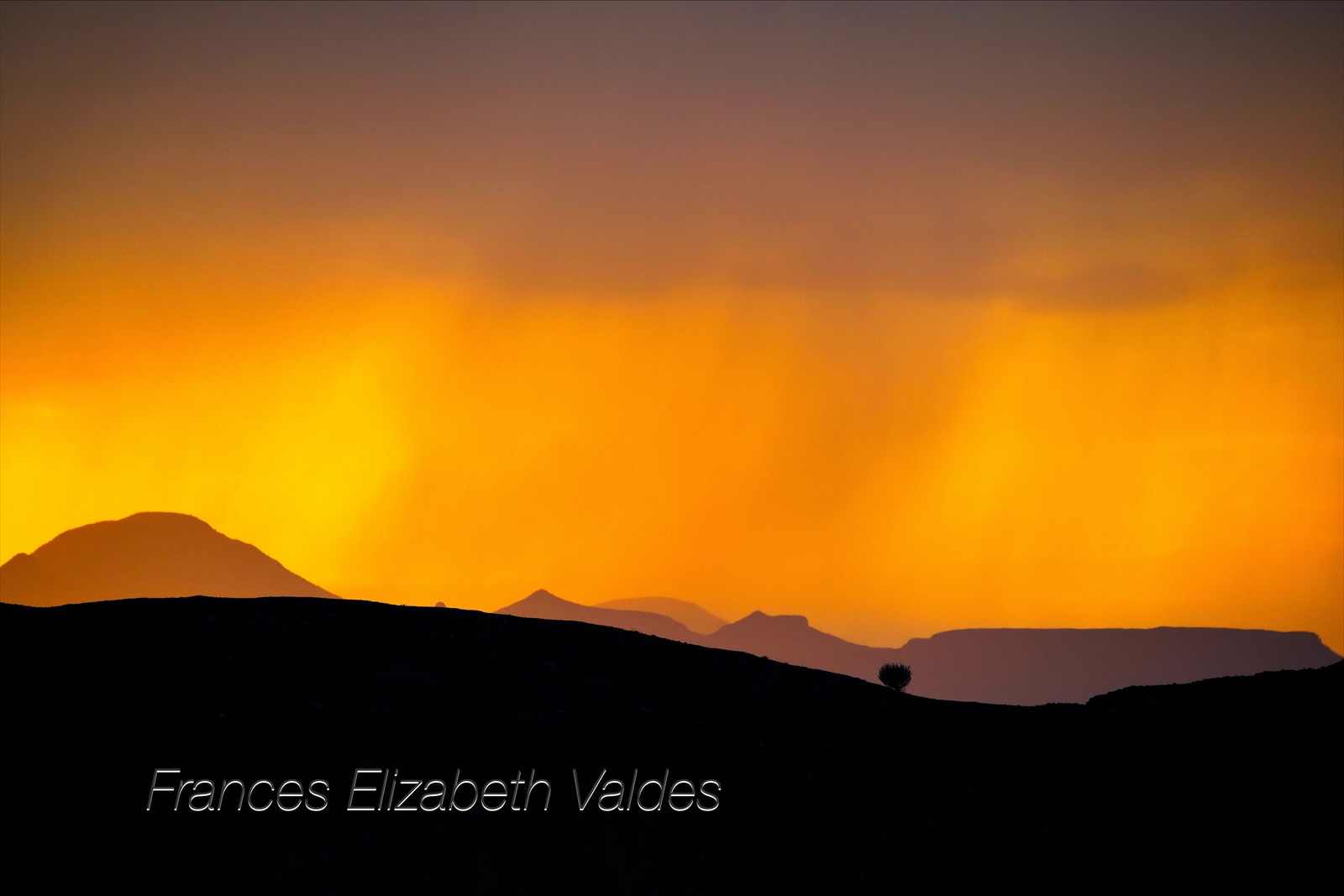
Desolation Valley – Bersig
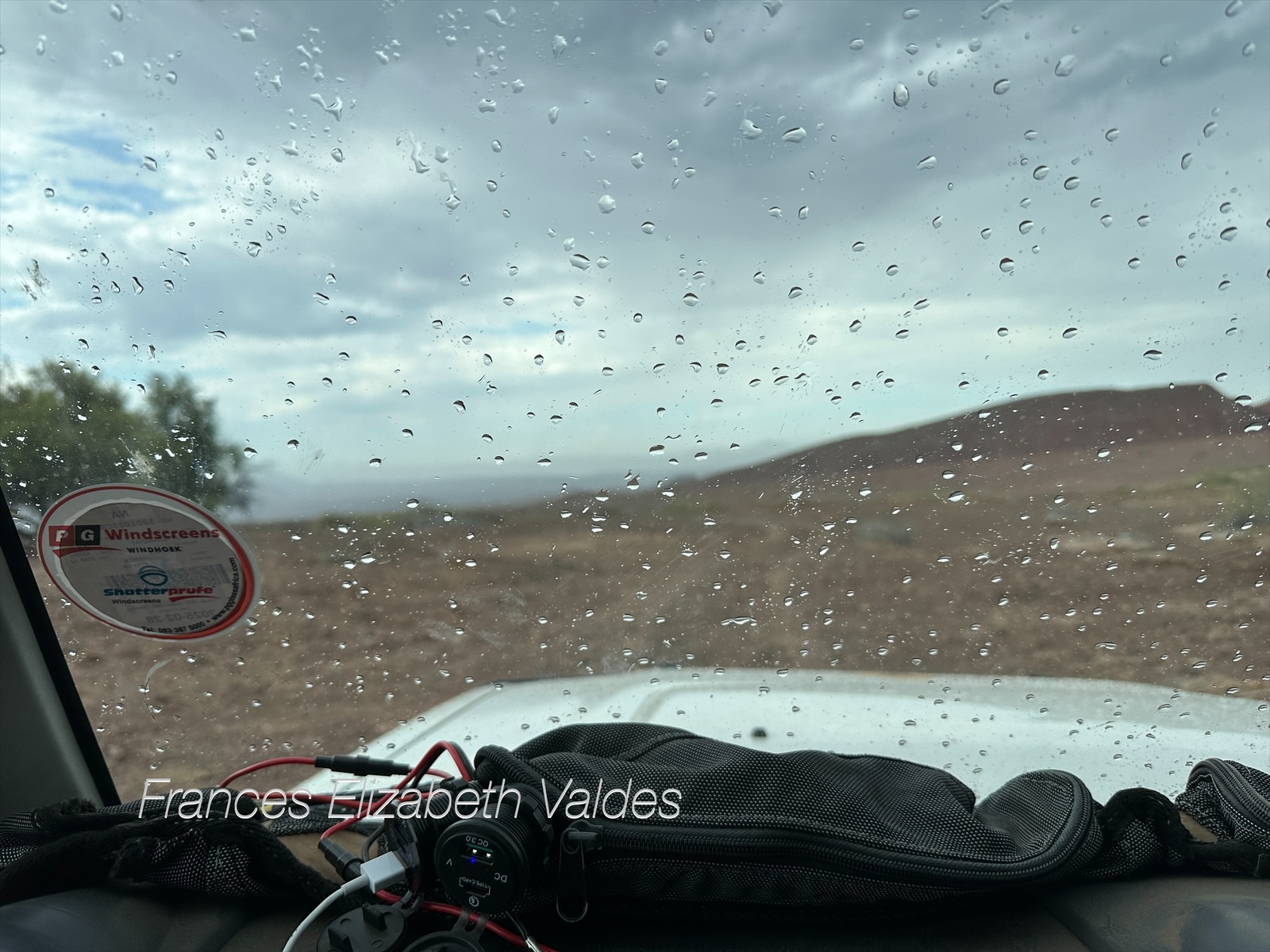
There was still rain around in the morning, but it didn’t last. This was good for us, as living in the U.K we have our fill of rain, but it was not good for Namibia
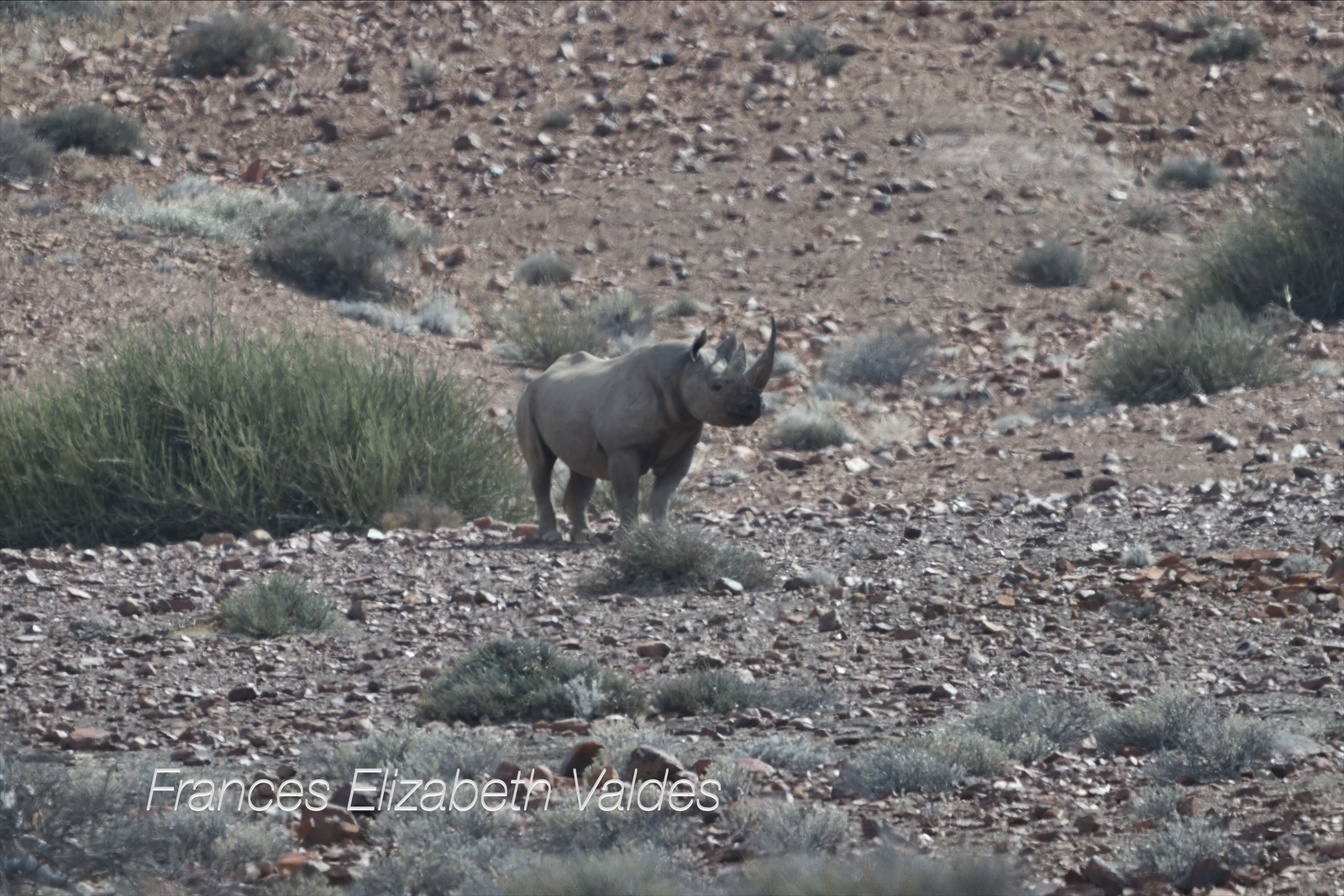
We continued our drive towards the Skeleton Coast – Bersig Road. It was slow going as the track was littered with small stones. As always in Africa, just as I was beginning to think the scenery unchanging and a bit boring, things changed. Suddenly, on the side of the track, up a small hill, I spotted a rhino. This was incredible. We have seen rhino at a waterhole in Etosha, but finding one when you (and it) are all alone in the wilderness, is a lot different from seeing one in a national park.
Years ago, when staying in an expensive luxury lodge, we spent a day on a walking safari tracking rhino. It was a strange experience for two reasons:
- the trackers ended up driving us straight to the rhino, so there was no sense we were tracking it.
- the guy who acted as our guide was British, and when we asked him what he missed now he was a full time bush guide, he said wildlife documentaries. To us, he was living the ultimate wildlife documentary.
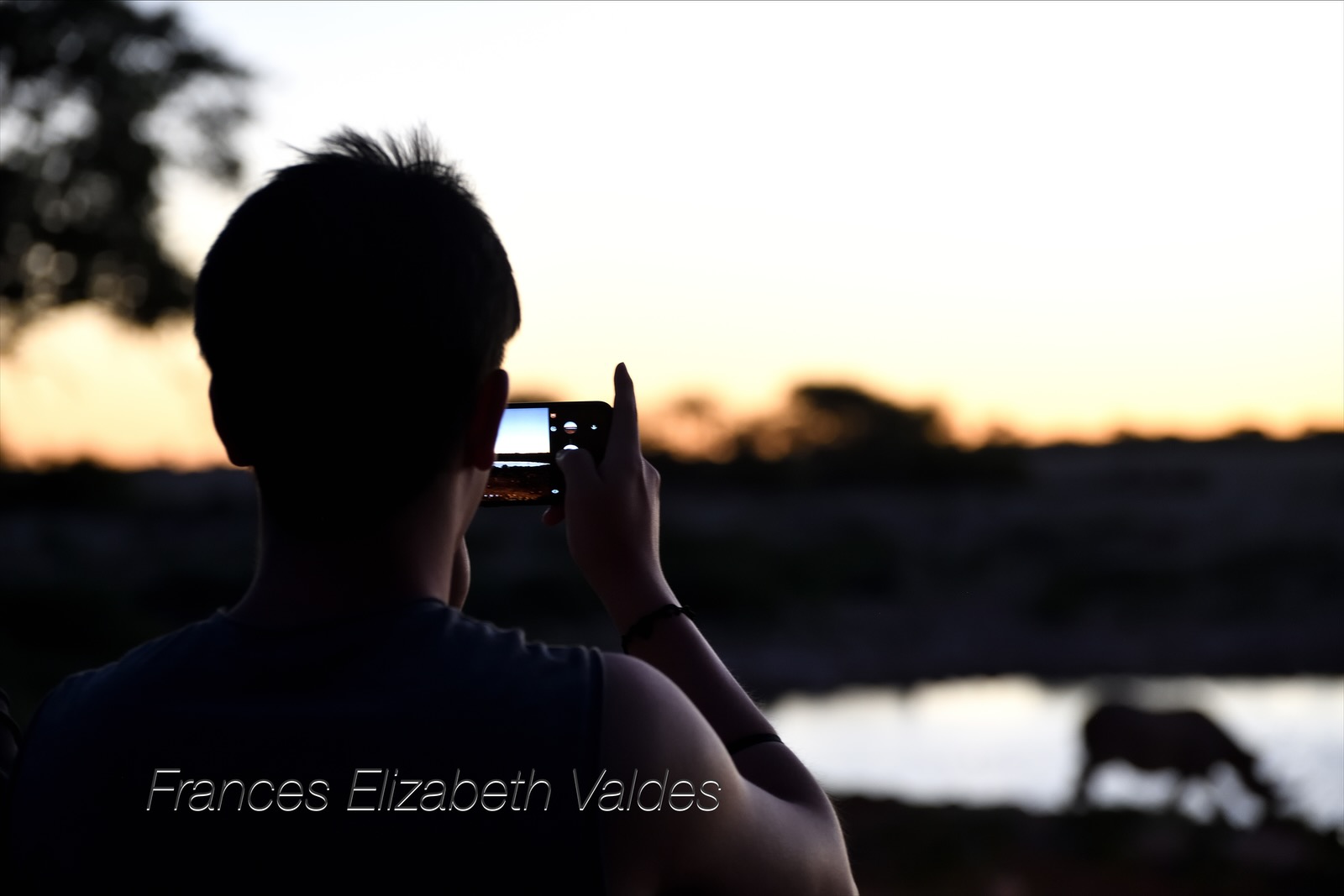
I think there is an unwritten secret about rhino which no one wants to talk about – they may be rare, but they’re also extremely boring. They don’t do anything. The ones at Etosha would come into the waterhole, and stand there for hours.
Rhino don’t have the entertainment value of elephants, whose character is displayed as soon as you see them; or the excitement of lions when you wonder who is next on their menu. Rhinos do nothing except eat. They are also very grumpy, so don’t get near one.
In this area, rhino are very fond of euphorbia bushes (it is standing next to one in the photo). The euphorbia is actually more interesting than the rhino. If you touch it you will die. I think it’s the sap, but I’m not sure and don’t want to find out. In the eighties, five German tourists made camp in the Brandberg region and wanted a fire. They saw a lot of dead leaves and collected them to burn. The leaves were from the euphorbia bush. By morning four out of the five were dead.
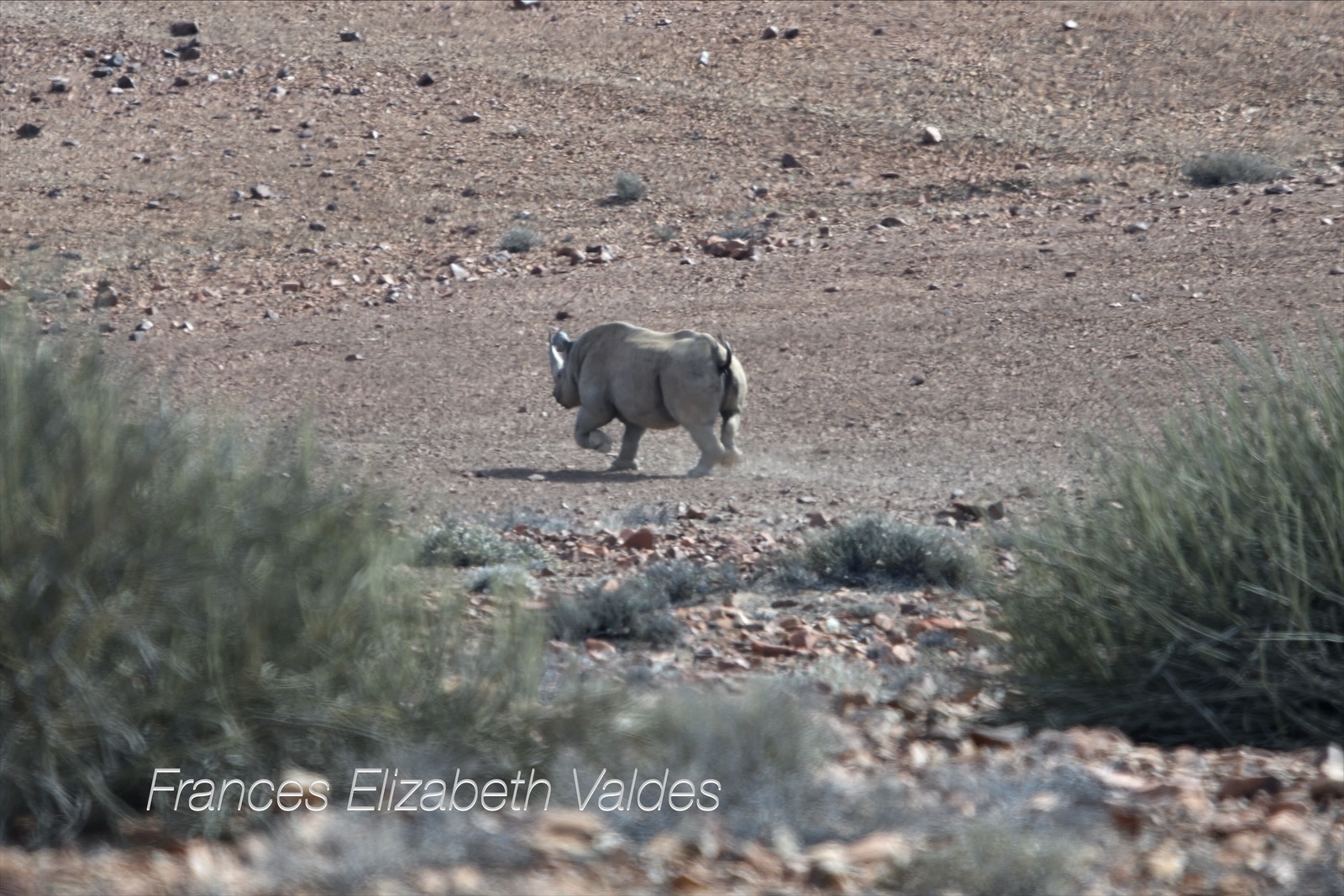
Anyway, back to the rhino. True to form it stood there, but after a while decided we weren’t to be trusted, and ran away.
I had not seen a rhino run, as I’ve said I’ve not seen them do anything much, but it was impressive. The speed at which it ran up the hill, over very rocky ground was surprising. 1 Apparently Rhino can run up to 50km an hour making them the fastest land mammal weighing over a ton. 2
Nigel took the coordinates of our sighting to pass onto the rangers when we saw them (we had some binoculars to give to the ranger station at Palmweg – we had read they wanted them).
The road continued as a tedious rocky track, until we got to the ‘main’ road.
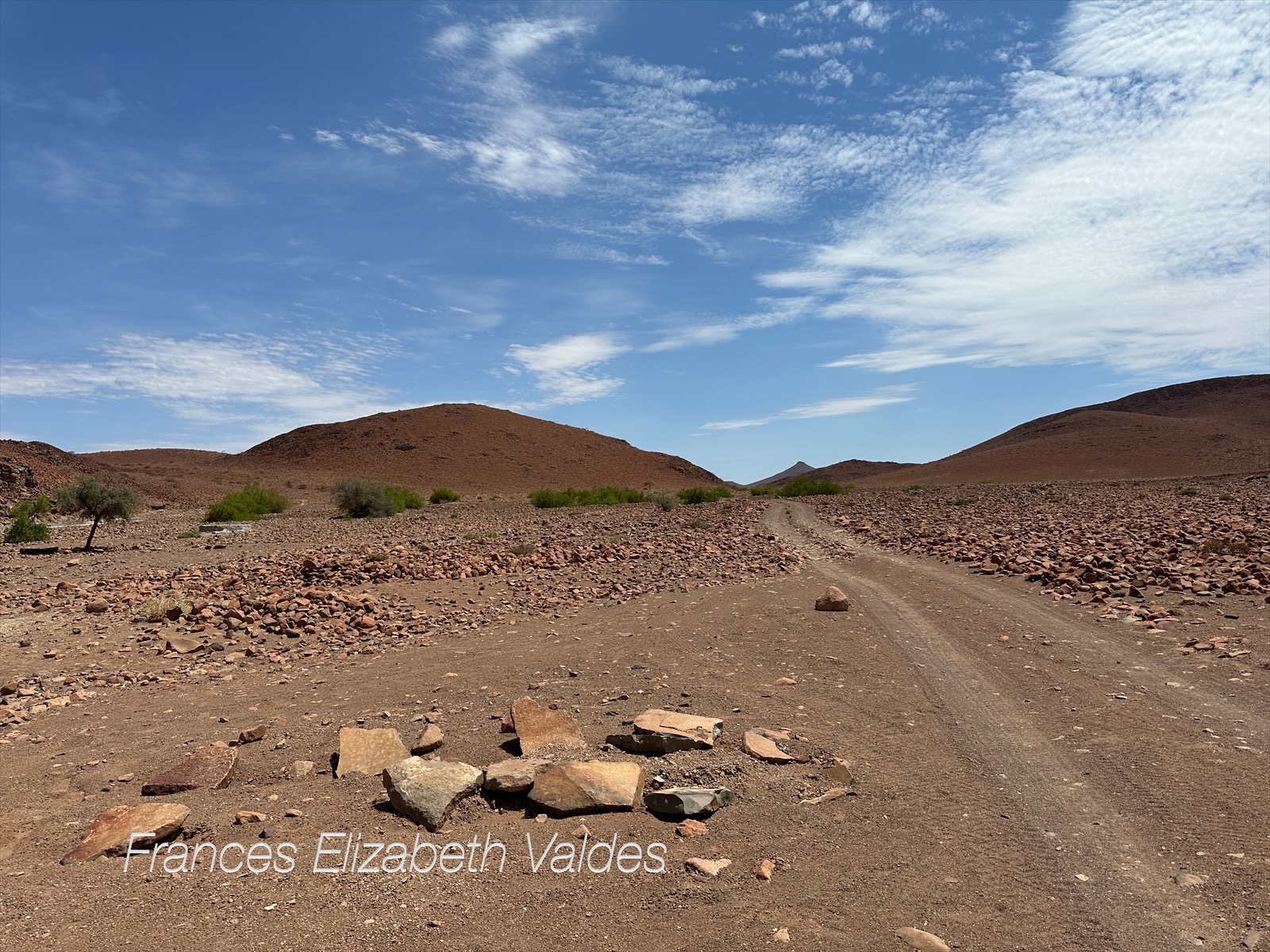
This main road leads from the Springwasser gate of Skeleton Coast National Park towards the main town of Khorixas in the south, or to Palmweg in the north.
Only a few of the main arterial routes in Namibia are paved, so in this case, as in most others, the main road was a reasonably well graded gravel.
It seemed as if we were suddenly back in ‘civilisation’, to be on a gravel road. There were cars! not many, but some.
We stopped for lunch overlooking the road at a picnic spot with no shade but plenty of evidence of previous beer drinking.
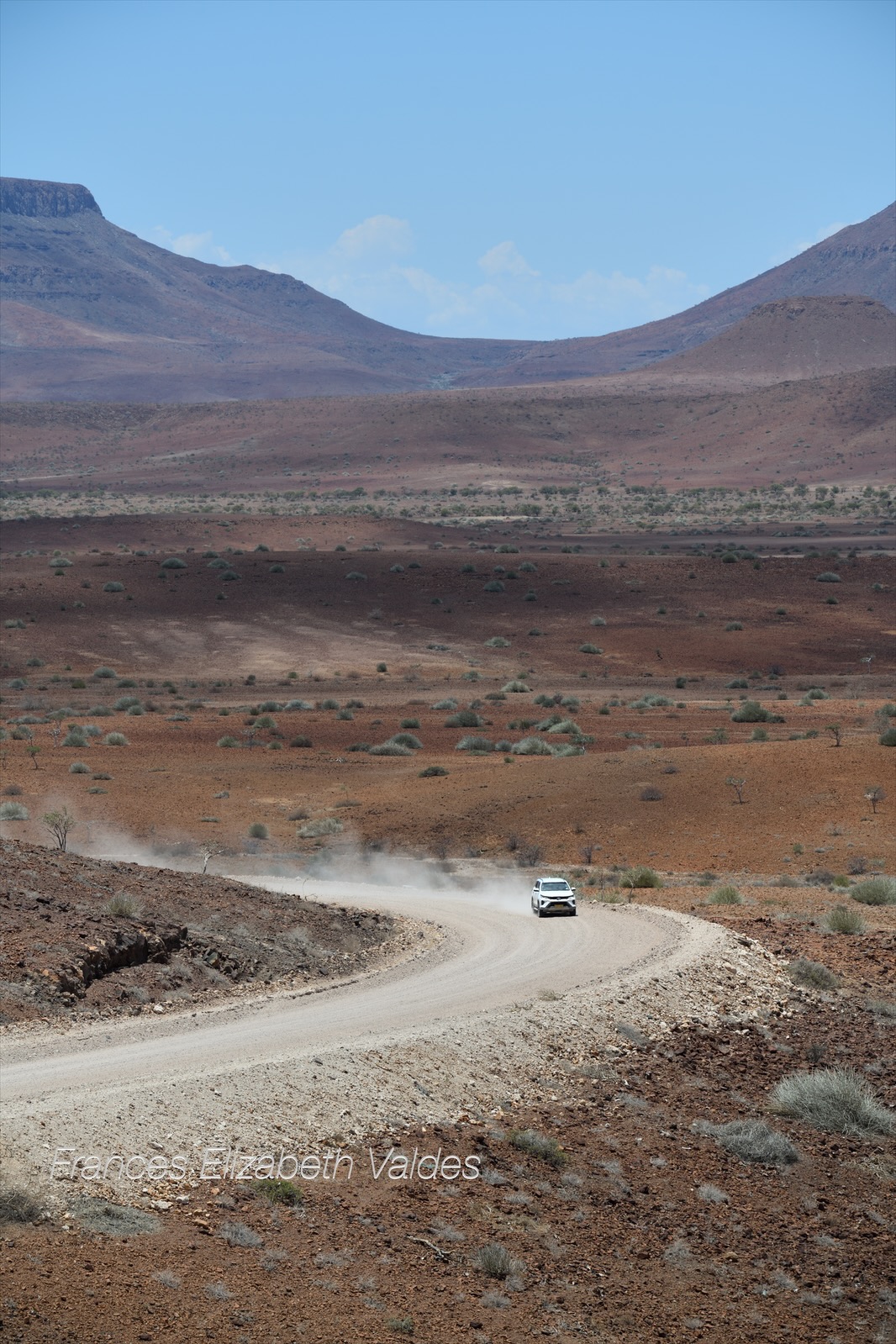
We saw a few giraffe in a spot where we had previously seen them (that was odd as they’re supposed to roam), and headed towards Bersig. We had camped at Bersig in 2020. At that time the campsite was being developed by the town.
It was quite early to camp but we were now in an area of people, albeit not many, so wild camping wasn’t really an option. There was only one other campsite between Bersig and Palmweg, and since we knew the Bersig one we wanted to camp here.
We called in at the Torra Conservancy office to see if we could pay for the campsite, but there was no-one there. So we went to the shop and tried to buy, what had seemed so important that we were trying to buy it at all the local shops we came across 3. We failed again. But we got more beer.
Next to the shop were some tables with a canopy overhead and quite a few people drinking. We spoke to them and discovered that the campsite had not succeeded. The elephants kept breaking into the water and the town had given up trying to maintain it. They said we could still camp there if we wanted, but there were just no facilities.
We asked if we could buy some firewood, and some guys told us they would get us 60kg for 5 euros. It wasn’t 60kg, but it was a lot. While we were waiting we got chatting to the local team’s football coach. He talked enthusiastically about his women’s team, which we thought was so refreshing. We gave him another of our footballs and a bit of money for the team.
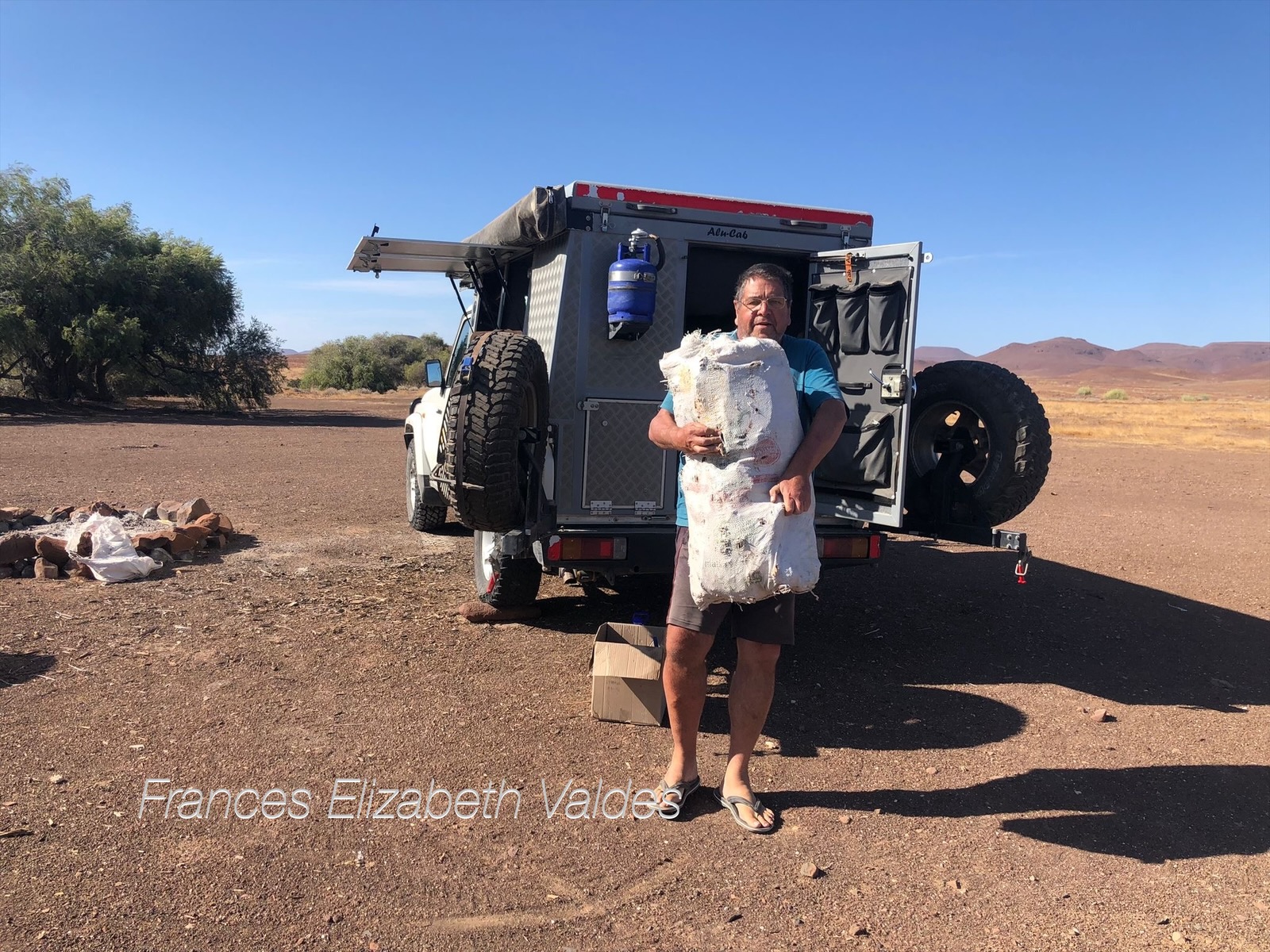
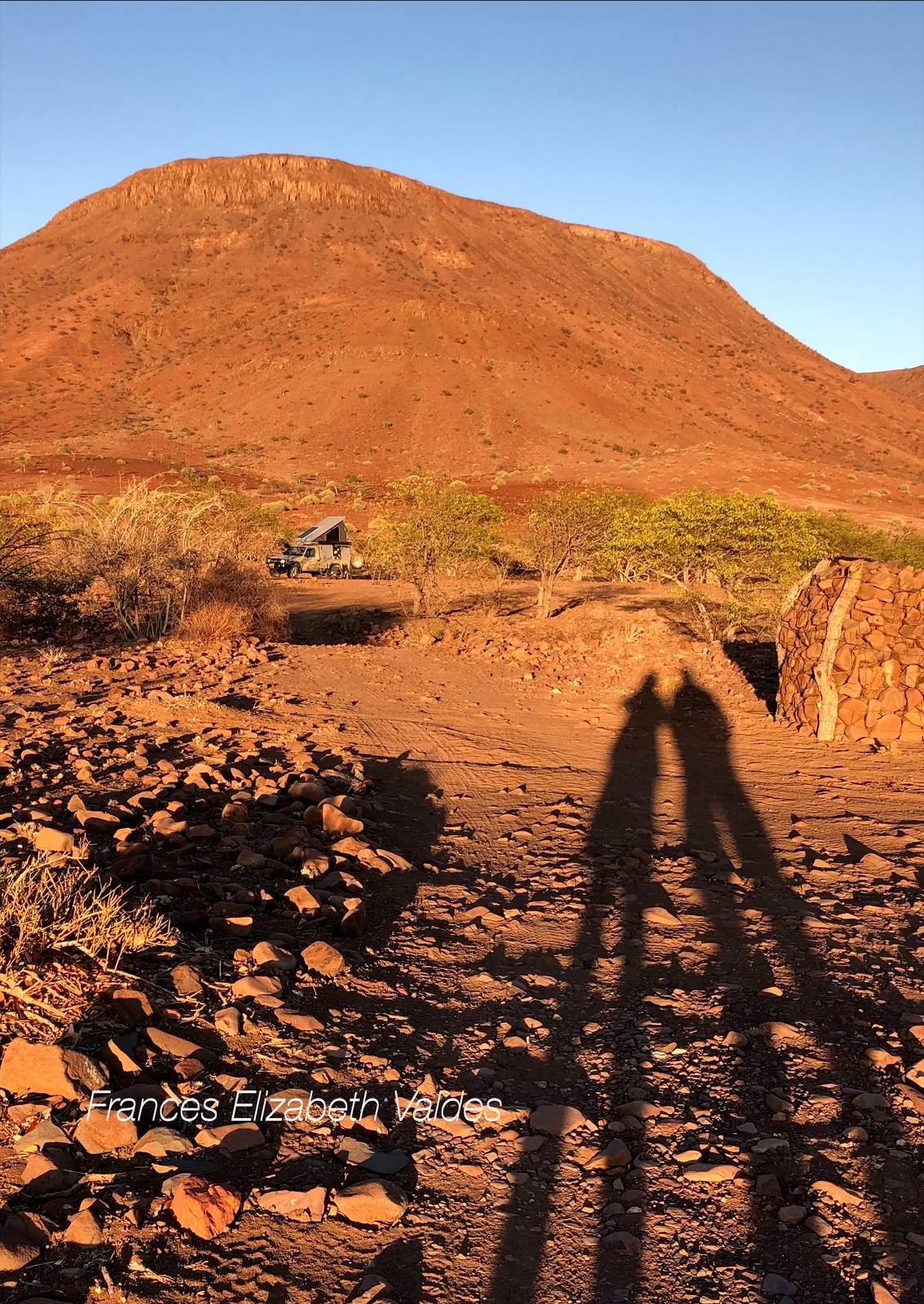
We went off to the ex-campsite and set up. It was just as beautiful as before, but the fire pits had fallen into disrepair, and there was no water at all. It was surrounded by mopani trees which looked very green. In fact, we had thought how green things looked when we got on to the Springwasser Gate road. It wasn’t as if the ‘rainy’ season had brought them much respite from the drought, but clearly there had been a bit of rain.
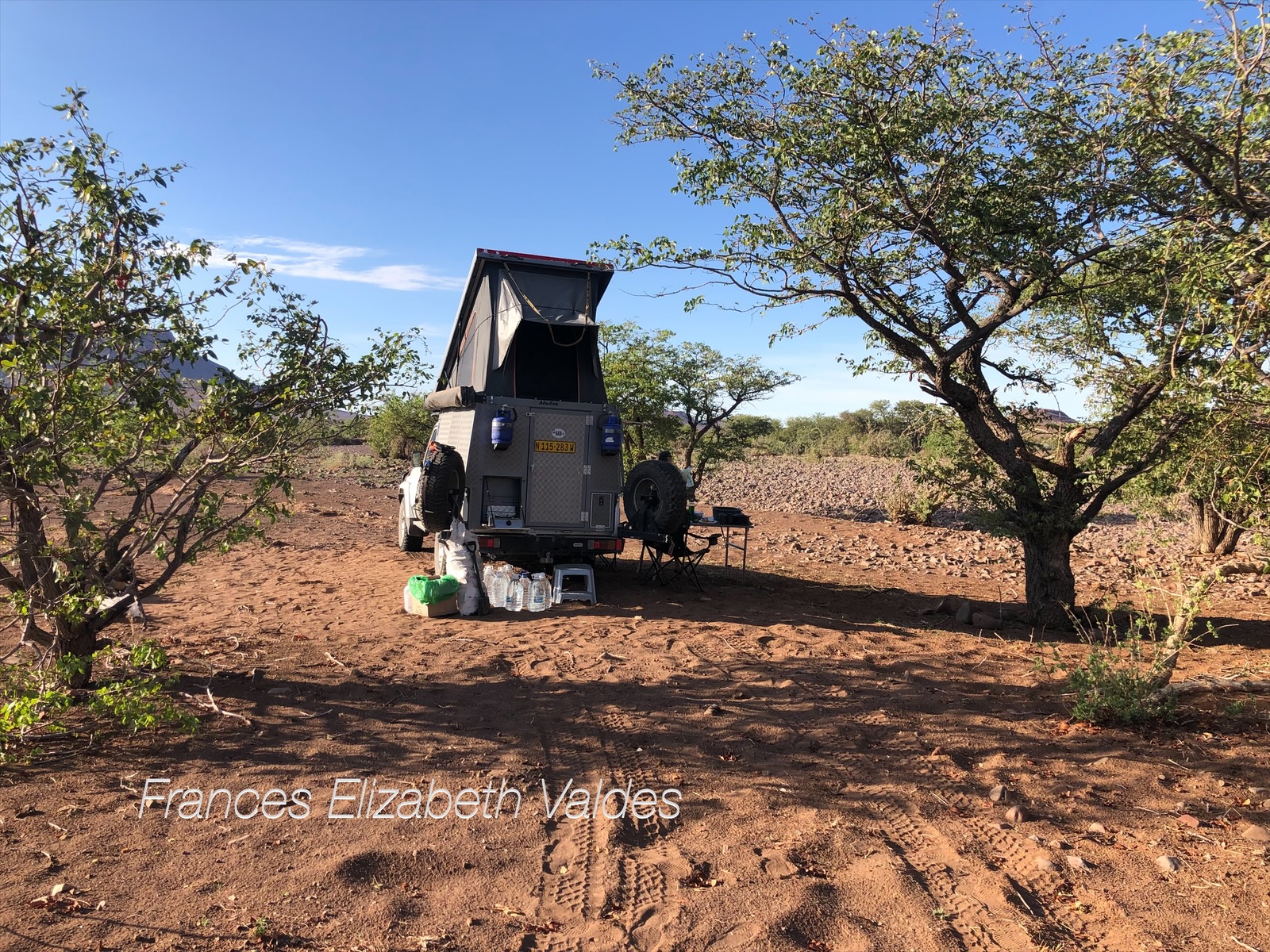
As a consequence of the rain the mopane trees we were camping under were full of caterpillars. I hadn’t noticed this when we pitched camp. The caterpillars were small and not much of a bother, once I’d asked them to leave our vehicle.
When Nigel was in Rhodesia, he used to eat their larger cousins as snacks. 4 It was something the locals enjoyed. I once saw a bag of them for sale in Fortnum and Masons. I found it ironic that something eaten by the rural poor in Africa, should be sold as an expensive treat in a luxury London shop.
- We always do our best not to disturb animals, and the fact it ran away from us is not something I’m proud of. But we weren’t looking for rhino, we just happened across it. ↩︎
- I mention this so you can impress someone at a party with the fact – however, if you are the sort of person who likes to do this at parties, I should caution you probably won’t be invited to many. ↩︎
- Shops in Nambian villages tend to sell basic products like cooking oil, maize meal, sugar perhaps toothpaste and soap and of course beer. It’s the only things people can afford. ↩︎
- This horrified his mother when she found out ↩︎
 Desert Wonderers