Elephant Song – Mudorib
This was the first time we tried to leave Elephant Song. We managed to stay away only two nights away!
We decided to drive down the Hoanib to spend more time enjoying its beauty and wildlife. We intended to wild camp at the other end in the Mudorib Valley. We wanted to see if we could find the elephant family, which had walked past Elephant Song yesterday. So we packed up, said goodbye to Magnus – one of many goodbyes we said to him over the course of our trip, and drove off.
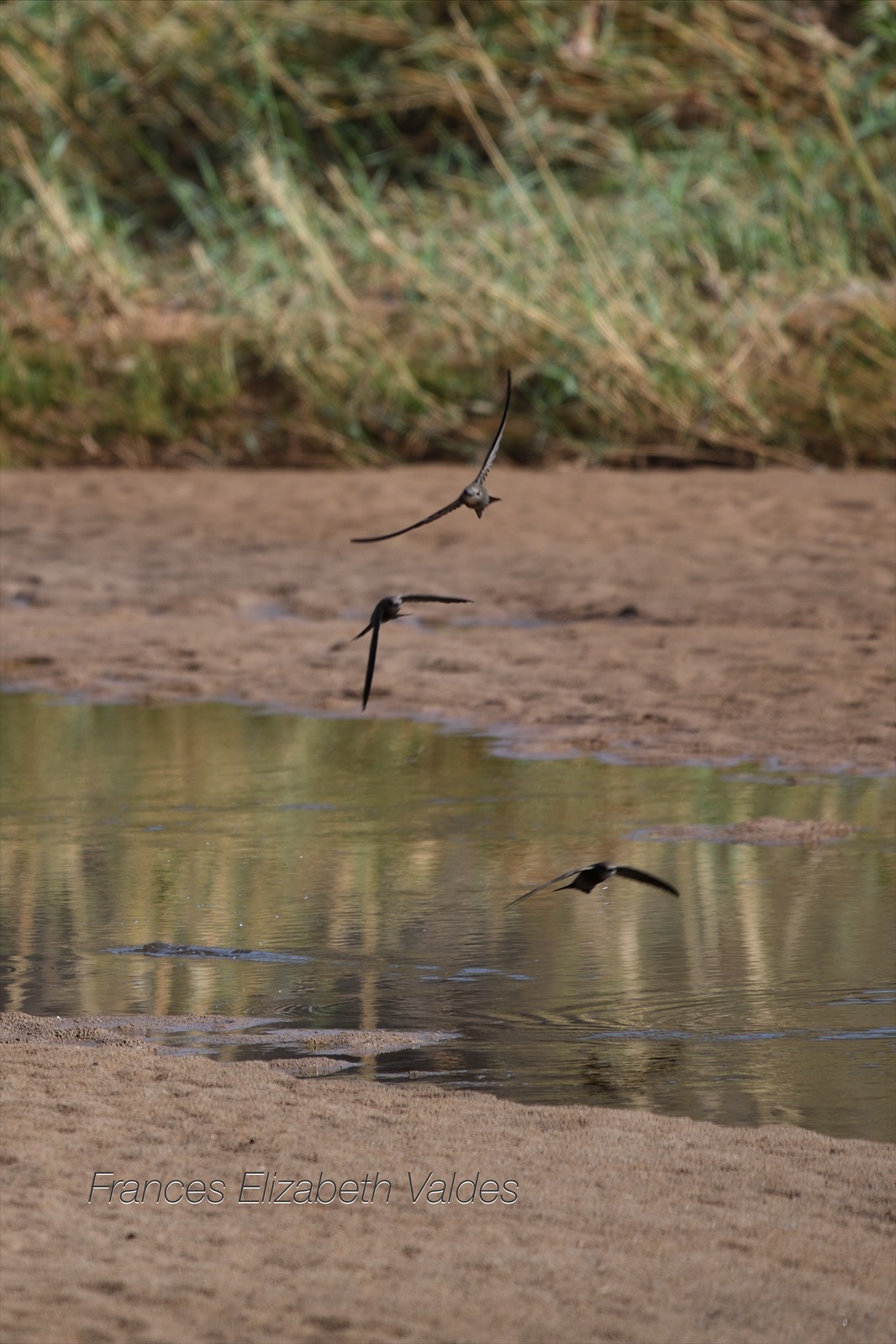
We came to an area of lying water where birds were skimming the surface. It was beautiful. I tried to take a photo of the birds, but despite motorwind I didn’t succeed. Neither of us know much about birds. Well, Nigel thinks he does, but his knowledge divides any bird we see into either; a sparrow, a seagull, an eagle or a robin.
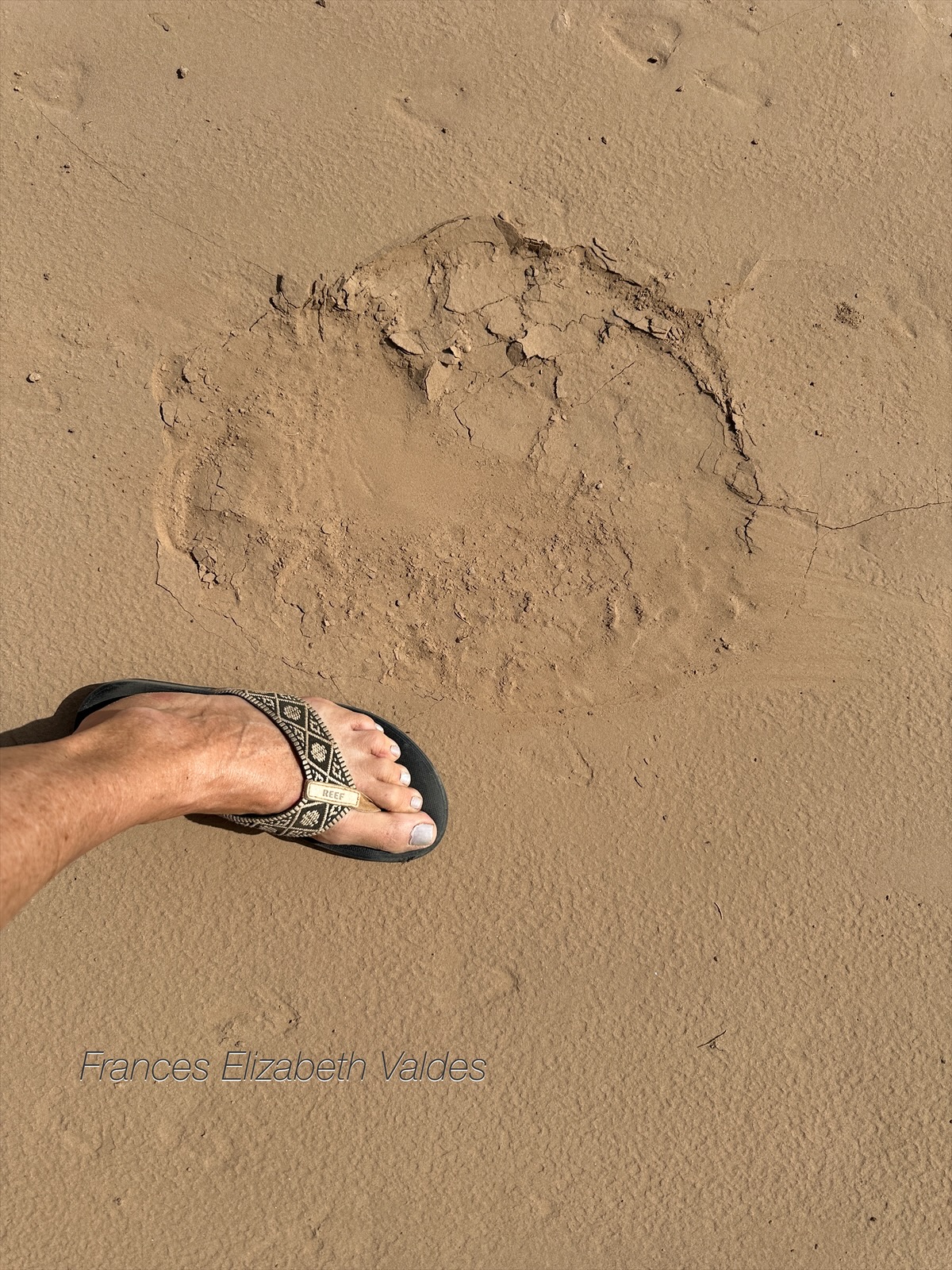
We wandered around the stream looking for tracks in the sand shores. This was just the kind of place ellies enjoyed. We found tracks but none which were new.
If you can see the trace of a ‘fingerprint’ in an elephant footprint (yes they have ridges on the sole of their feet like fingerprints) , you know its very fresh. What we found still had crisp edges (so less than a day old) but didn’t have ‘fingerprints’
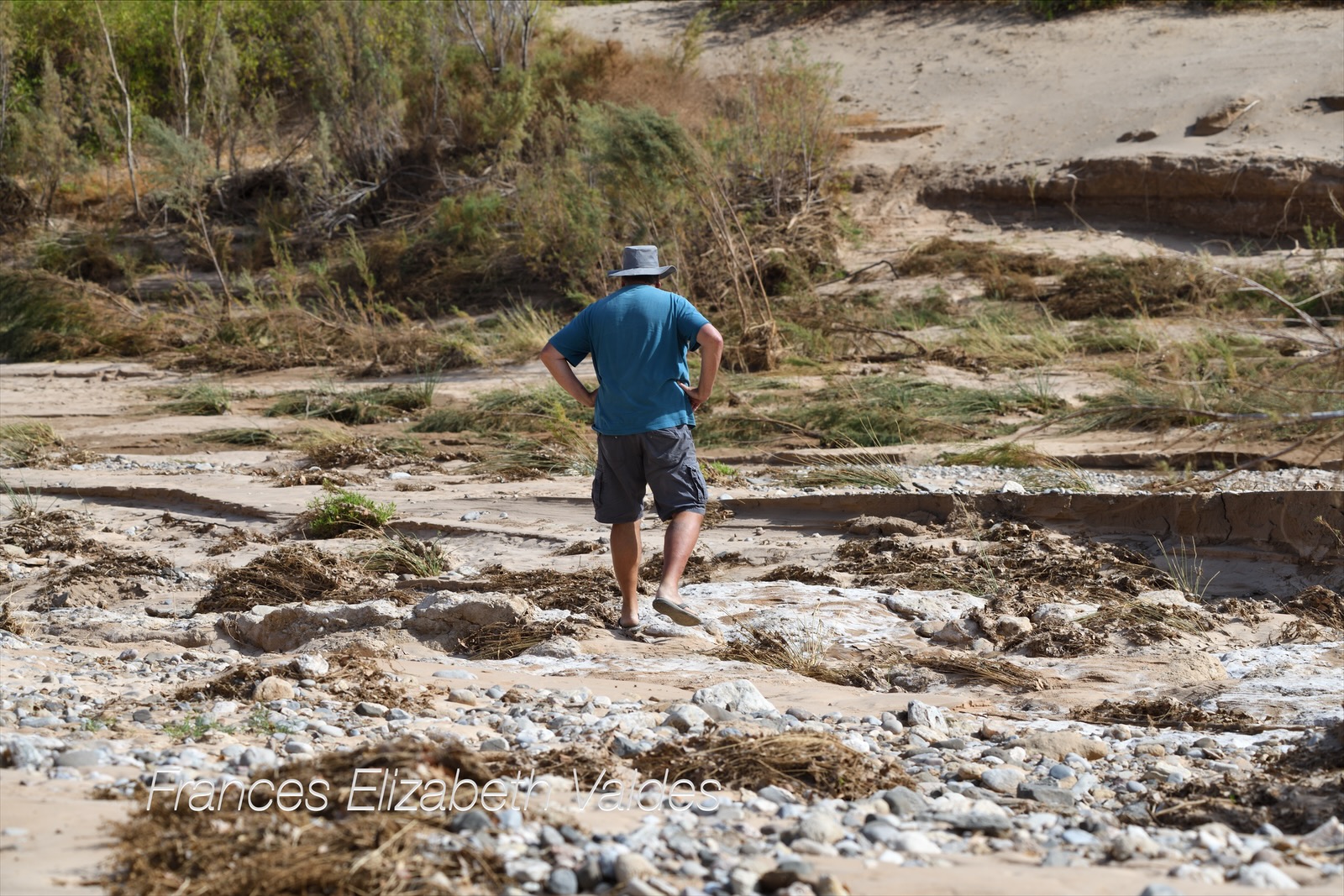
We took a slightly different route around a narrow canyon to see if the elephants had gone that way. We imagined going through the narrow canyon might be a bit intimidating for an elephant. Elephants have always struck me as disproportionately nervous. What (apart from man) does the largest land mammal have to be nervous about.
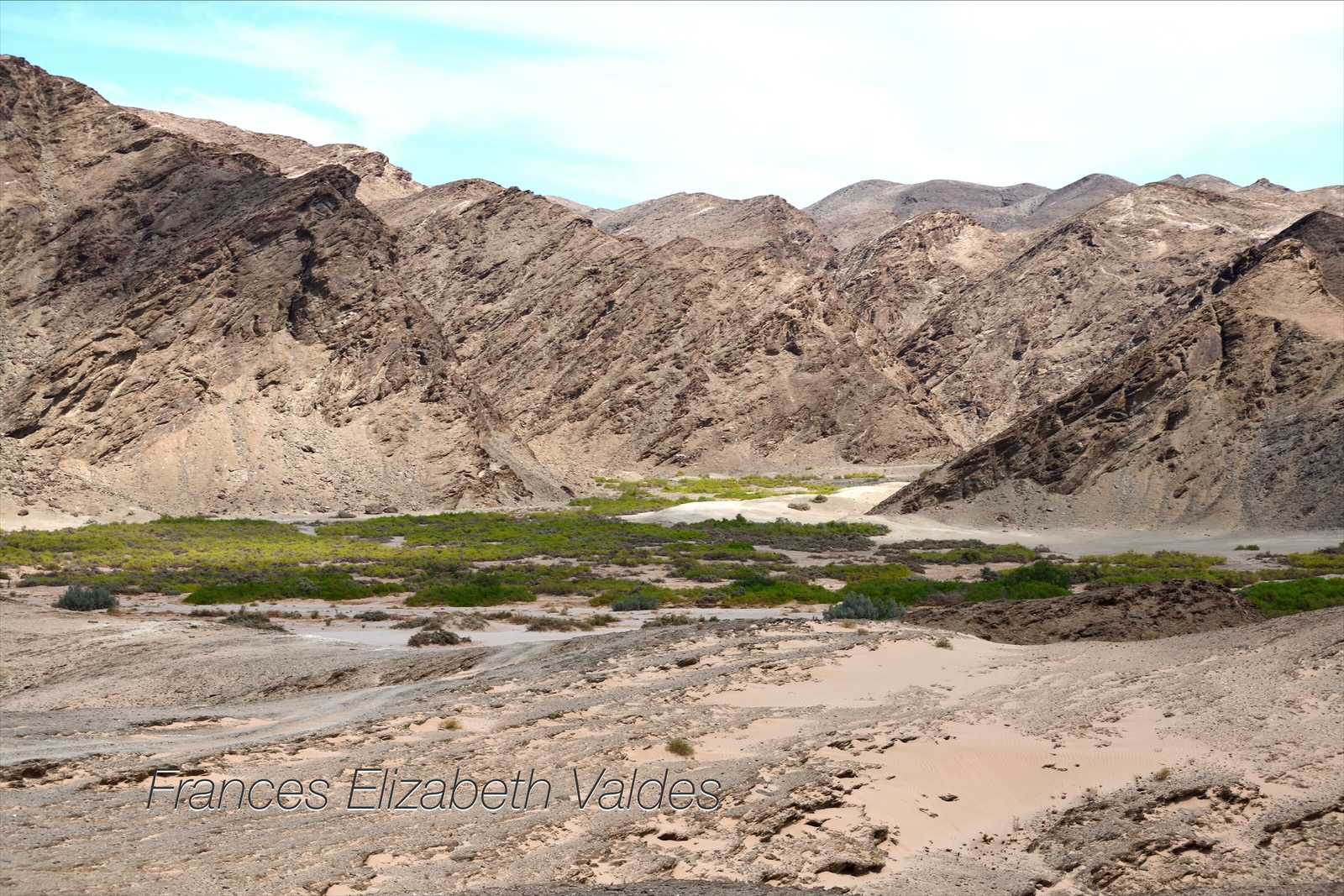
There was no sign elephants so Nigel drove up a very steep ridge (making me rather nervous) and we got a lovely view of the Hoanib from the top. There were signs someone had camped up there (the remains of a fire). Nigel was tempted to camp there that night, but we thought the wind would be really strong on top of the ridge in the evenings.
We kept driving along the Hoanib, which is so beautiful. The scenery constantly changed from large areas of sand, to narrow channels which showed signs of recent water. Either side of the valley were dark black mountains containing some of the oldest rocks in the world. The rocks here have been used to back up the theory of snowball earth. As I have said before, I love geology but I do appreciate that not everyone does. So, if you want to know about snowball earth I guess you better Google it, rather than let me explain and bore those who don’t want to know.


We stopped for lunch early, still not having found ‘our’ elephant family (over the next 10 days they became ‘our’ elephant family) but we were hungry. Although, the dry river bed is edged with bushes, not everywhere has trees. It was important to stop in the shade of trees, because the extreme heat at that time of day. At midday the wind hadn’t started, so it was just naked heat. Not that the wind cooled things off much. It just blew hot air just like a hairdryer. The lunch stop was in a wider part of the valley, with a few larger trees. They all showed signs of elephant activity – dung. But most was several days old – no flies and dry.

We were disappointed we hadn’t found the elephants by now, and we started to think we must have driven past them while they were up a side canyon or in bushes. Elephants seem to have an amazing ability to just disappear into bushes.
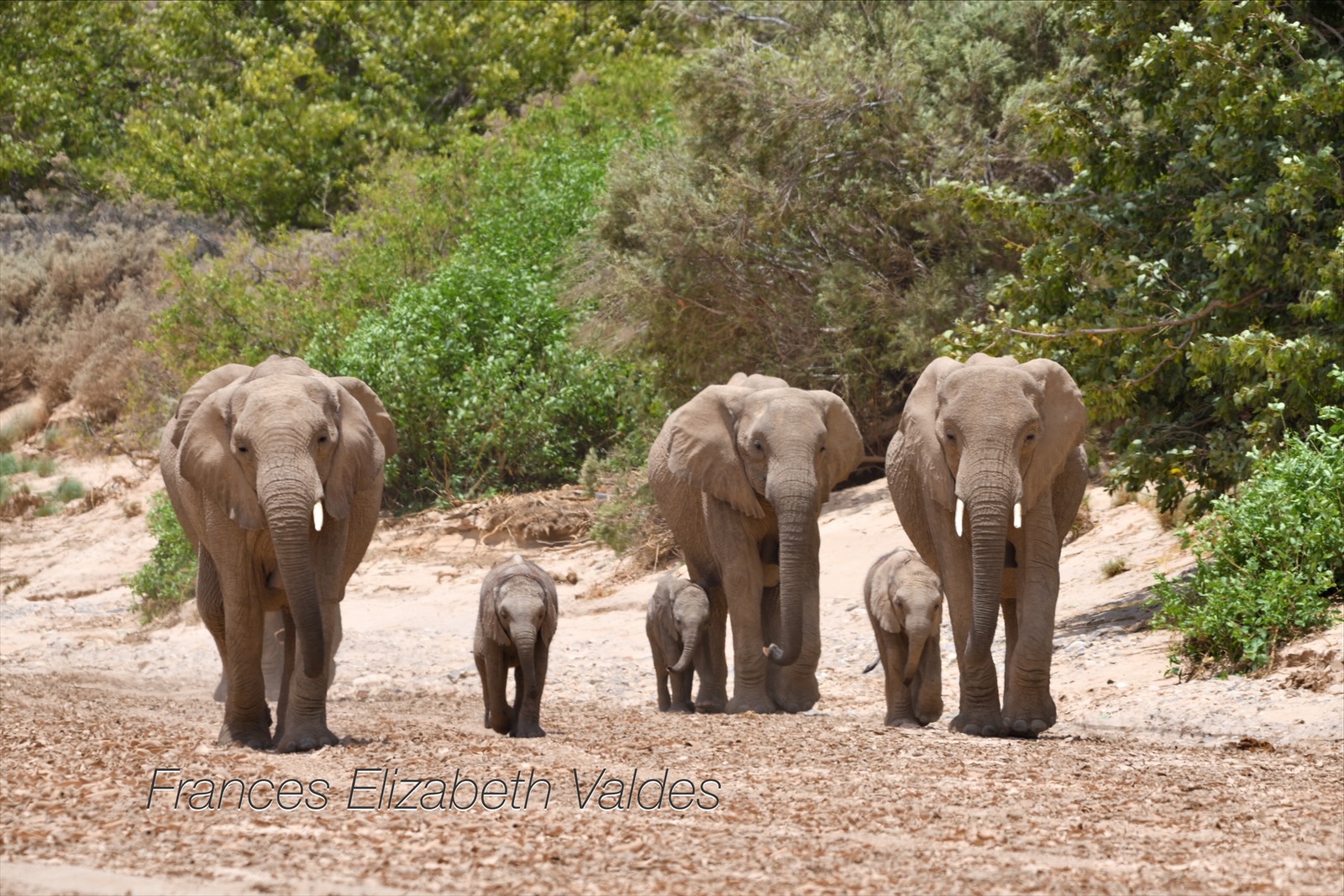
After lunch we drove further down the valley towards the Mudorib. We had forgotten about looking for elephants, and were happily chatting a way. Suddenly Nigel issued an expletive, and stopped the vehicle. There, a few metres from his driver’s door, was an elephant bum sticking out of a bush. I looked to my side, and saw an elephant standing on a bank eating from a camel thorn. We were actually in the middle of Stompie’s family. This was not good.
Nigel was about to reverse, when in my side mirror I saw another elephant and calf walking to the back of the vehicle. Nigel turned off the engine, and we sat very still not making a sound.
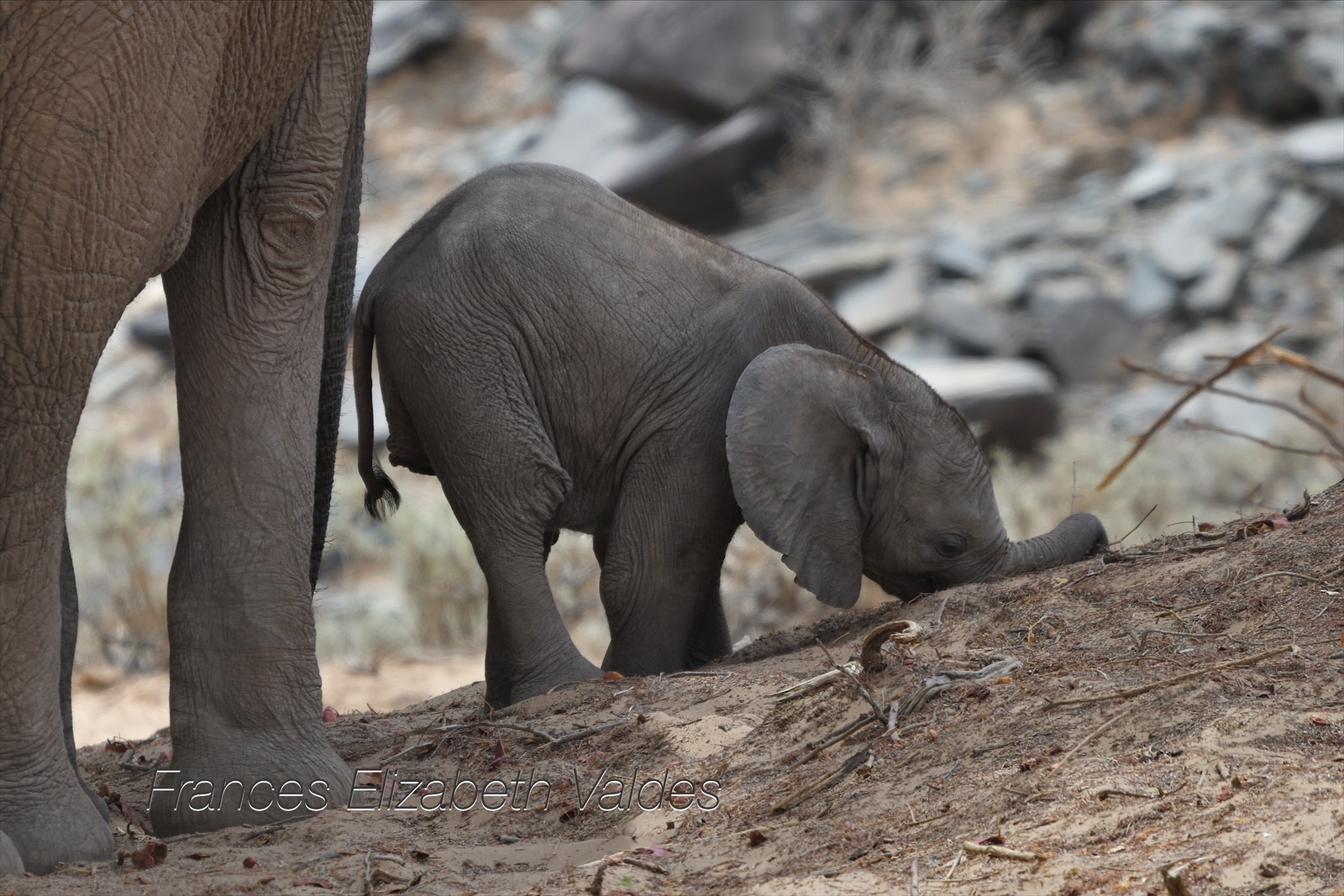
The elephant and calf walked around the back of our car, and past Nigel’s window. They didn’t seem at all disturbed by us, even though accidentally we had got really close and in the middle of their group.
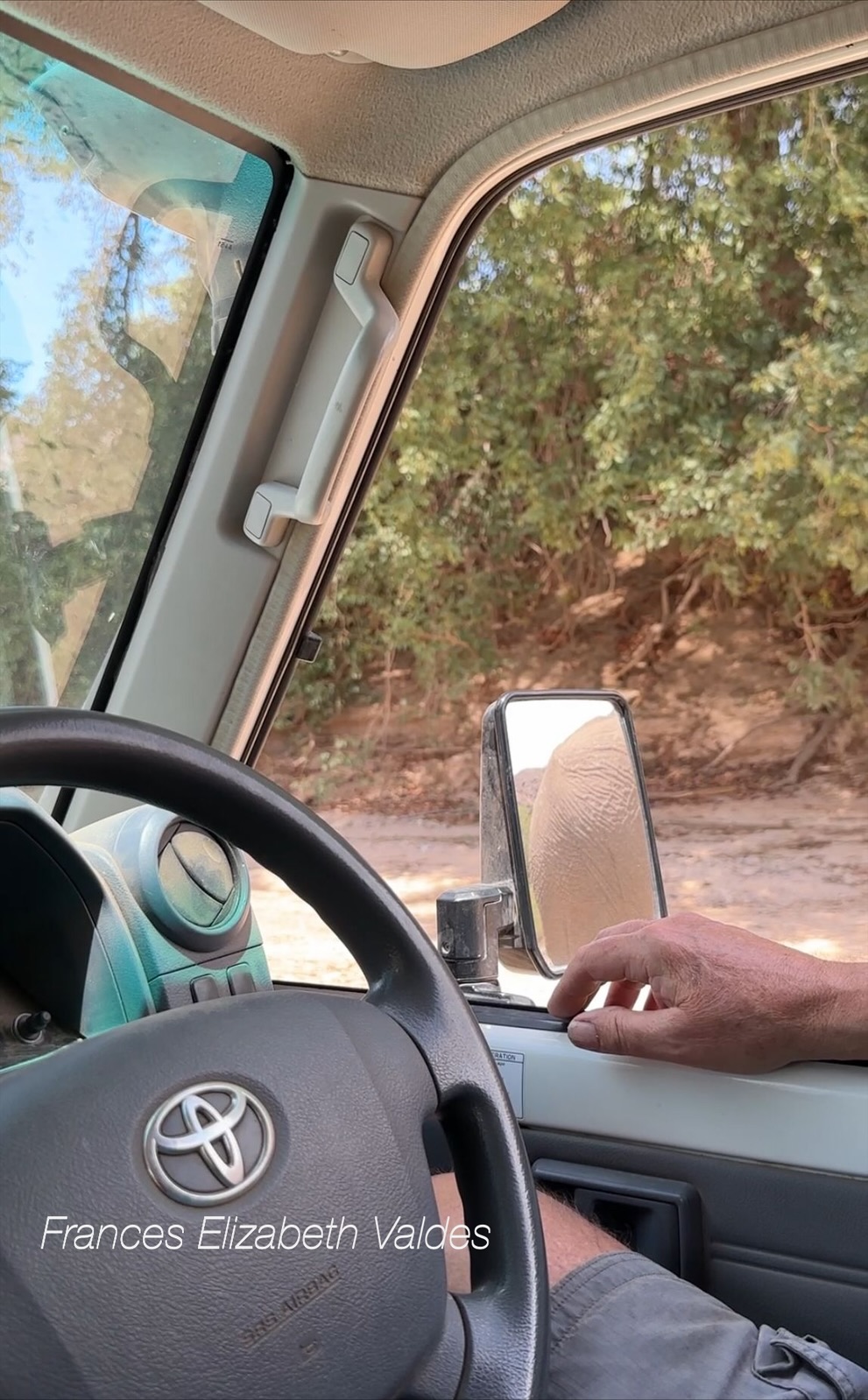
We reversed a little and watched. Another baby appeared from the bushes, and after a while the whole family moved on. Nigel sped ahead of them down a parallel riverbed, and we watched them walk towards us.

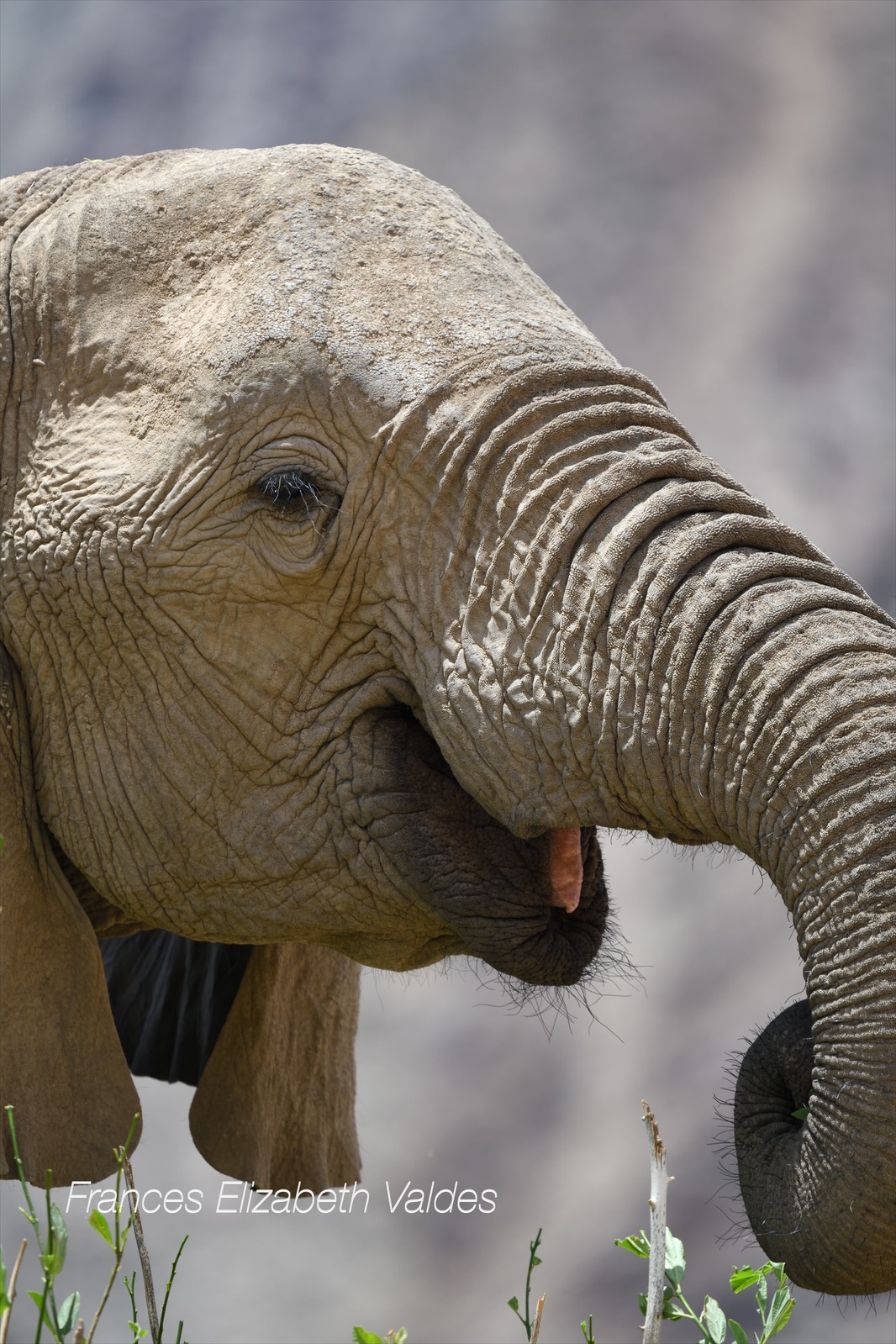
We watched for a while and then drove on. Further down the valley we came across a large (well for desert adapted elephants which tend to be smaller than their non desert cohorts). The bull elephant was more or less in the same place we met him before. Nigel wanted to wait to see what happened when Stompie’s family met the bull, but I was a bit worried about getting to camp in good time. We had always said we would try to make camp early (between 4-5pm). So, we drove on and got to the platform over the Mudorib where we had previously camped.
The wind was bad, and we tried to use the van as a windbreak. On the rare occasion the wind temporarily dropped, flies pitched up.
Just as it was getting close to sunset another camping car appeared, and drove past the waterhole. Then, much to our relief, down into the Mudorib valley. It stopped by a tree in the distance, but in front of the ridge where we were. I guess that everyone who camps in this area wants to be alone. So, thankfully they didn’t want to camp near us. We could see their fire flickering under their vehicle. Later on we got to know them and they were really interesting. But, like us, they were there to be by themselves in the wilderness.
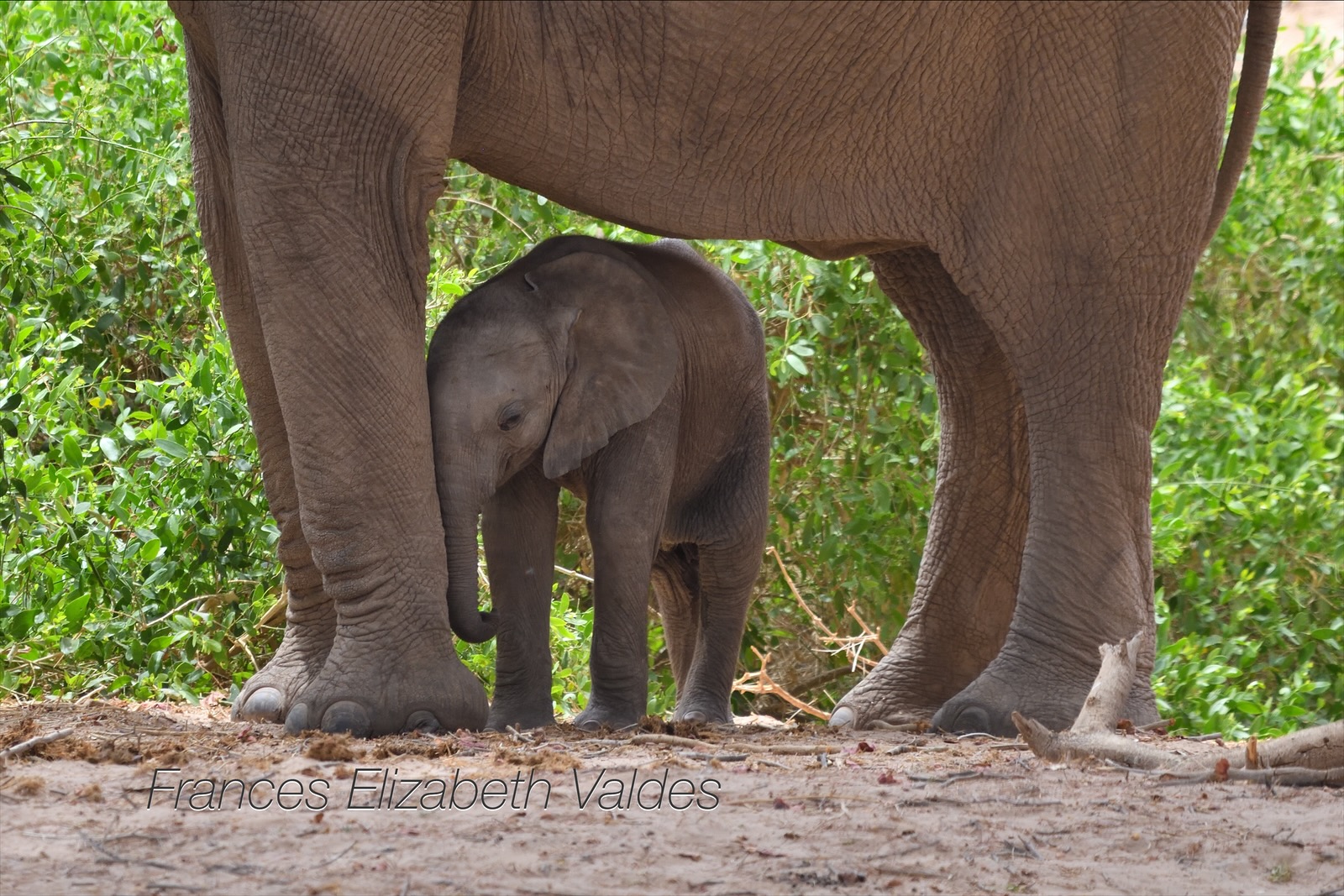
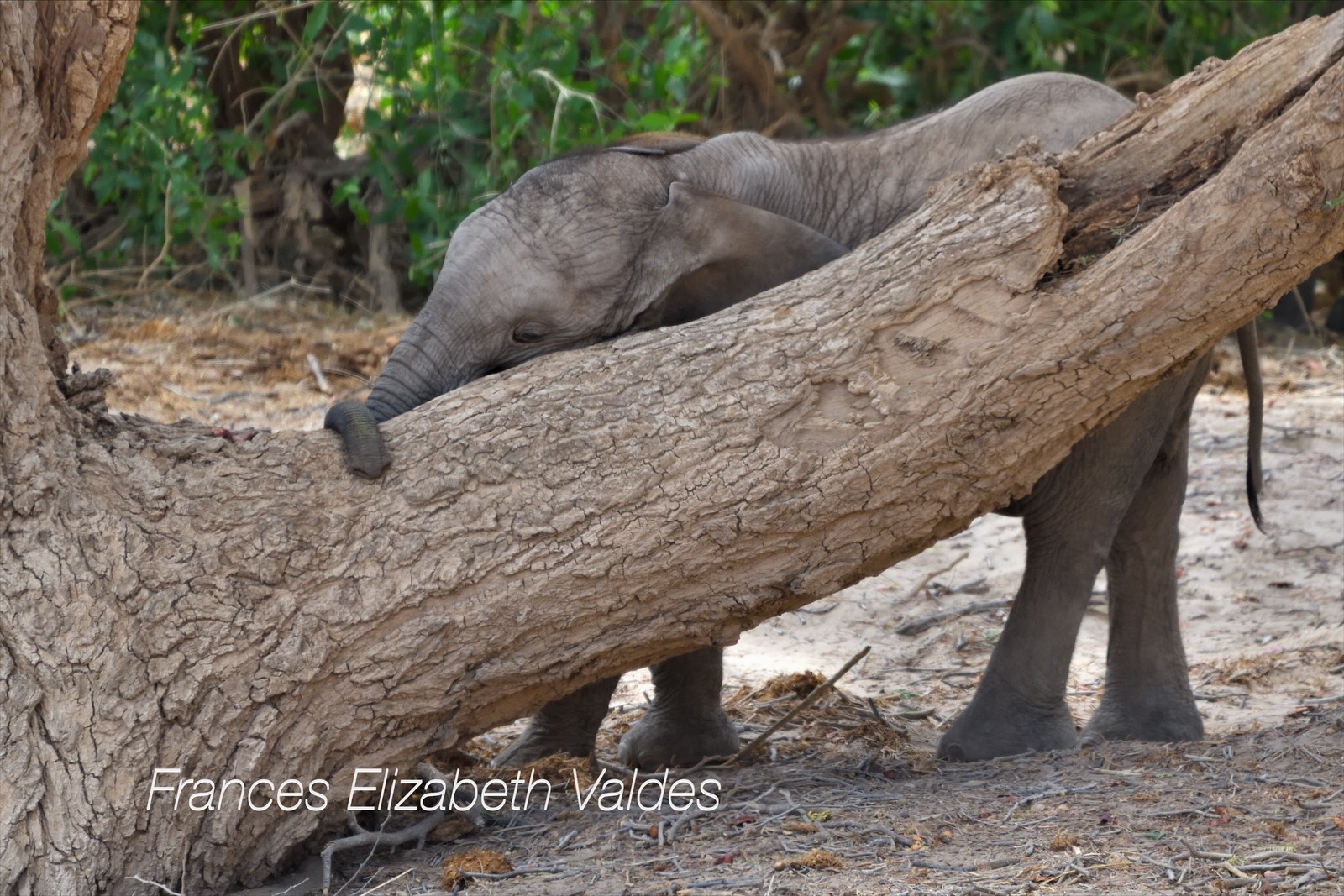
When an elephant has to sleep
 Desert Wonderers