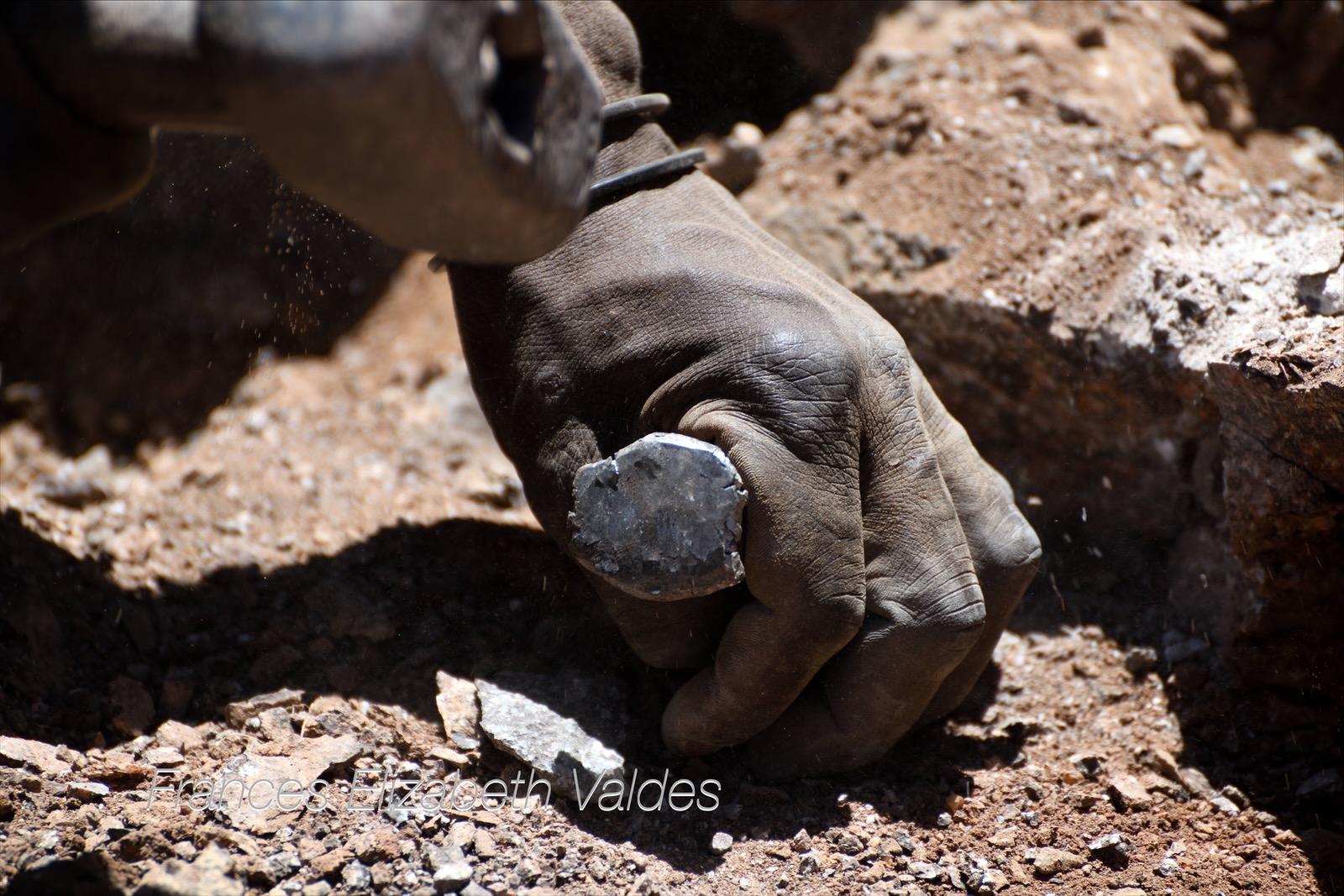
(This account is from our 2018 trip to Namibia. In 2024, mining had re-started and the Gobogobos settlement was a little more established)
The Brandberg region of Namibia is a popular transit route for tourists heading from the coast to Etosha National Park. The gravel roads crossing the Namib desert are littered with small settlements of shacks, goats and children. As vehicles approach the shacks, women appear waving and pointing to stalls selling beautiful crystals. The area is famous for many different kinds of crystals, but we wanted to go beyond the tourist stalls and find the miners who excavate them.
We stayed at Brandberg Rest Camp in Uis. Uis was a mining town until the mine closed causing it to be downgraded from a ‘town’ to a ‘settlement’. Uis has one small shop, a well-used liquor stall, a petrol station (which ran out of diesel while we were there) and no doctor. But, it was also a major hub for those living in the scattered shacks of the desert surrounding it.
Brandberg Rest Camp is owned by the charismatic Basil Calitz who is a fount of knowledge about the area. He told us where to go to find the miners. We did not want to arrive empty handed, and Basil told us what kind of supplies they would be grateful of – maize meal (called mealie in southern Africa), dried soup mixes to flavour it, cooking oil and sugar.
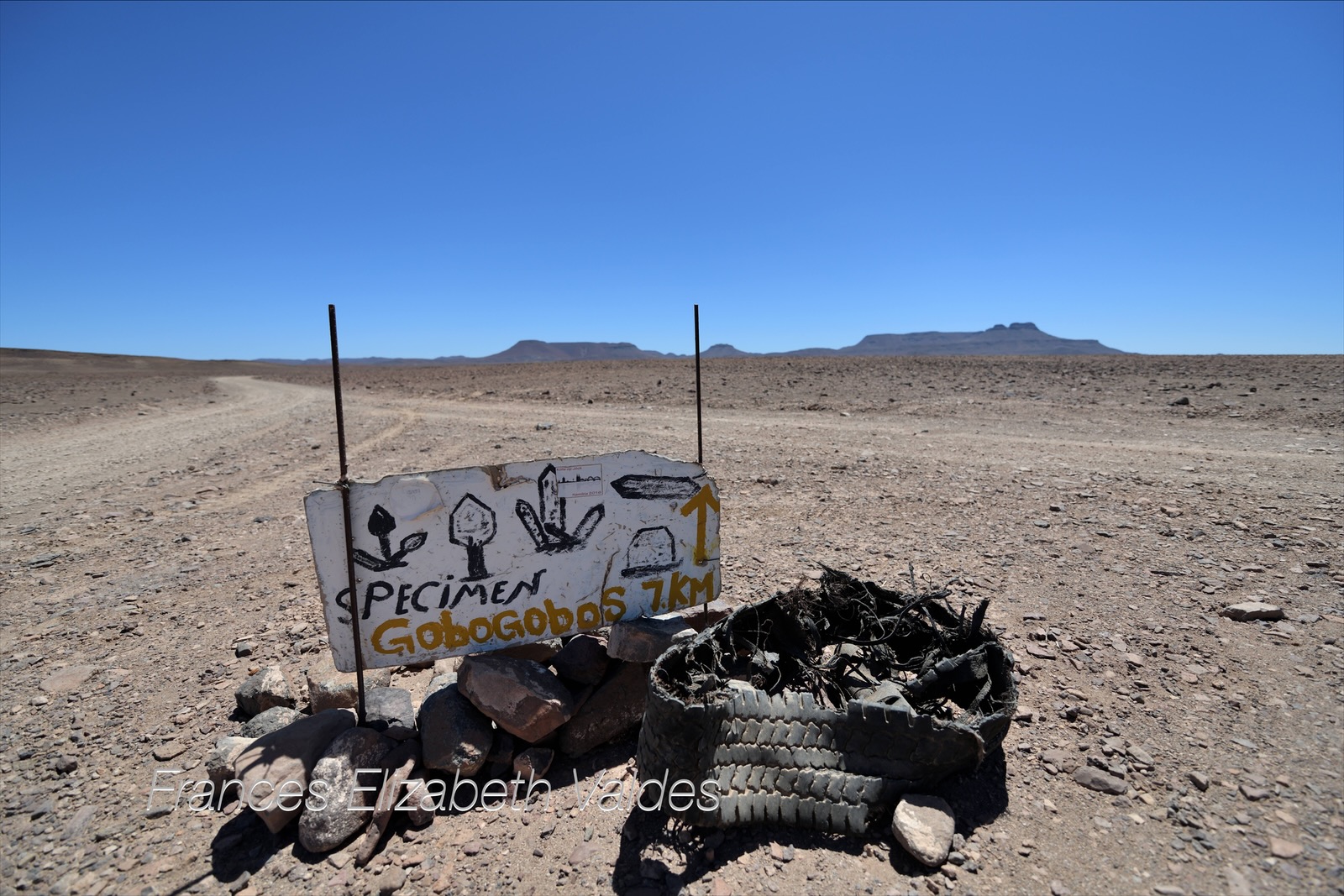
In this area there are a number of individuals mining crystals by hand. They get referred to as ‘small miners’ – small because of their mode of operation.
It took us nearly three hours, driving on increasingly indistinct dirt roads, to find the miners.
In contrast to the women selling the crystals, the miners lived in near isolation with no goats, and no way to grow anything in this part of the rocky desert. They lived in basic shacks with plastic bag walls.

Water was brought to the miners every fortnight, by tanker. They had no transport, and with no passing vehicles, when they needed to go to Uis, it was a 24 hour walk. They walked at night because of the daytime heat, but risked encounters with desert lions.
Despite the hardship of their lives, they were welcoming. They helped us – spotting a puncture in our tyre, and helping us mend it.
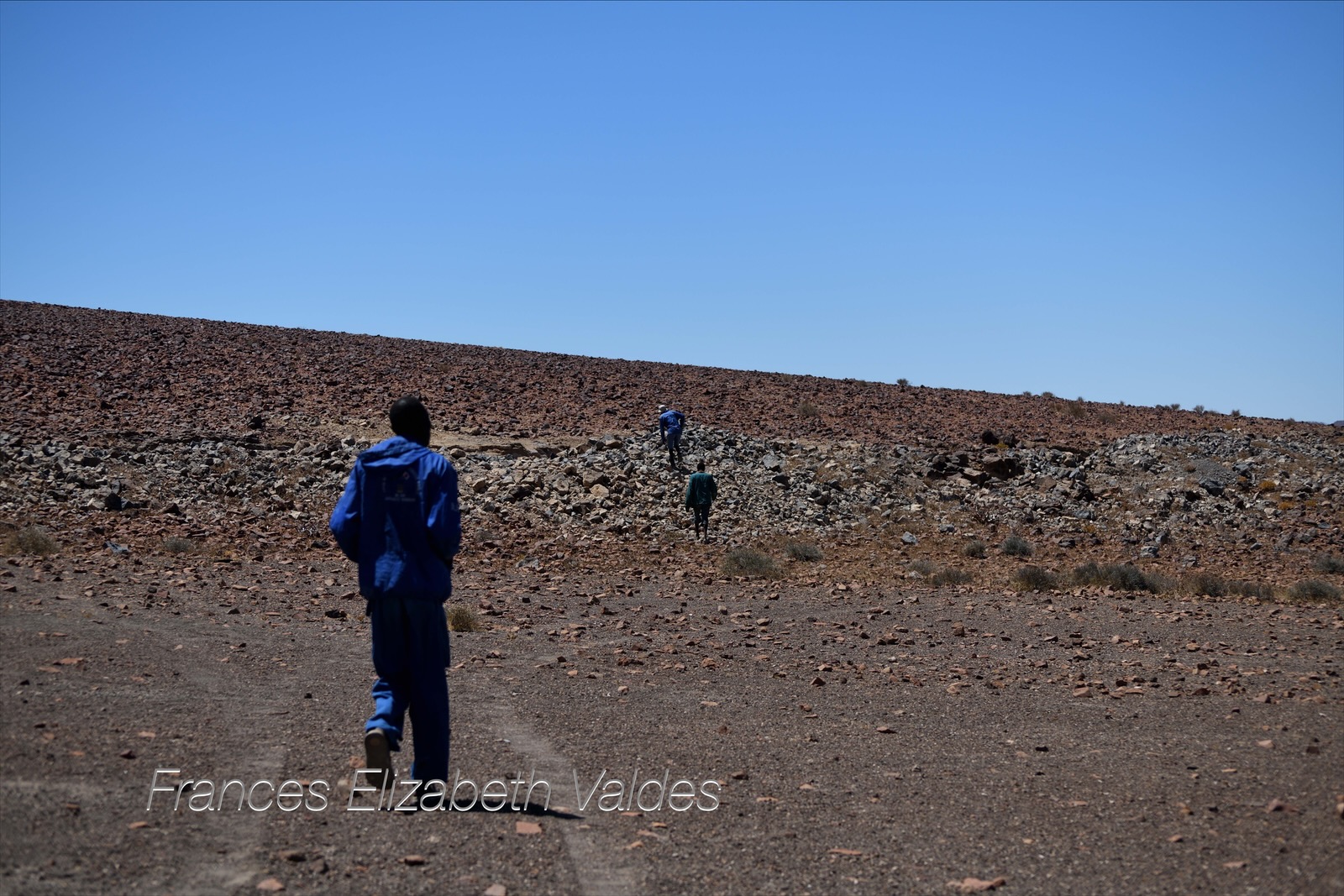
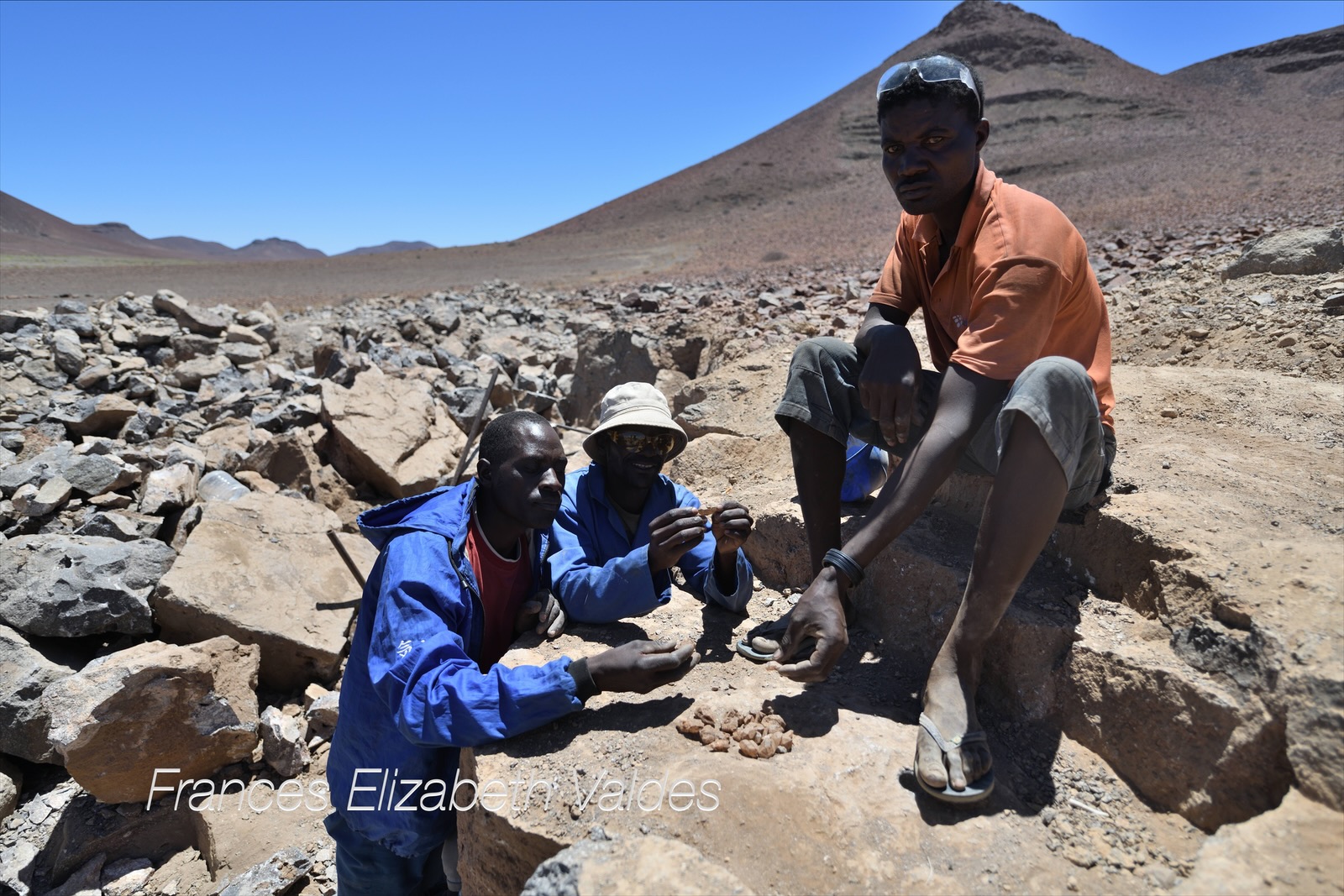
The miners took us to where they mined the crystals. We drove to the seam they were working, but normally this would have been an hour’s walk for them. They possessed one safety helmet between the three of them, but its main use was to mark the area they were working on after they left.

They dug by hand, had no safety glasses, and no proper footwear. They extracted the crystals from the rocks by swinging sledgehammers, and digging with metal prods and bare hands
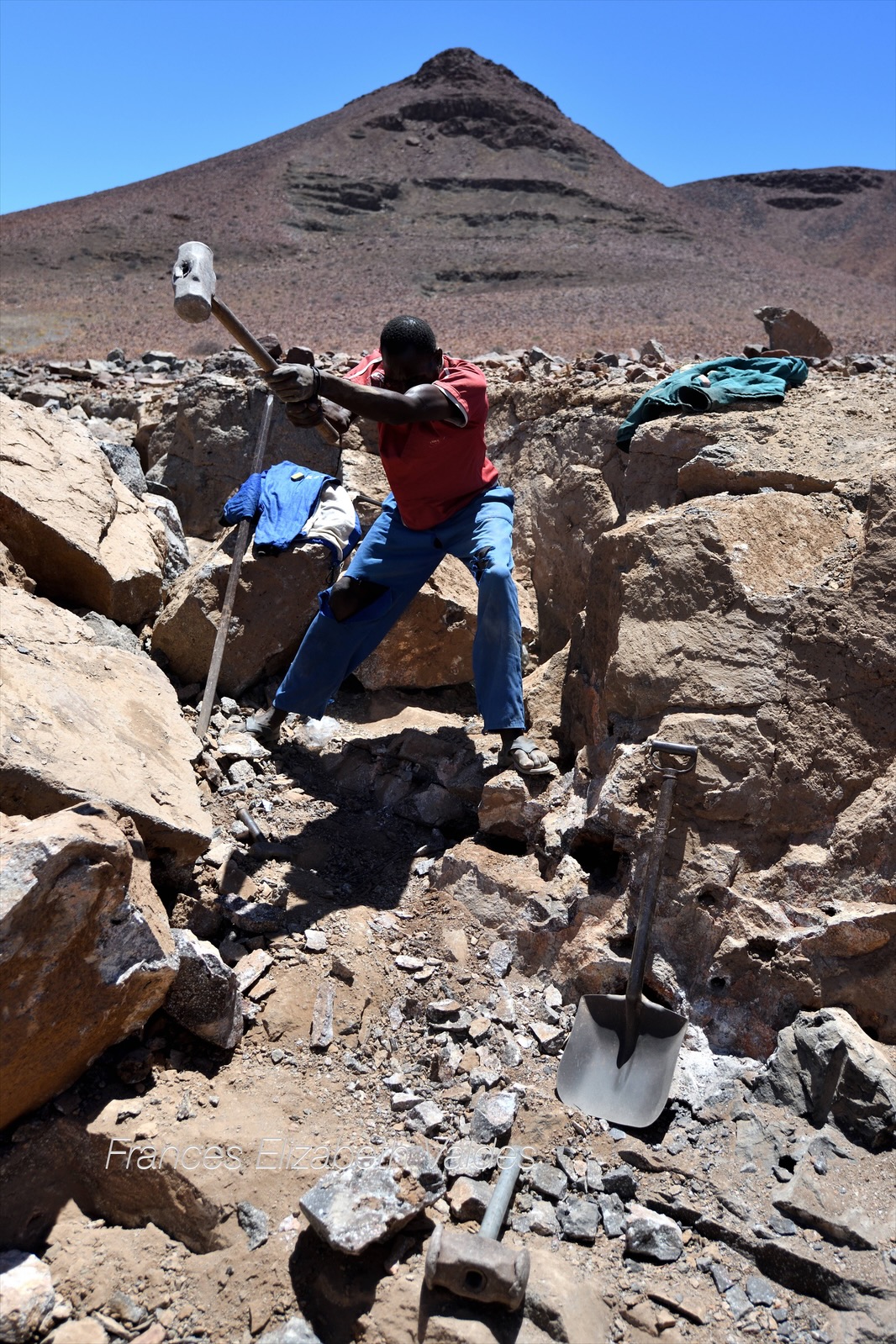

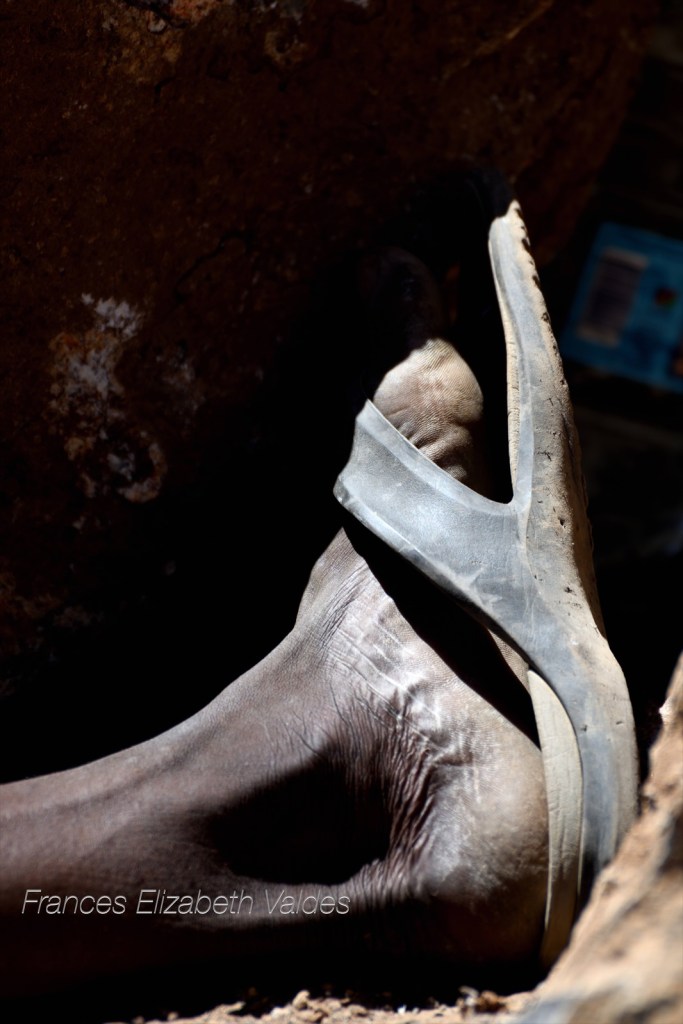
While we were with them, a flip flop broke, and they had nothing to replace it with.
A few days later, we watched an overland bus filled with tourists stop at one of the roadside stalls. Its occupants gathered around the stall and started to ‘bargain’ over the price of minerals. Perhaps they didn’t see the shacks behind the stall where the vendors lived; perhaps they didn’t compare them to the homes they had left to go on holiday. As we watched them try to get the price of the crystals reduced, we thought of the Gogogobos miners.
 Desert Wonderers