
Aba Huab – Huab – Nr Desolation Valley
The rain was still rattling around in the distance when we woke, but as the day wore on it disappeared; burnt off by the scorching sun. Waking up with the sun, watching it rise over a world unchanged for millions of years, and being completely alone in the desert, is a wonderful experience.
We made our coffee and prepared our breakfast while we discussed where to go that day. We decided to try to get to Desolation Valley again. It meant driving back towards the Aba Huab river, but we would go past the Slangpos Waterhole which would give us an opportunity to top up our water tank.
We drove back down the same track we came up last night and spotted elephant footprints. It was the spoor of two elephants who must have walked past our camp last night. How can something so big be so quiet.
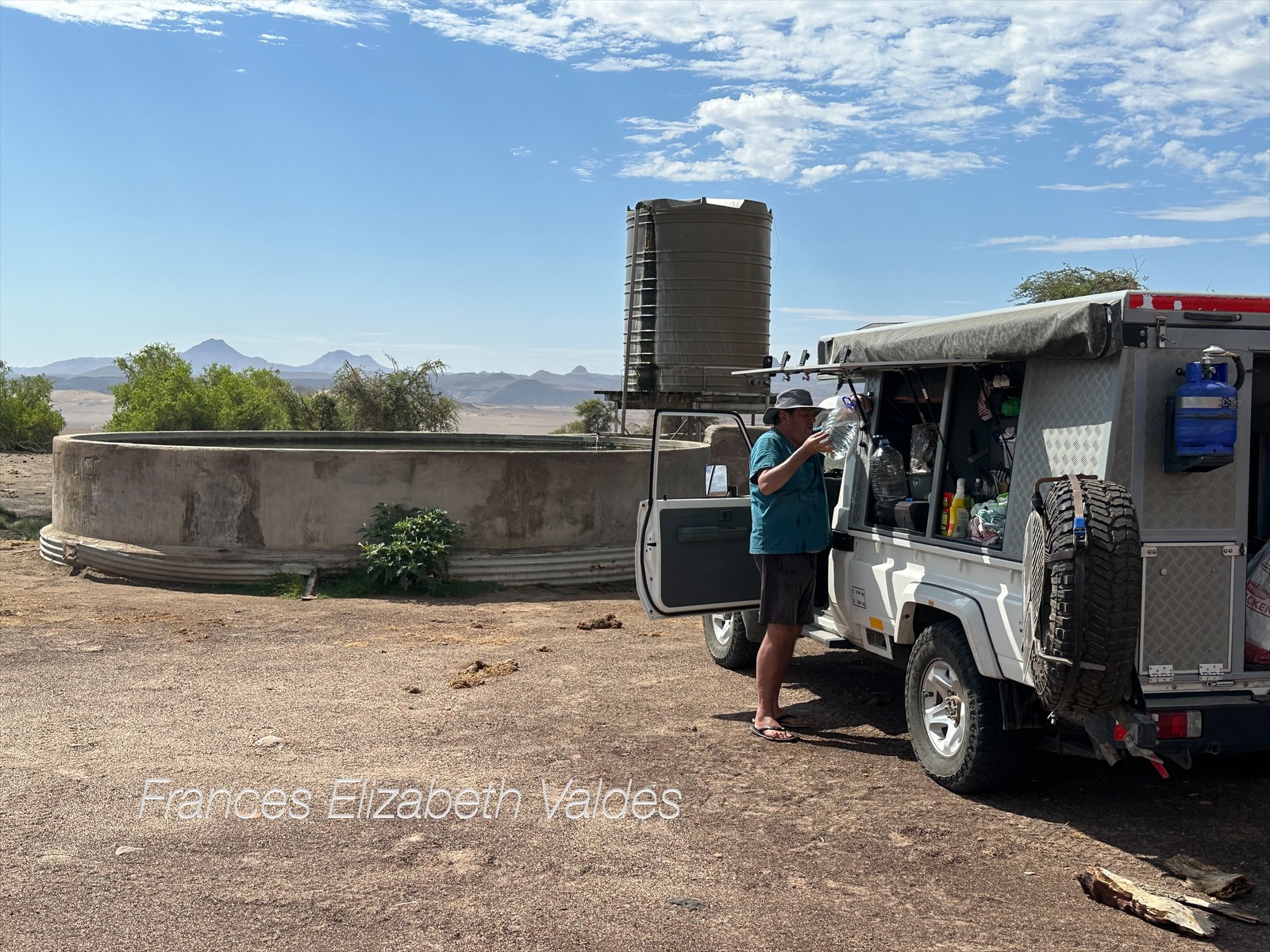
We got to the waterhole and saw a lodge safari vehicle on the overlook. The elephants had only just left the waterhole.
I asked the guide how to get to Desolation Valley and he gave me some instructions, which I really hoped Nigel was listening to, given my navigational skills. If I couldn’t use the Tracks4Africa app to keep the dot (us) on the line (a track of some sort) we were lost.
We drove on a track alongside, but a little away from the Huab. We needed to get round the reed beds which obstructed us yesterday. I was trying to remember what the guide told me but could only remember keeping right by the little hill.

The scenery had turned into large boulders with desert varnish 1 which is what we remembered from 2020.
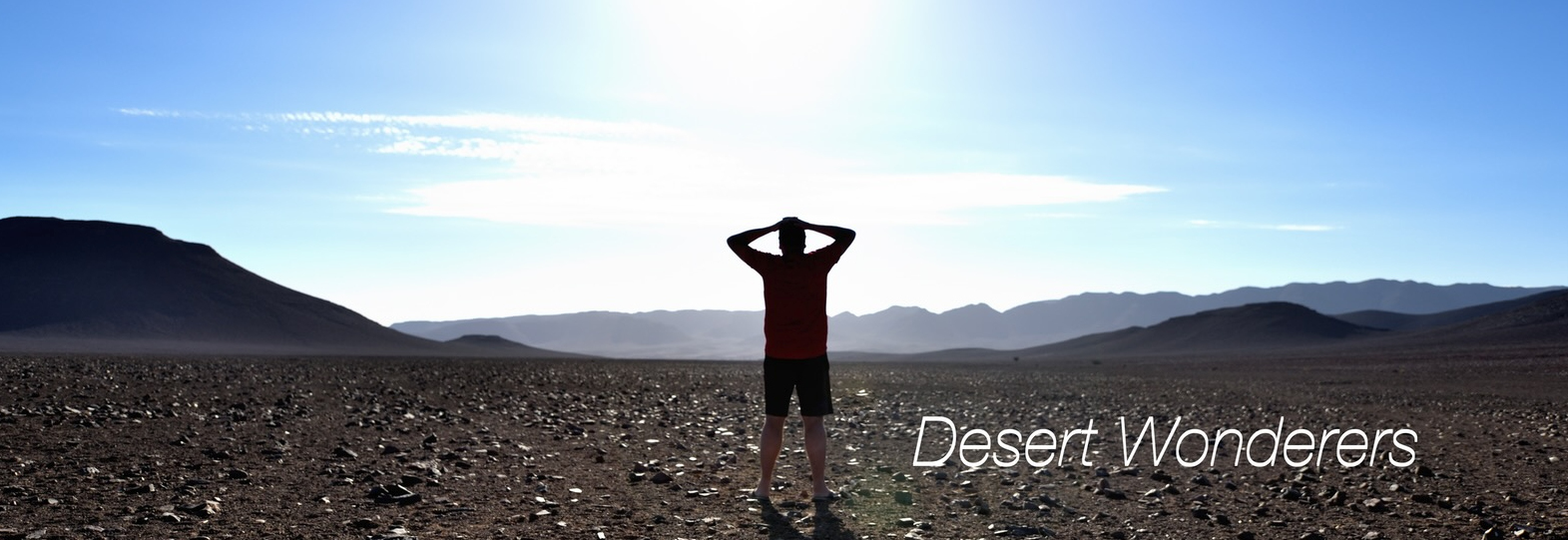
Large boulders sitting on the desert floor with the backdrop of mountains, fill us with wonder. How did they got there? What forces moved them? How long did it take for the desert varnish to form? Did the San walk over these hills in years gone by? This scenery unchanged for millions of years and we were so insignificant in the time scale.
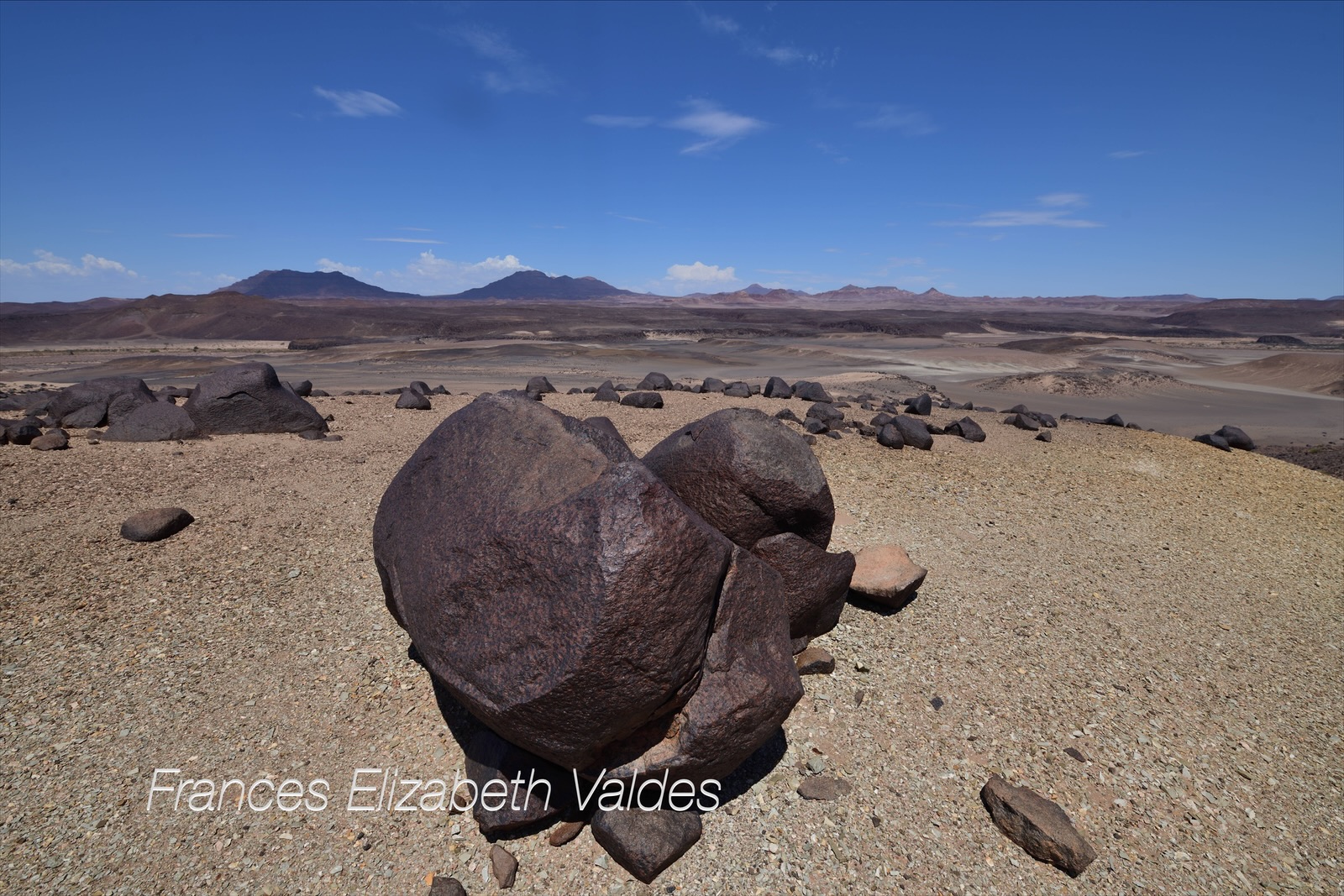
We managed to get to a viewpoint of Desolation Valley, and could see the Huab as it headed to the Skeleton Coast emptying no water to the Atlantic Ocean.
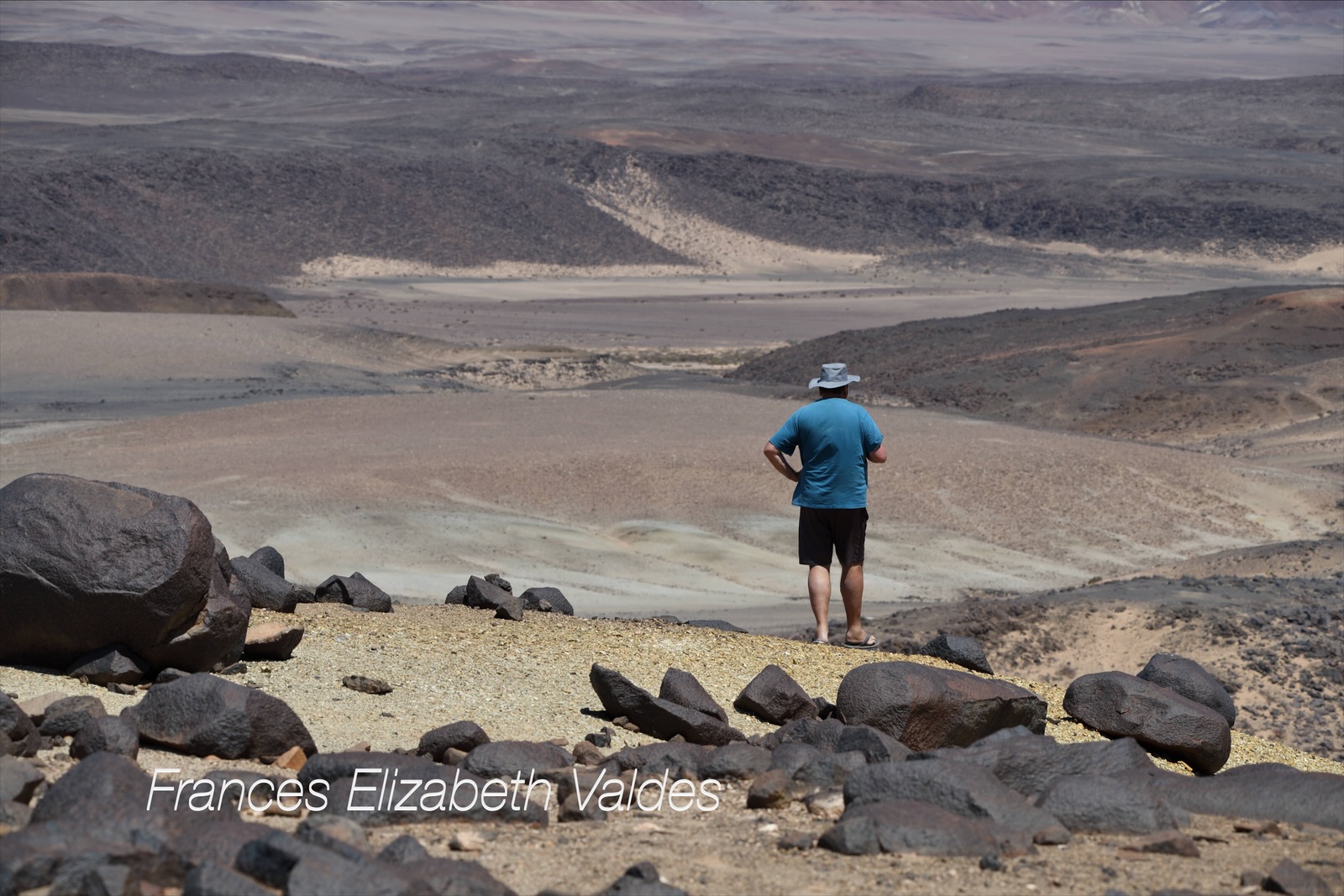
We had lunch and then decided to head north on a track which would eventually take us to, what passes as a main road (in Namibia this means a well graded gravel).

The track to get to the ‘main road’ was one of our least favourite, not difficult but tedious – small rocks meaning you couldn’t go fast.
Around 4 pm we started to look for somewhere to spend the night. We needed somewhere not too rocky and flattish. We spotted a good site but we could see a tented camp on an outcrop above it. We went up to the camp hoping we could ask permission to camp out of sight, underneath the outcrop, but there was nobody around. In an open kitchen area there was a fridge with filo pastry, but little else. This seemed to suggest no-one was expected. The Tracks4Africa app stated it was owned by a group offering tented tours of Namibia.
As there was no sign of life we decided to tuck ourselves away under the outcrop, in the hope that this wasn’t the day the day tour arrived. We were just beginning to settle in when we saw a young man and a small child walking towards the camp. They saw us and came over. Since English is taught in all schools, communicating is not a problem even in rural Namibia – you just need to find a young person. The young man told us that they were the sons of the couple looking after after the camp. It was not being used that day, and we were OK to stay. He was waiting to go to university, as it seemed so many of the young men his age were.
I gave a toy tiger I had crocheted to the little boy. He took it, but looked at me suspiciously. He had his brother’s mobile phone in one hand, which he held onto. I got the sense he didn’t know what to do with the tiger. They both walked away. I saw the little boy hand the mobile phone to his brother, and take the tiger with both hands, as if he now knew it was his. It still makes me smile. as I describe it.
We settled down knowing it was OK to stay. The young man said a fire was not a problem, and I made some more bread over the camp fire. It was hot, we showered and had a lovely evening.

Ever since my first experience of African camping in 2020 I have had a passion to bake bread on a camp fire. This was result on that day.2.
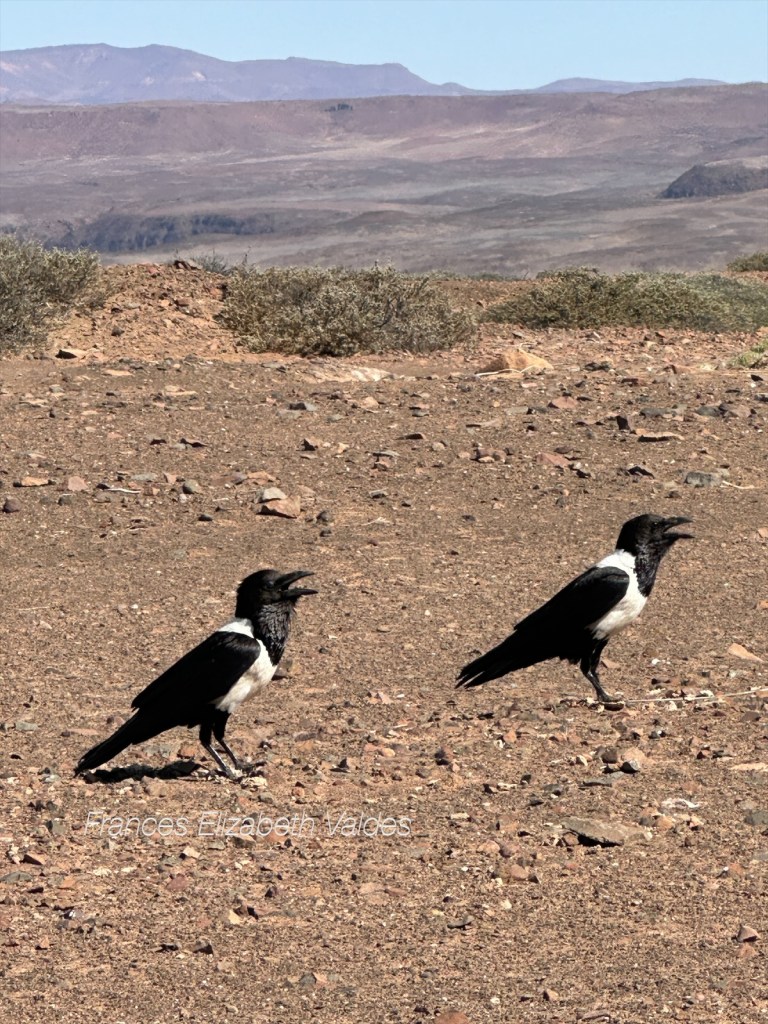
It didn’t take long for these guys to check out what we were doing, and what they could scrounge from us.

- Desert Varnish is found in many desert areas of the world. A thin layer of manganese oxide or iron oxide coats the rocks causing a shine. It is a bit of a mystery as to how it forms. It seems clear the the slight moisture from the ocean fogs or dew cause the oxidisation, but its not sure where the manganese or iron come from – its not the rock. Manganese is quite rare and one theory is that there is a biological agent – a microbe at work. ↩︎
- I don’t usually do Instagrammy food photos, I was just rather proud of this ↩︎
 Desert Wonderers