
Rhino Camp – Doros Crater – Abu Huab
We were the only people in Rhino camp but despite that, we wanted greater remoteness and wild camping – just us and the desert. In the past, we found this kind of remoteness in the Doros !Nawas Conservancy, our next stop ( the local language is Nama which is click based hence the ‘!’ ). We filled our water tanks before we left Rhino Camp in anticipation of at least a couple of nights wild camping.
On our way out of the Ugab valley we passed Louise’s son, who was living with her at that time. He was walking her dogs dressed in a cosmopolitan t-shirt and shorts (him not the dogs), and listening to music on fashionably large headphones. He looked like any young man walking their dogs around our local park in Brighton U.K.. But, he was thousands of miles away from their opportunities.
Louise’s son told us how he was waiting to go to university in Windhoek, and wanted to be a geologist. He loved the Brandberg area, and wanted to come back when he was qualified. It seemed such a reasonable ambition – for a westerner, but we couldn’t help feeling the odds were stacked against him. He would need money for university, and would have to compete in a very constricted labour market. Unemployment is bad in Namibia.

We drove north up a side canyon, passing what was supposed to be a stream, but was now an area of damp with a few silted pools. Rain was badly needed.
We travelled through the canyons for several hours until the track opened onto a large plain. In the distance were table top mountains, and Doros Crater.
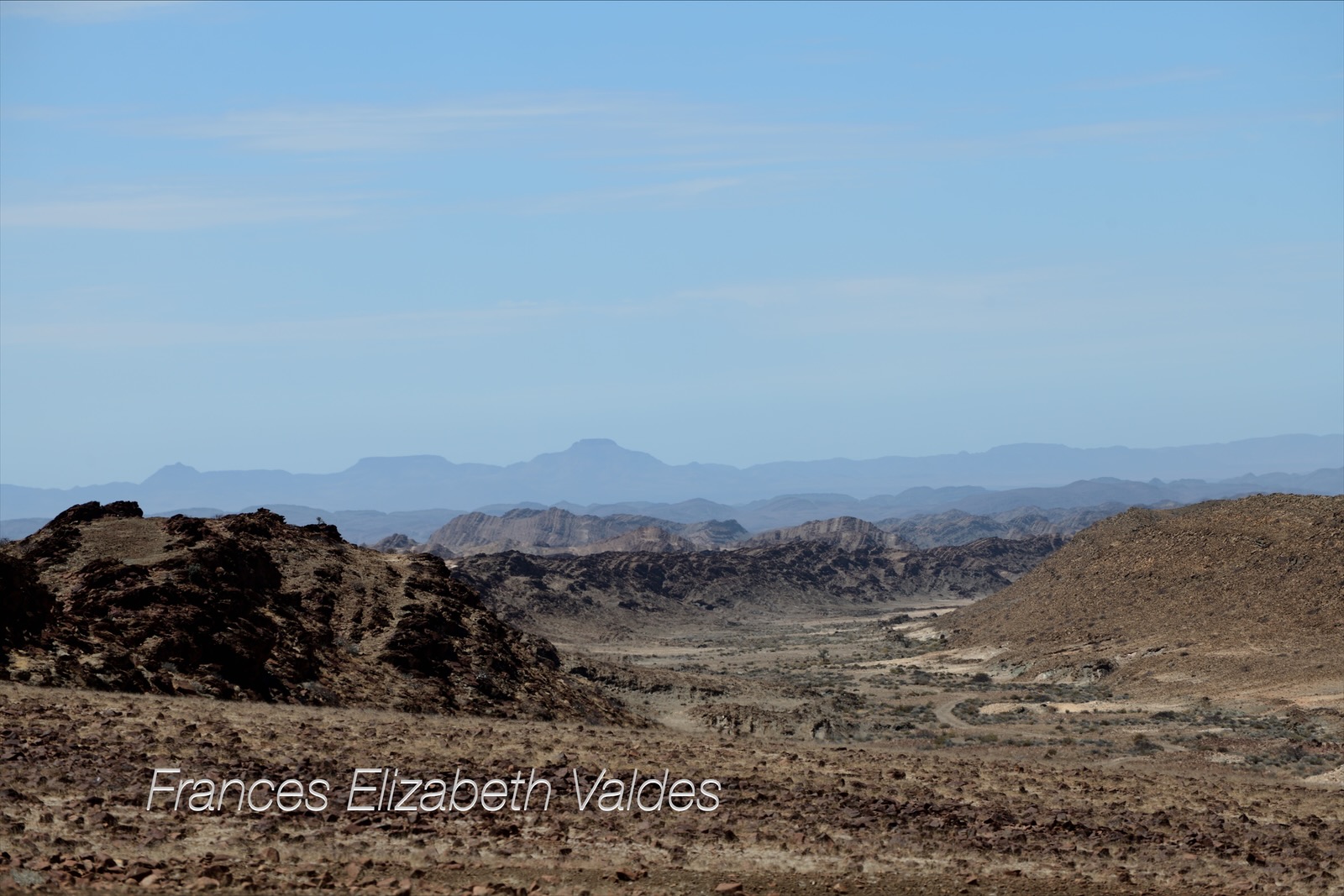
In 2019 we had difficulty finding Doros Crater, but now it seemed difficult to ignore. Perhaps it was just the angle we approached it at – coming from the south, instead of from the east as in 2019.

I find Doros Crater fascinating. It looks like volcanos we have seen in Iceland, which have recently erupted ( geologically recent, so perhaps last century). But Doros crater was formed around 180 million years ago. Lack of rain means few plants and little erosion. It appears unchanged; a frozen depiction of the forces once creating this landscape.
Doros !Nawas Conservancy was not well visited when we were here in 2019 and 2020. You not only needed 4 wheel drive to get here, but you needed to be good at doing it. There were times when I had to get out of the car and build up the track with rocks, or direct Nigel over large boulders. In fact, one of the routes into the area features in the Dangerous Roads of the World website . They suggest tackling it with two vehicle driven by experienced drivers. We had one experienced driver (Nigel) and a satellite phone for emergencies.
Now we came on to the plains and were met by a noticeboard saying no wild camping. Since the nearest campsite was 4 or 5 hours drive away, it seemed perverse to place the sign here.
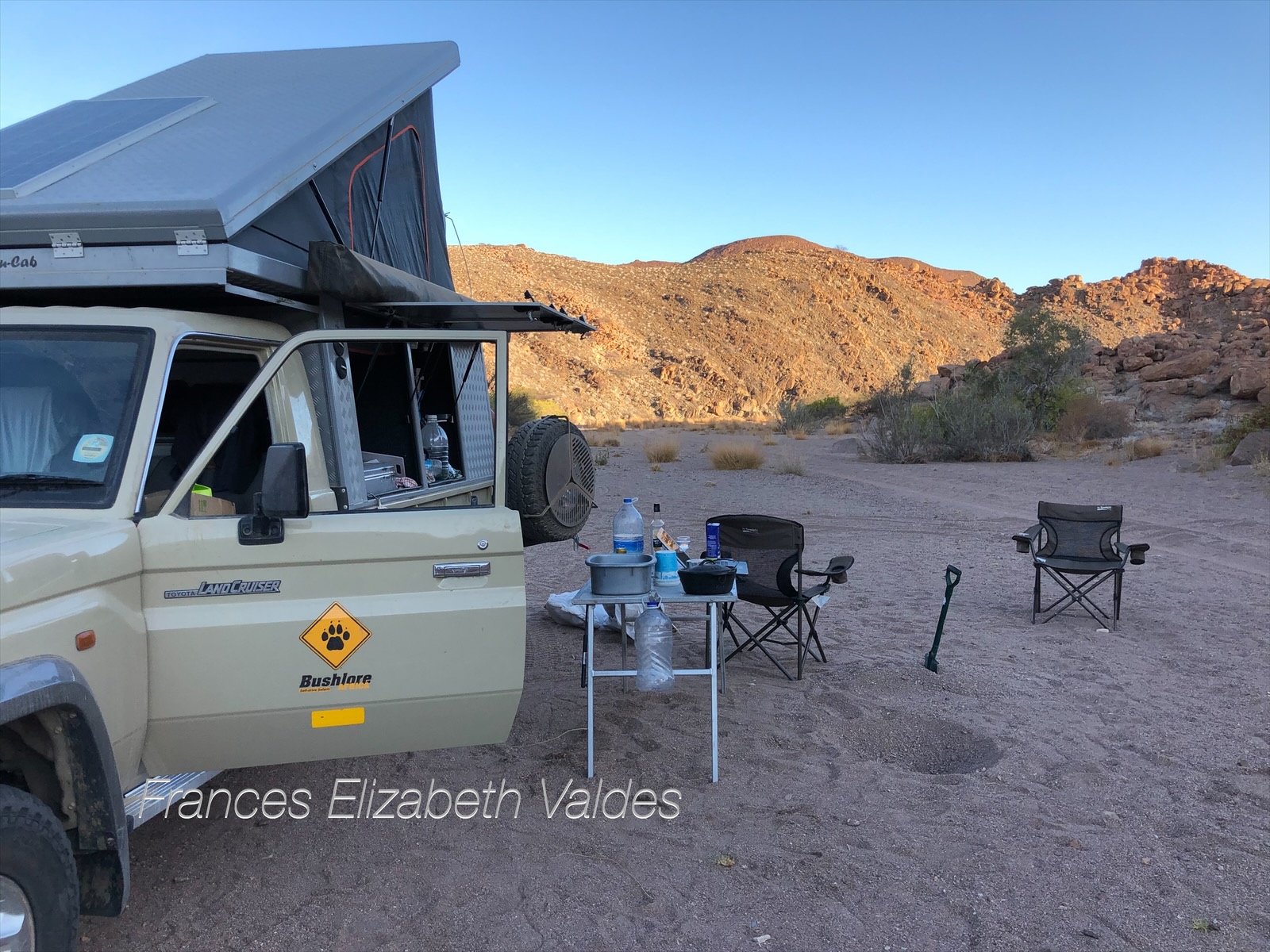
In addition, to the no camping signs, various tracks had no entry signs. In fact, there were signs everywhere telling you, you mustn’t and couldn’t. Admittedly, some of the signs were directional, which certainly would have helped in our first year here, when I’d got hopelessly lost. The tracks were in better shape than before. But, I was sad as it indicated they were used more, and the area was becoming popular. I know it is selfish wanting to keep it to myself.
We drove past signs for a new luxury lodge built on one of the hills. Later, we googled it and discovered they were selling the remoteness we had lost by the lodge’s presence. There was also a rhino ranger station (the area has rhino) which may have been there previously, but I don’t remember it. We certainly hadn’t come across signs forbidding driving to it before. We didn’t know whether it was the lodge or the ranger station which had turned much of the Conservancy into a no-go area.
We were sorry we couldn’t re-visit our favourite camping spots. The Tracks4Africa app showed the closest camp to be a community camp at the small settlement of Twyfelfontein, so that’s where had to drive. It took us several hours to drive out of the conservancy, and then we were on graded gravel roads. At the junction with a road to the Twyfelfontein Country Lodge there was tarmac – just 2 or 300 metres of tarmac, surrounded by gravel roads. Not sure why!

It turned out that the Aba-Huab Community Camp was lovely, but so hot. We had a wonderful shower which temporarily cooled us. The shower head was in the middle of a large tree around which the shower had been built. There was a huge, very beautiful Hawk Moth on its trunk. I do take my camera everywhere, but not the shower, so you will have to take my word for it.
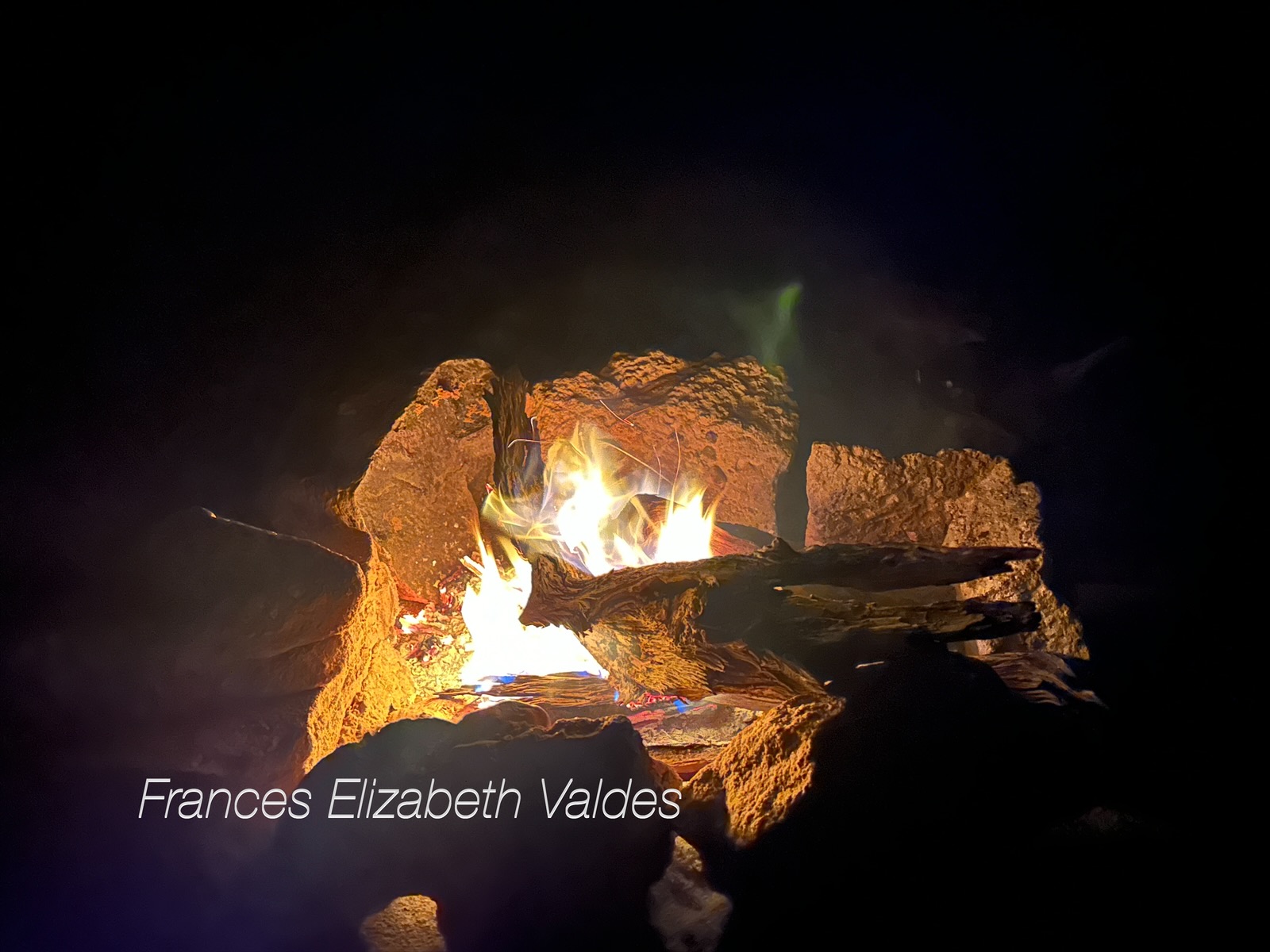
We were brought wood from across the river and we lit a fire. We chatted to some of the locals. They were passionate about football, had a football pitch and were in the local football league. Their pitch was not what our local team of Brighton and Hove Albion would consider a pitch – grass not being a feature in these parts. Nigel gave them one of the footballs he had bought in Windhoek. On our return we learnt that, owing to the prevalence of camel thorns1, it had only lasted a few days. Lessons must be learnt for next time.
The night sky was spectacular, and we sat looking at the stars next to the campfire, trying to cool down! Campfires are obligatory when camping in Namibia.
The Campfire
There is a misconception that a campfire keeps animals away. It does some, but not necessarily the ones you want kept away. You may have seen photos of lions lying around a campfire, which should remind you that, they may be apex predators, but they are still cats.
The first time we made camp, in 2020, Nigel rushed to light a fire. I couldn’t understand why when it was so hot. After a few campfire nights, I understood the real reason. You need it to sit next to when you drink your evening beer. It’s a ritual.
We also cook over the campfire using a cast iron pot called a potjie. Stirring a potjie over a campfire is also the ritual.
- The camel thorn tree is beautiful but covered with thorns. I don’t mean rose bush thorns, I mean tyre puncturing thorns. In its defence; it is much loved by elephants for shade, and giraffes for snacks (its leaves ). ↩︎
 Desert Wonderers