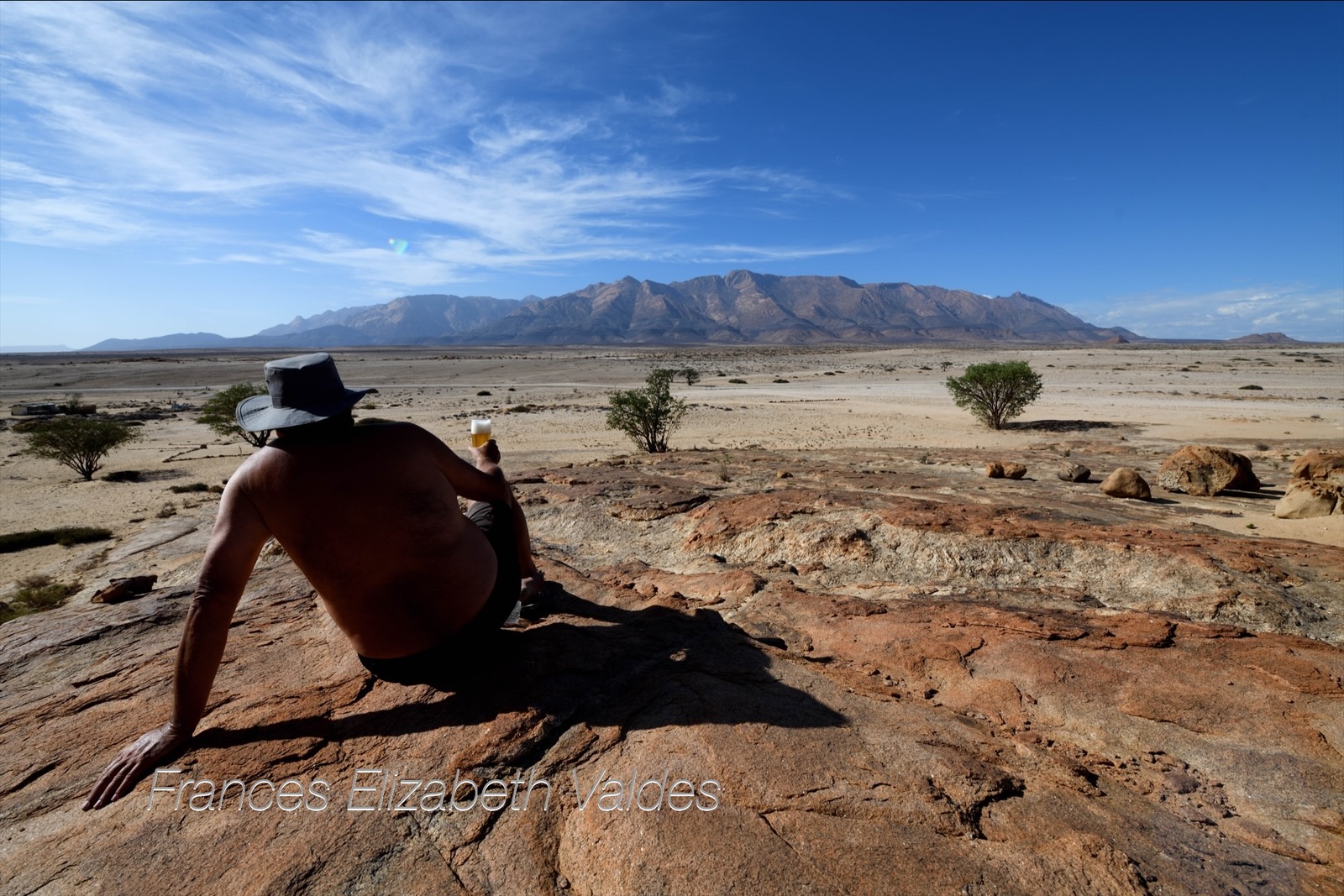
The last time Nigel and I were in Windhoek the news was full of a virus in China. We returned back home to the U.K. in March 2020, shortly before lockdowns spread through the world. Now, four years later, Windhoek seemed unchanged, but we knew it wasn’t. Around the world people share a past filled by memories of Covid. In a poor country like Namibia, people’s suffering was among the greatest.
Leroy from Bushlore Car Rental collected us from the airport. It was an hour’s drive to Windhoek where our expedition Land Cruiser was prepped and waiting. During the drive we asked how Leroy and his friends had dealt with Covid, or more especially lockdowns. Bushlore had been very fair, and they had been retained, but not everyone in Namibia had such compassionate employers. Namibia’s economy was beginning to improve, but many people still did not have jobs lost when covid lockdowns struck and tourists left. Over the next four weeks we learnt to recognise those without jobs by how thin they were.
Windhoek is a modern city, but even in modern cities it is possible to find traces of the culture and landscape beyond. As we got to an affluent suburb of Windhoek, Leroy stopped the car allowing a large leguaan (a monitor lizard) to cross the road, heading towards the housing estate.
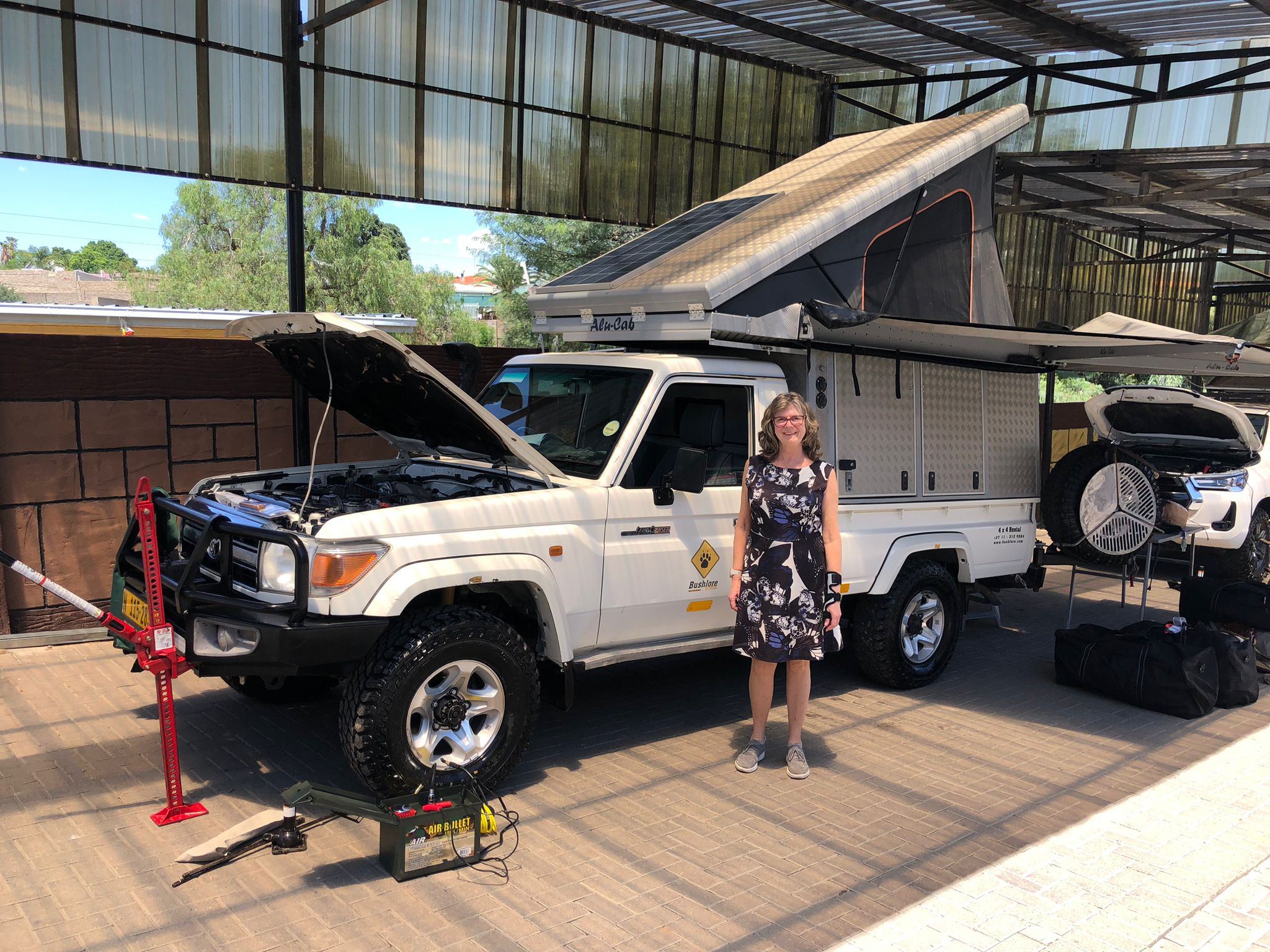
We arrived at Bushlore’s compound and our Land Cruiser was waiting for us. To expedite the hand over, we had decided that Nigel (background in engineering, cars, and motorbikes) would be shown the vehicle; and I (retired solicitor) would deal with the paperwork.
Nigel had quite a bit to absorb as he was shown around the vehicle. As a lawyer, I loved Bushlore’s pragmatic approach to the rental contracts. It was summed up as- if you’re sensible, you can do what you want.
We had a sense of release when we finally drove out of Bushlore’s compound. We were on our way. Except, first we had to shop for our trip, then pack for the next four weeks, then, and we were especially looking forward to this, we needed to sleep. We had started our journey over 26 hours ago, and we’d not slept well on the plane. We had booked our first night at Arrebusch Travel Lodge, and were looking forward to a real bed. It would be our last experience of crisp white sheets, a comfortable mattress and air-conditioning for four weeks.
Being tired didn’t make the shopping easy. I had made a list back in the U.K., and knew Windhoek was the only time we were likely to shop at a large modern supermarket. We grabbed a shopping trolley and started ticking things off our list. But it didn’t go to plan, tiredness meant we wanted to cut corners. Nigel became concerned we couldn’t fit any more in the van. My list became redundant.
We finally drove to Arrebusch Travel Lodge mid afternoon. I had specifically asked for a chalet with parking next to it so we could pack the van for the next four weeks. Back home, I had not only made lists of possible camping meals, and a shopping list of food we would need, but I had also planned how to pack the campervan. The van does not have a lot of space, and it is vital to pack so you know where everything is.
It seemed to take forever to pack the van despite my plans, perhaps because we were so tired. Eventually it was done. We ordered a lovely pizza from the restaurant, and collapsed into bed.
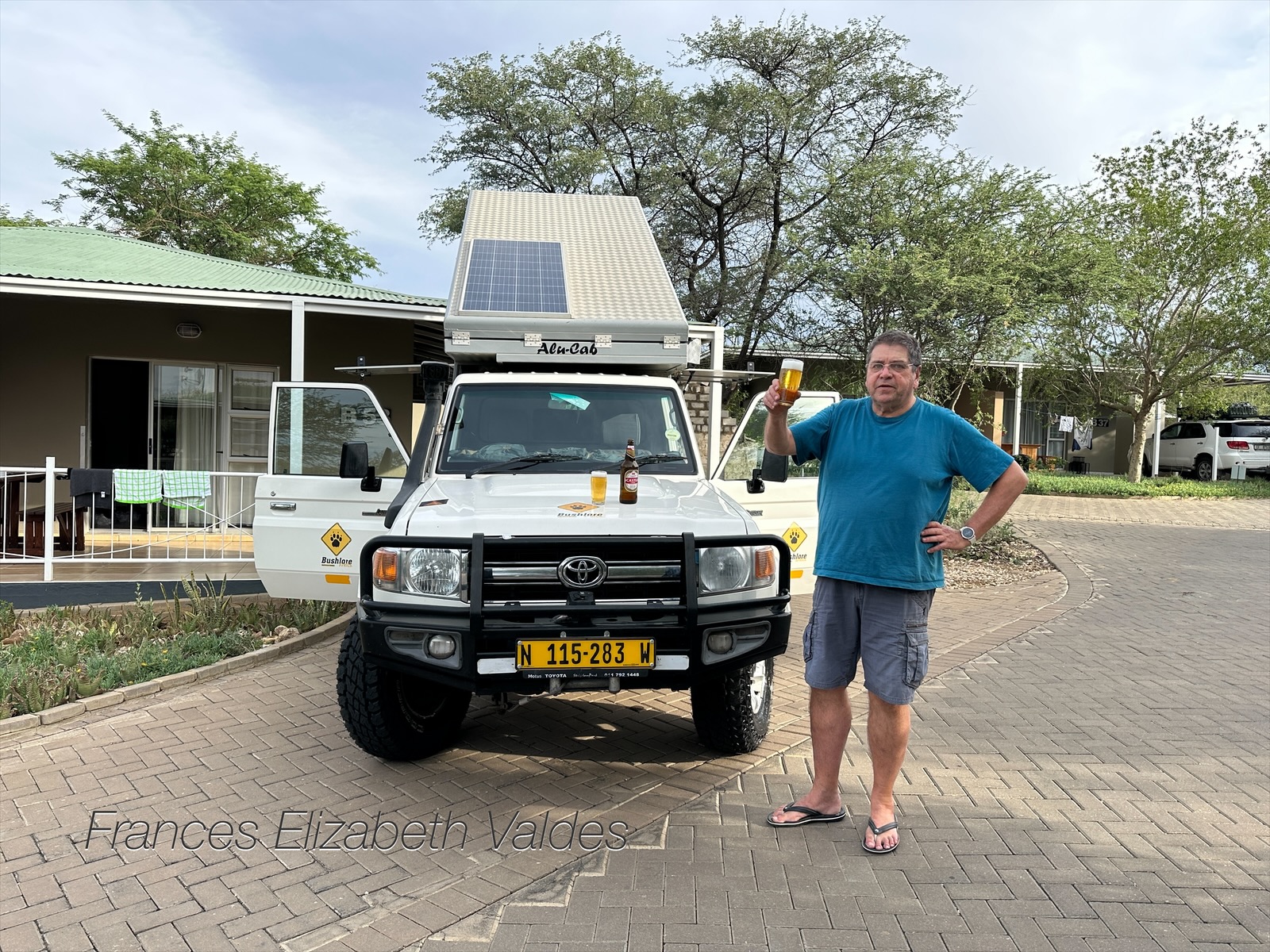
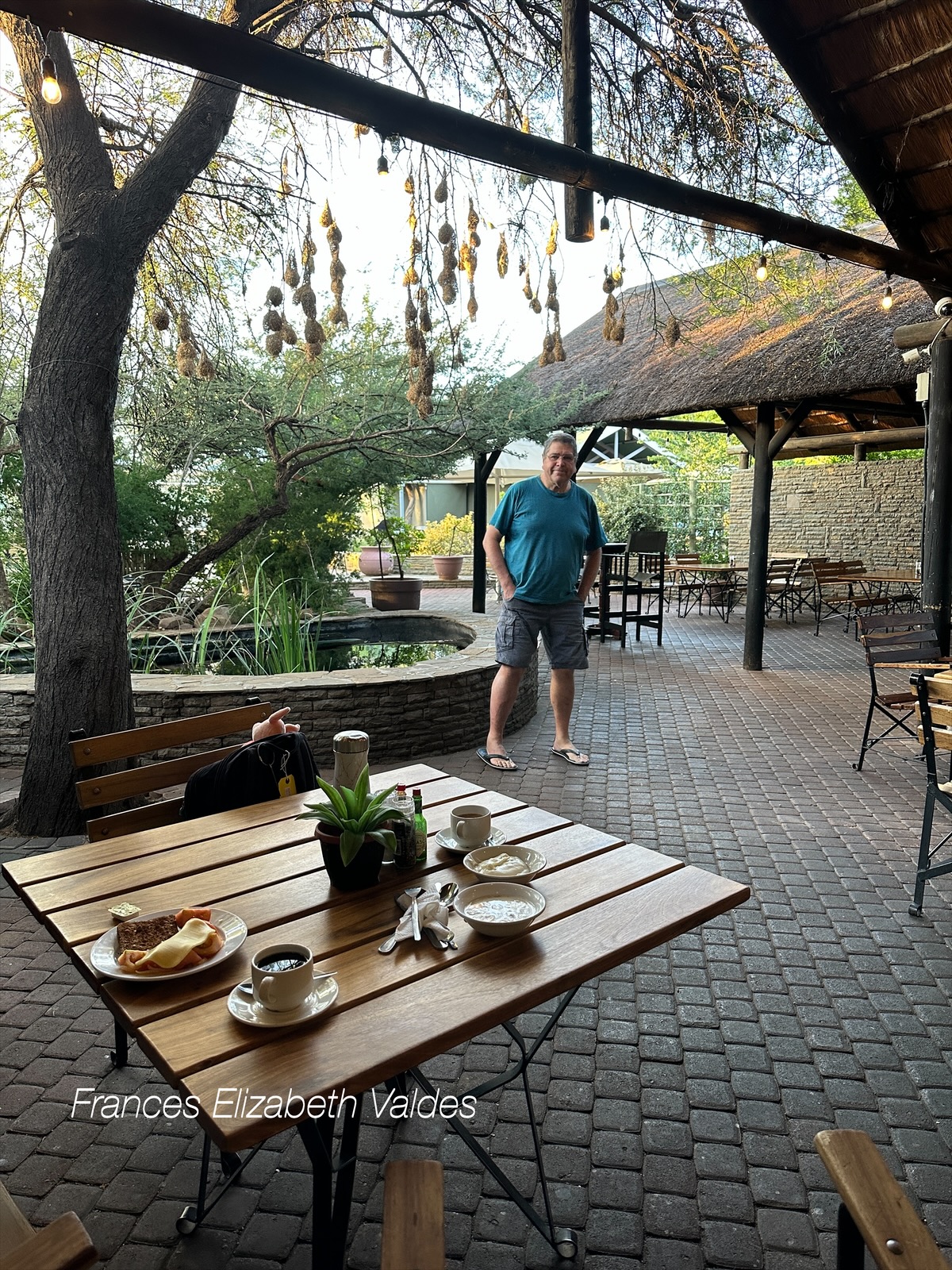
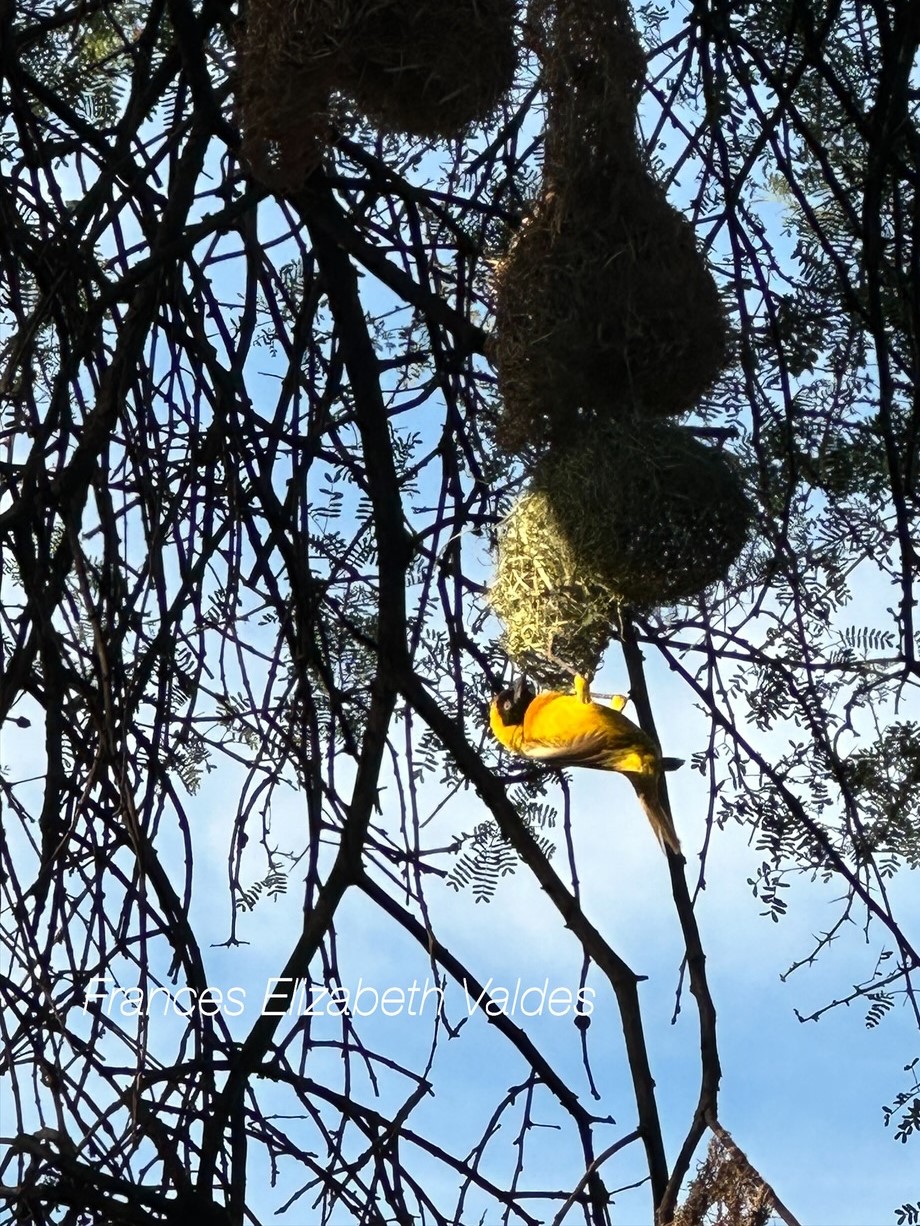
The next morning we were ready for a month in the desert. Arrebusch is lovely, but could be anywhere. We were still in a city. But, like the leguaan yesterday, breakfast provided a reminder we were in Africa in the shape of a small yellow thief bird. In the middle of the outdoor restaurant was a tree full of dangling weaverbird nests.
We sat down for breakfast and realised the weaverbirds had chosen the tree for the same reason we chose our table – access to food. Anyone leaving their table to get a knife or more coffee, returned to the remains of a weaverbird raid.
When we had shopped and packed the camper we were very tired, and worried about space, Now, we were more awake and realised we had a bit more room than we originally thought. We always try to take food staples for the small communities and schools up-country who are badly in need. So, our first stop was a nearby supermarket to buy extra maize meal (called mealie in these parts), cooking oil, sugar and soup packets (used to flavour mealie porridge).
This supermarket was in a modern enclosed shopping mall, on the edge of a new and prosperous looking estate. It was mostly empty, apart from a very long queue at the ATM. It was Friday, so I presume people were collecting their wages. The ATM was next to a shop selling Le Creuset products. We could have been anywhere in the world. The products and prices were about the same as the U.K. The walls were littered with glossy adverts portraying white or extremely light skinned models enjoying lifestyles miles away from the people up-country – literally and metaphorically.
We bought more food to give away, more for us to eat, and a few more footballs (these are extremely popular in a football mad nation). We waited while the footballs were deflated to take up less space. We were in no hurry as we wandered through the mall, after all, this was the first day of a month-long holiday. But as midday approached, we realised we needed to leave. The mall was not why we were in Namibia. We had come for remoteness, for desert, for joy in emptiness; the mall was not a minimalist environment.
We broke free of Windhoek’s gravity.
 Desert Wonderers