
Windhoek – Uis – Brandberg – Elephant Song
The road out of Windhoek is a transition to the real Namibia. Nigel and I were relieved to be leaving behind the clamour and bedlam of the city and travel towards the peace of the desert. The road is a standard three lane tarmacked highway, but as it passes out of Windhoek we glimpsed different worlds: shanty towns of plastic sheeted huts, firewood sellers in lay-bys, and troops of baboons. The buildings eventually disappeared revealing sparse vegetation, and an arid landscape; the wilderness we seek.
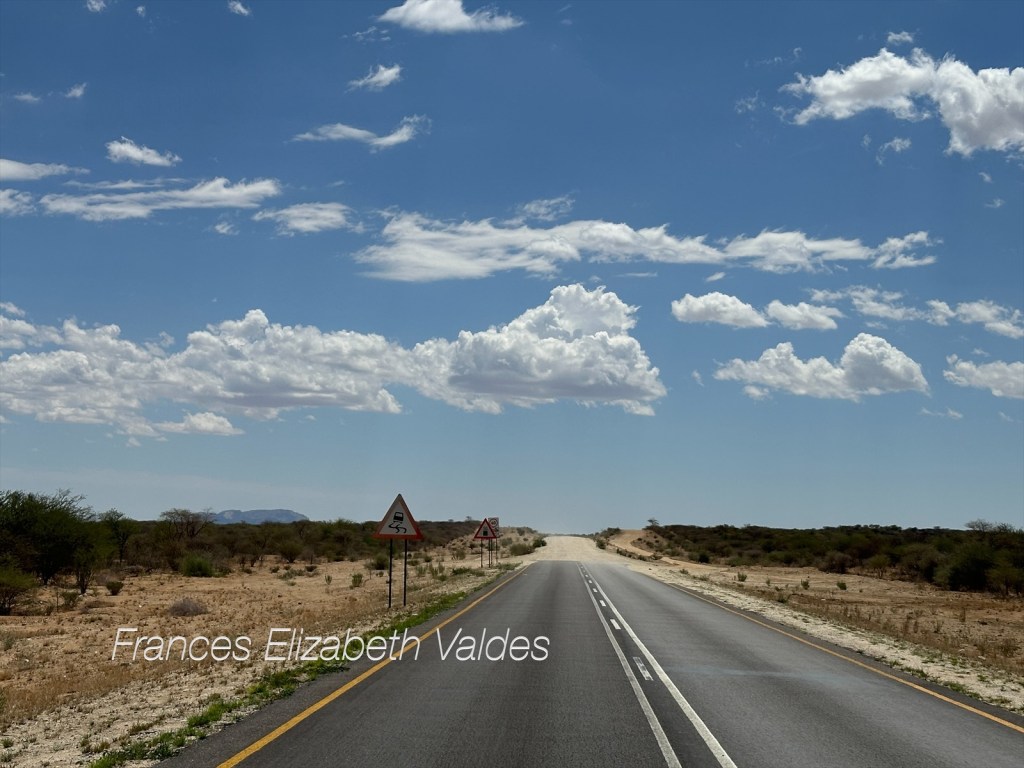
We drove towards the town of Okahandja and then west towards the coast, finally turning north off the tarmac road and on to a well graded gravel road. Leaving tarmac was the first sign we were heading where we wanted to go; wilderness.
We had to pass through Uis to get to our first night’s stop. Uis lives in our psyche.
When we first returned to Namibia in 2018, I read about Uis in a guidebook. It had been a town but was downgraded to a settlement when the nearby tin mine was closed. The tin mined in Uis was low grade. It was economic for South Africans to mine when sanctions, (imposed because of apartheid) prevented them getting tin elsewhere. When apartheid ended, and South Africa could get tin on the open market, the Uis tin mine was abandoned. I was fascinated at the idea of downgrading a town to a settlement.
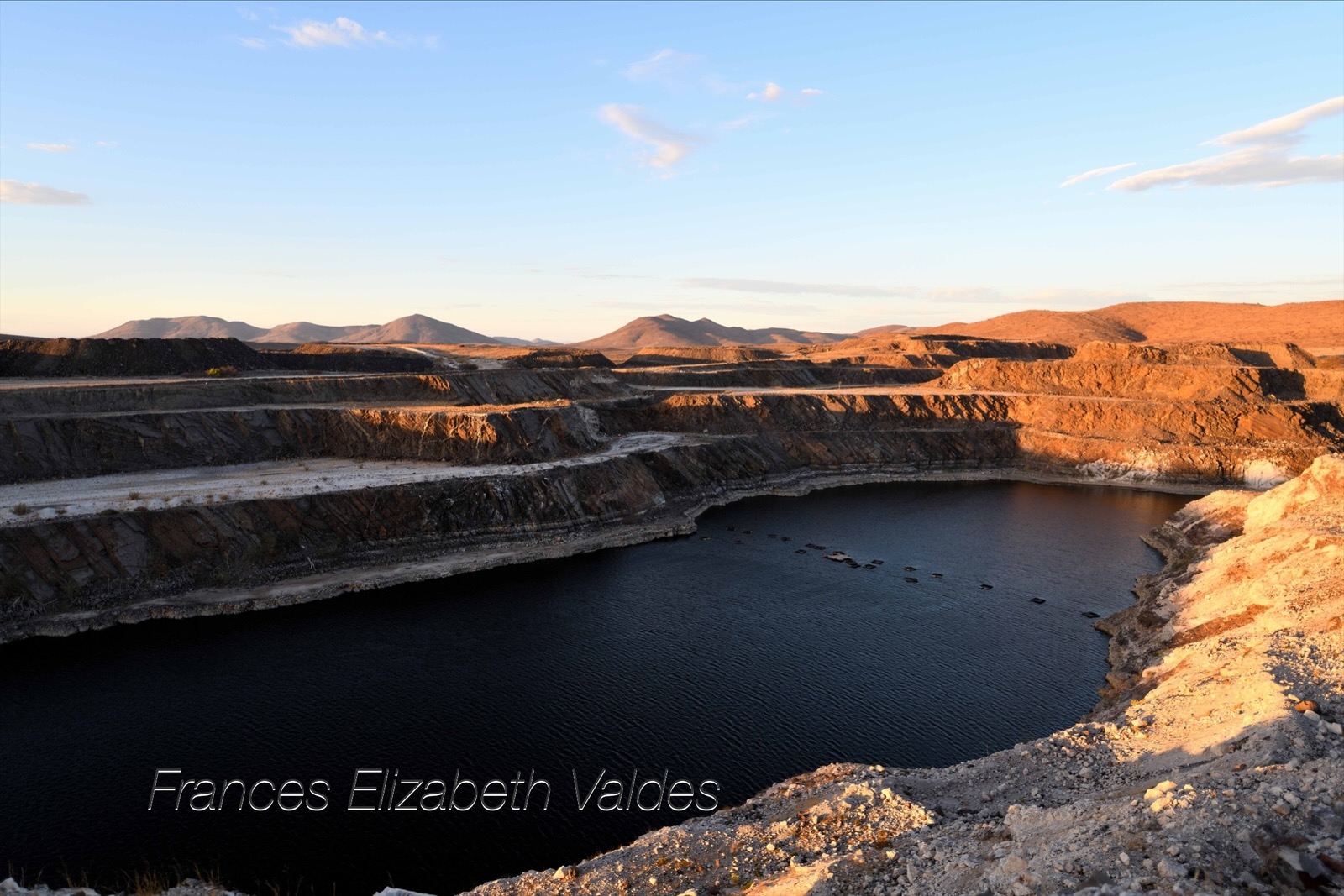
Uis is also in an area of interesting geology, and the two combined made me want to visit. We loved the area so much we returned the following year for longer. And the year after that. And now.
We wondered how much in Uis had changed since our last visit in 2020. We read that the mine was now considered profitable again, and we also knew deposits of desirable (to industry) minerals had been found in the area.
On the edge of Uis we filled up at the same petrol station as in previous years, bought some rocks from the hawkers as in previous years, and stopped at the same little supermarket as we did in previous years. There was something we remembered we had forgotten to buy. Now I can’t remember what.
We couldn’t see any obvious guard in the supermarket car park so I stayed outside while Nigel went in.
In Namibian towns the car parks usually have guards who will look out for your car while you shop. In return, it is courteous, and wise (especially if you may return) to tip them. I heard that in Swakopmund theft from unattended cars was really bad until the local town leaders decided to employ the thieves to look after the cars. I don’t know if it’s true, but it’s a nice story.
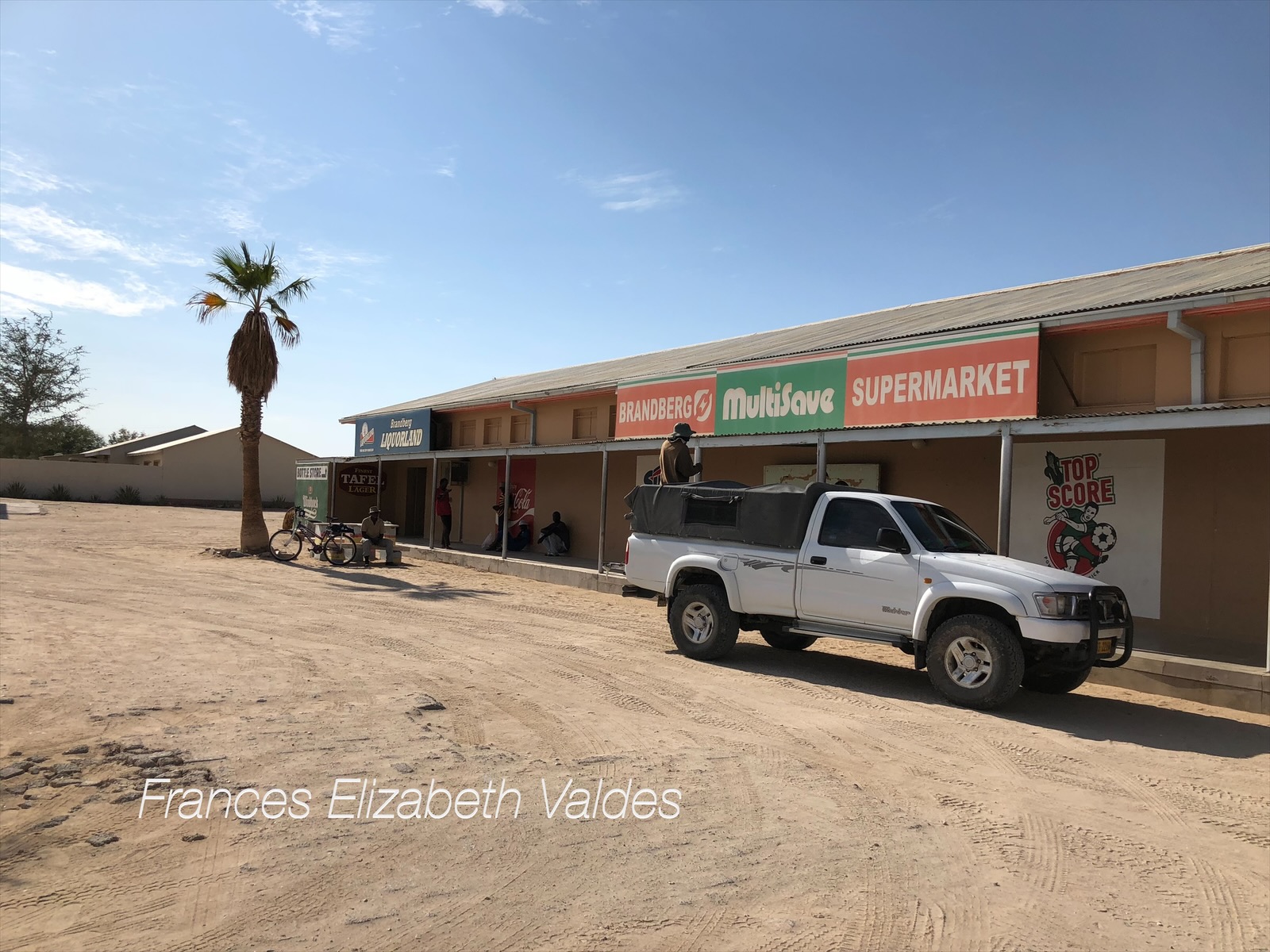
As I was waiting for Nigel, a coach pitched up with workers from the mine. They got off, and I watched a young black couple, still wearing hard hats, walk towards the middle-class area of Uis. In previous years, this area appeared to have predominately white residents. Namibia has been independent since 1990 (it had a variety of colonisers, the last being South Africa) however, housing segregation is still evident in some places. Now the segregation is mainly the result of income disparity rather than regulation. Clearly, revenue from the mine was spreading wealth to previously disadvantaged groups in Uis. This had to be good.
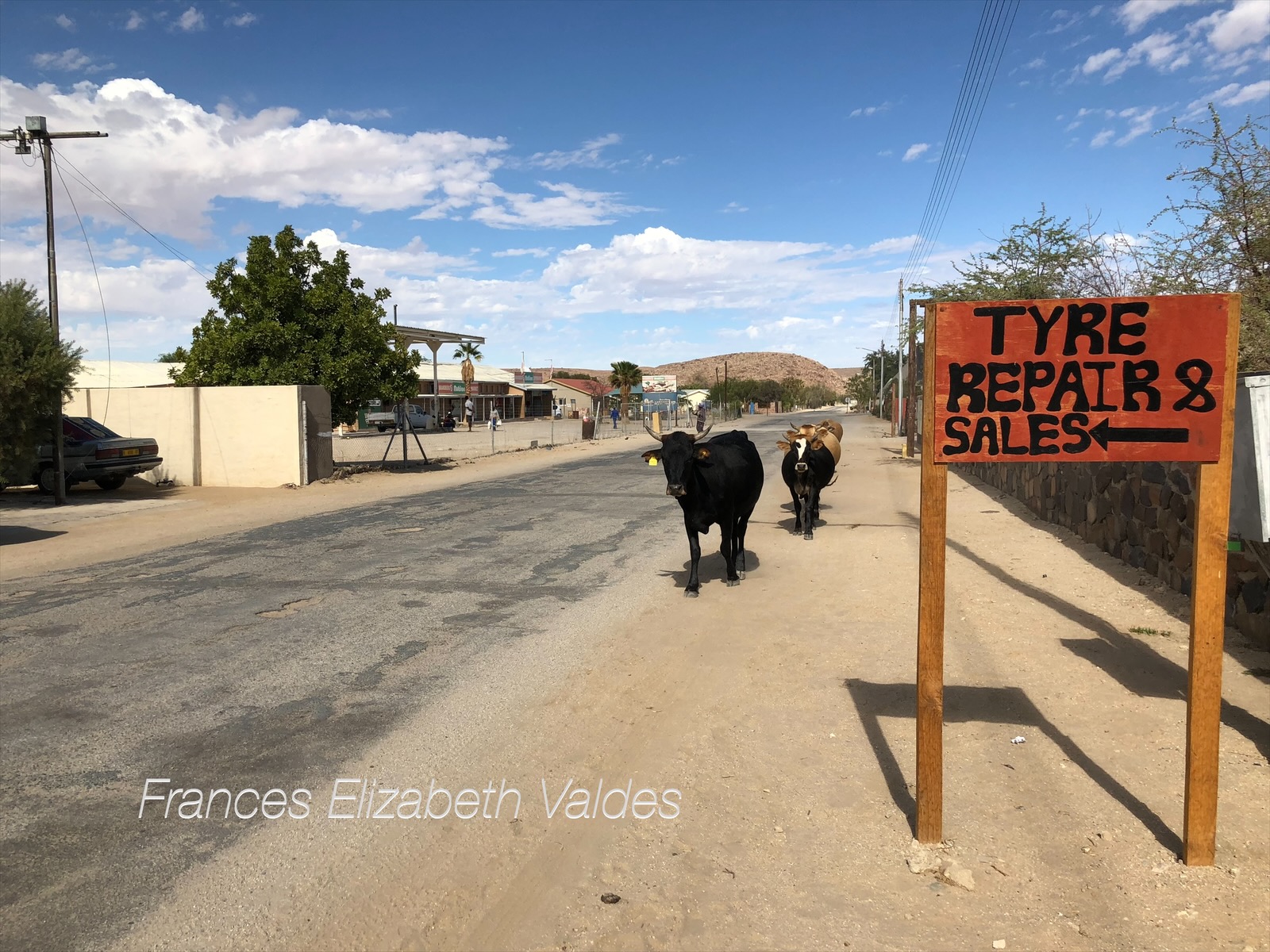
The town was bustling, and had lost its sleepy feel. The cows, which had wandered down the main road, were gone. Nobody was aimlessly standing outside the shop, and I missed chatting to them as I had in past years.
Namibians are some of the most friendly people I’ve ever met. Ironically, as much as we return to Namibia for the landscape, it is memories of the people we meet which stay with us when we return home.
We had wanted to wild camp for our first night, but we had taken so long getting out of Windhoek that we decided not to rush, and camp at a bush camp called Elephant Rock. Namibia has some very nice European type campsites with restaurants and swimming pools, but these are mainly in the popular tourist areas. Bush campsites tend to be in less well visited areas, have only a few pitches, and are mostly run by the local community (although Elephant Rock was owned by a person in Uis, not the community).
I love bush camps, almost as much as wild camping. Every bush camp has space for a campfire, and an outside area to prepare food. There are showers surrounded by some kind of fence but open to the air, and hot water supplied by a donkey boiler. The manager of the camp, who is often its only employee, will light the fire under the donkey boiler, so you can have a hot shower. Usually we were so hot we said not to bother heating the water. There will also be a sit down toilet – at Elephant Song it was flushed using bottles of water left by its side. I was rather inept at this, but I won’t go into details!

 Desert Wonderers