
Xai Ais – Black Ridge
During lockdown when the world had changed beyond anything we knew, we kept thinking back to our holiday just a few weeks before. Our camps at Xai As and then the next night at Black Ridge haunted us. So, when we felt confident to fly again we knew we wanted to revisit these camps.
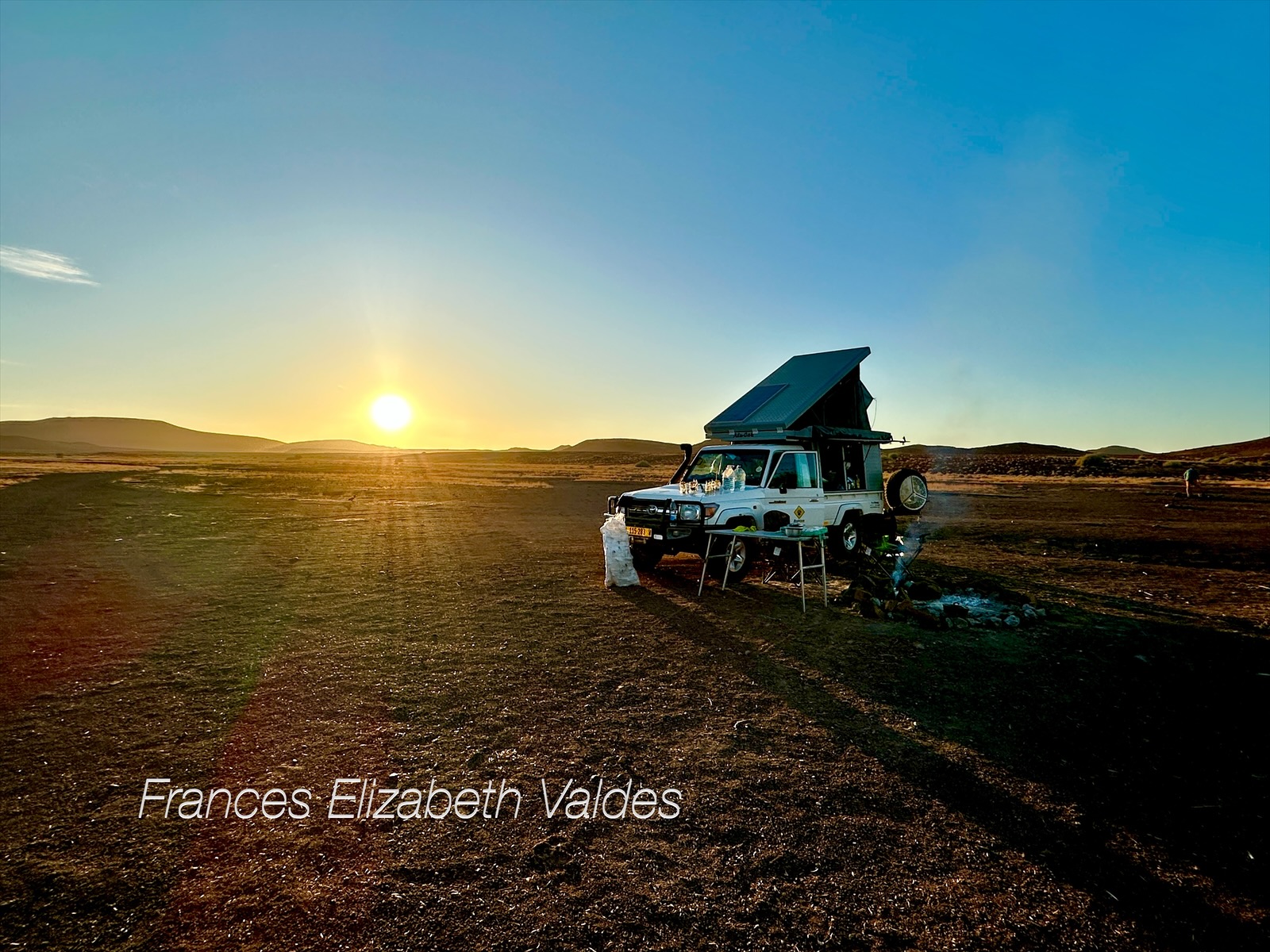
Xai Ais was as we remembered it There were even the same crows, well it’s fair to say we didn’t actually recognise them as the same, and they gave no indication they remembered us. The crows in Namibia are beautiful with white flashes.

When we left Xai Ais the next morning Nigel decided he wanted to walk for a bit to get exercise. It was something we were always worried about coming on this holiday – 28 days sitting in a car. I drove and he walked for a bit. But this is Africa and he is African. The dangers of being so low down on the food chain were instilled into him as a child. Whereas I will quite happily walk through the bush until I remember what else may be there. So, although he did walk, and I always had him in my sights, he was nervous. It was the last time he tried to do some exercise that holiday. Although, part of his nerves may have been trusting me to drive our land cruiser!
We visited the actual Xai Ais fountain which seemed to be greener than we remembered. There were signs that rhinos had visited moderately recently, perhaps in the last few days. The spoor was not dried, but not steaming, and the footprints still had a bit of an edge, just not crisp. There were no other animals there, although there were a few birds in the reeds.
We drove on over the small rocks which meant slow progress although not technically difficult to drive on. In the distance were the tabletop mountains of the Etendeka complex. Then we spotted our second rhino of the trip. It was standing by a euphorbia bush, doing what rhino’s do, which is nothing. We watched it do nothing for a while, and then drove on.

We got to an overlook on the Obob river, there had been giraffes there in 2020 but nothing now. In fact, we realised we had seen very few animals compared to 2020, although perversely we’d seen 2 rhinos. The area we had travelled in since leaving Windhoek was not known for plentiful animal spotting. If you want to tick animals off a safari checklist, then you’re best to head for Etosha. But, we had always seen a few animals.
In the Palmweg concession in 2020 there had been springbok, oryx, zebra and giraffes. We had even met some hyenas, although we didn’t really want to get acquainted. And when they actually came towards the car instead of retreating I was unnerved. They’re not the kind of animal to tackle with. But this year there were very few animals, and apart from that one rhino earlier in the day, we’d seen nothing in the Palmweg area.
We had lunch at a large plain that Nigel had wanted to revisit. It went on for miles in each direction. We do not experience these vast expanses of nothingness in Europe. It seems like every inch of my world is covered with plants, or trees, or buildings, or people. This was mile upon mile of small red rocks. Almost no trees or bushes, plants. And yet, if you looked closely between the small rocks you could sometimes find lichen or a tiny plant. In the distance mirages shimmer, and in those mirages you think you see a tree, but as you get closer you realise it’s a bush no higher than a metre. It is another world. And so hot.
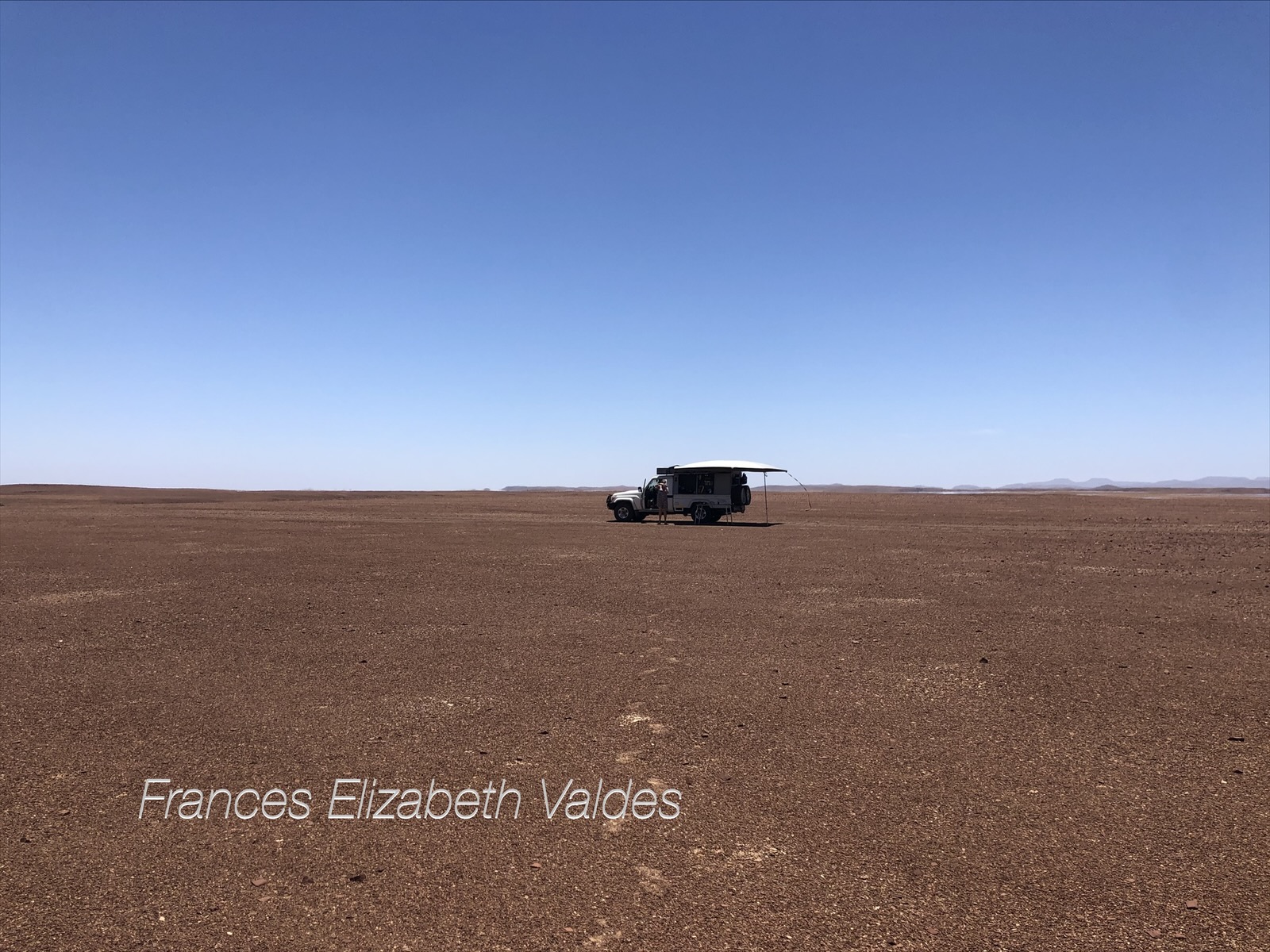
We weren’t sure if we were going to camp at Black Ridge or in the Kharokhaob Plains just before Black Ridge. We had camped at both sites in 2020. We drove towards the Plains, down a canyon towards them. Steep narrow canyons make us nervous. I’m not sure if this is a true worry or some primaeval hang up. We justify our nerves on the basis that if we were to come across an elephant (unlikely I think in that area) leopard or lion there is not enough space to drive round them.
We got to the edge of the plains and decided that Black Ridge was the place we had kept thinking of when we were home, so we would camp there . We turned back, along a parallel canyon to Black Ridge. We were so pleased we did.
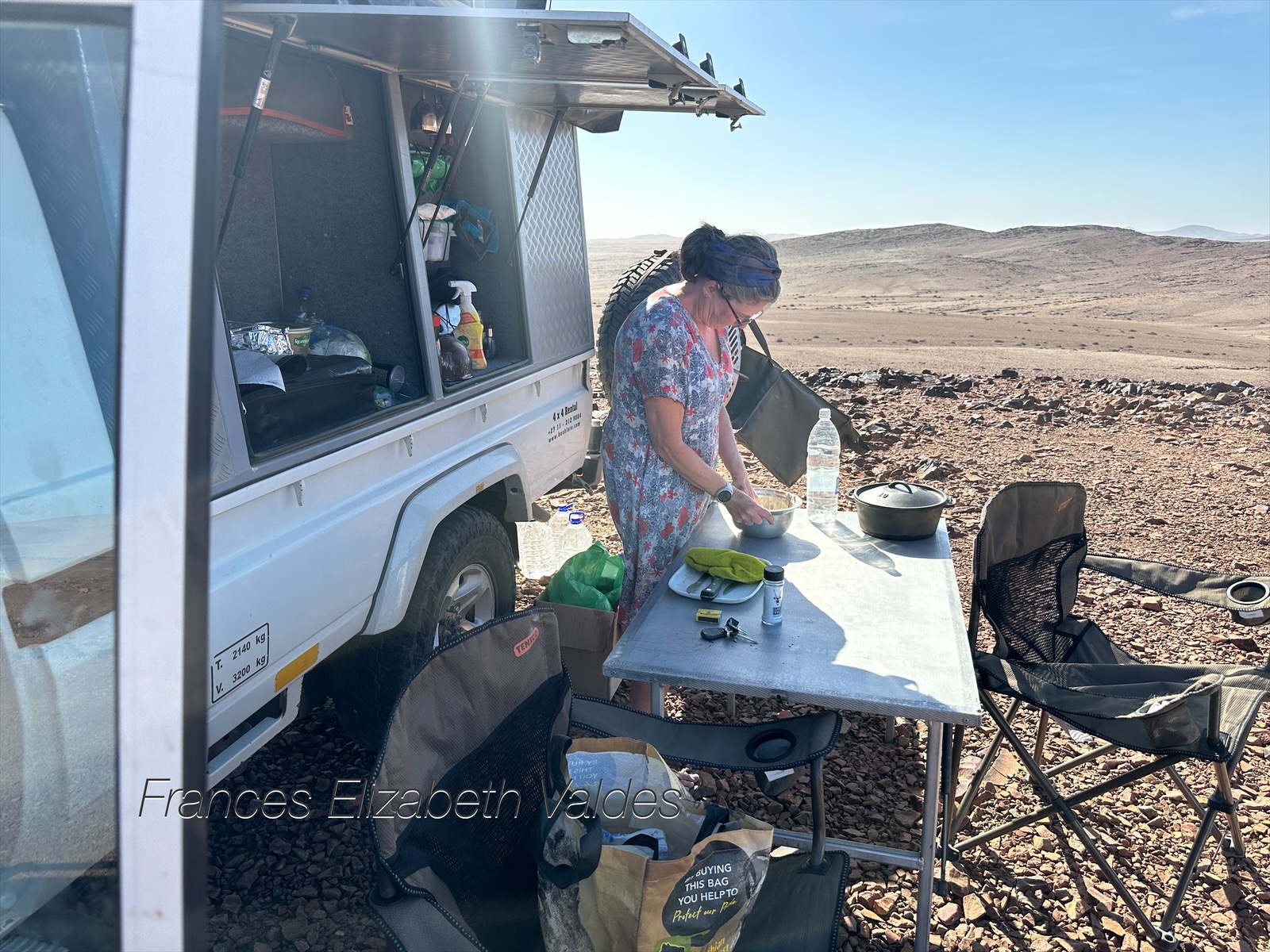
For us Black Ride was iconic. It is on a ridge – no surprise there, and because of that the wind, which develops throughout the afternoon, is usually very strong. There were a number of fire pits left by other campers. Some of them were quite sophisticated attempts to defeat the wind. We used one and managed to keep a fire going well enough for me to cook bread again. I was beginning to get quite good at camp bread.
We sat watching the valley beneath us. In 2020 we had no idea how far the valley was, and had assumed it was quite a long way away. In the morning we woke up to see springbok grazing among the boulders, making us realise it really wasn’t that deep at all. This time there were no animals. But the view was still magnificent. We sat and stared at it, using the van as a bit of a wind break.

 Desert Wonderers